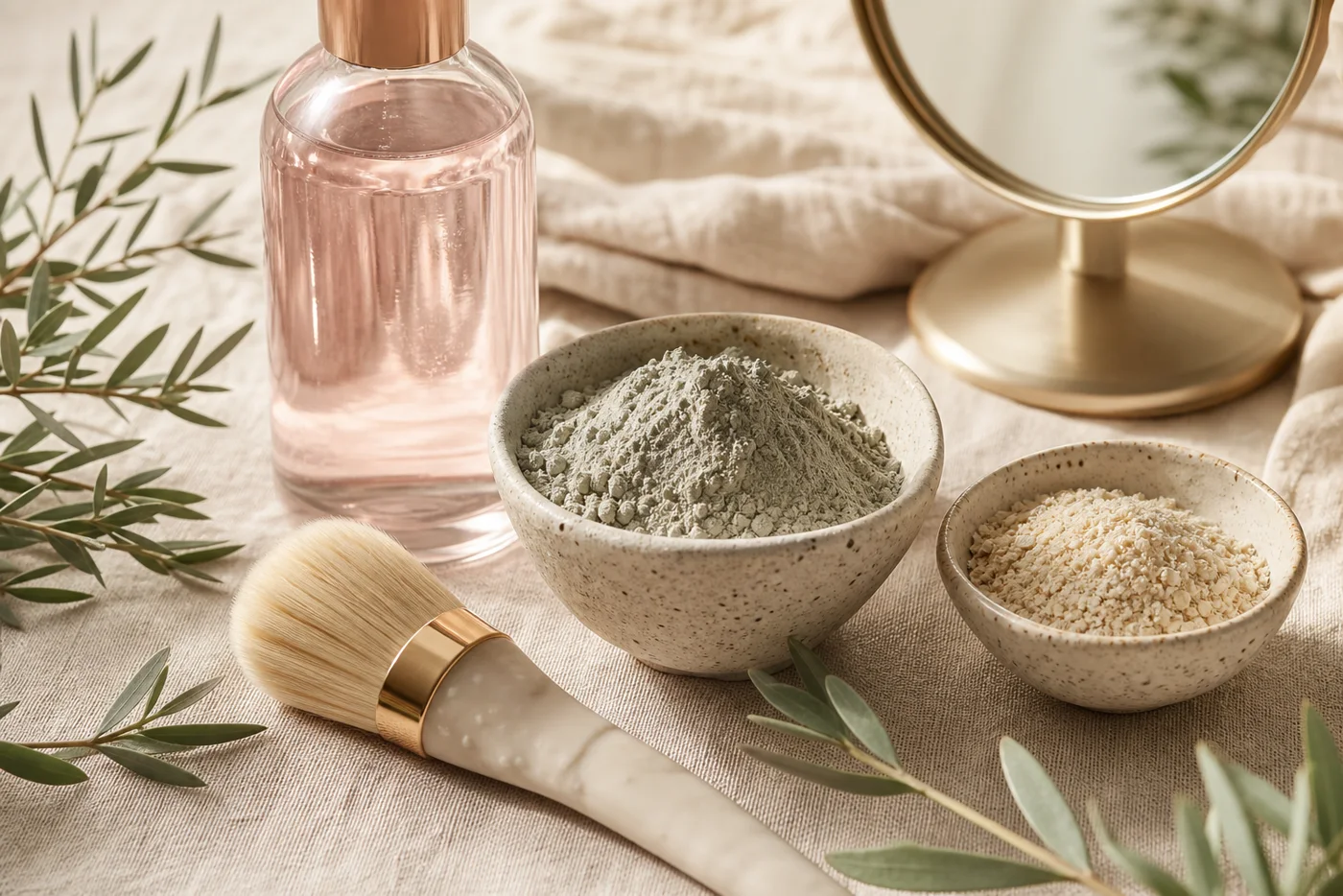
Large-looking pores are one of those skin concerns that can make a woman feel tempted to scrub harder, mask more often, or chase a quick tightening effect. The gentler truth is more useful: pores do not open and close like doors, and a mask cannot permanently shrink their natural size. But the right mask can make the skin surface look smoother for a short time by lifting excess oil, softening dull buildup, and leaving skin calmer.
After 40, this becomes a balance. Skin may feel drier in some areas while the T-zone still looks shiny. A pore-focused routine should never leave the cheeks tight or stinging. Comfort is the sign that the routine is sustainable.
What face masks can do for large-looking pores
A well-chosen mask can absorb extra surface oil, loosen dull flakes gently, and make skin look fresher for a few hours or days. Clay can be helpful when used thinly and briefly. Oats, aloe, green tea and rose water can soften the feel of the recipe so it does not become too drying.
- Use a thin layer rather than a thick cracking mask.
- Keep clay masks to 5–8 minutes if skin is mature or easily dry.
- Rinse before the mask becomes completely hard.
- Follow with a simple moisturizer.
What masks cannot do
A mask cannot erase pores, change genetics, or lift skin structure. Pores can look more noticeable with oil, sun damage, dehydration, heavy makeup, irritation, or loss of firmness, but they are still normal skin texture. If a product promises to make pores disappear, treat that as marketing, not skincare education.
The gentle pore mask rhythm after 40
For most mature skin, one pore-focused mask per week is enough. If the T-zone is oilier than the cheeks, apply the mask only where needed instead of covering the whole face. This targeted approach is often kinder and more effective-looking.
A simple mask formula to try
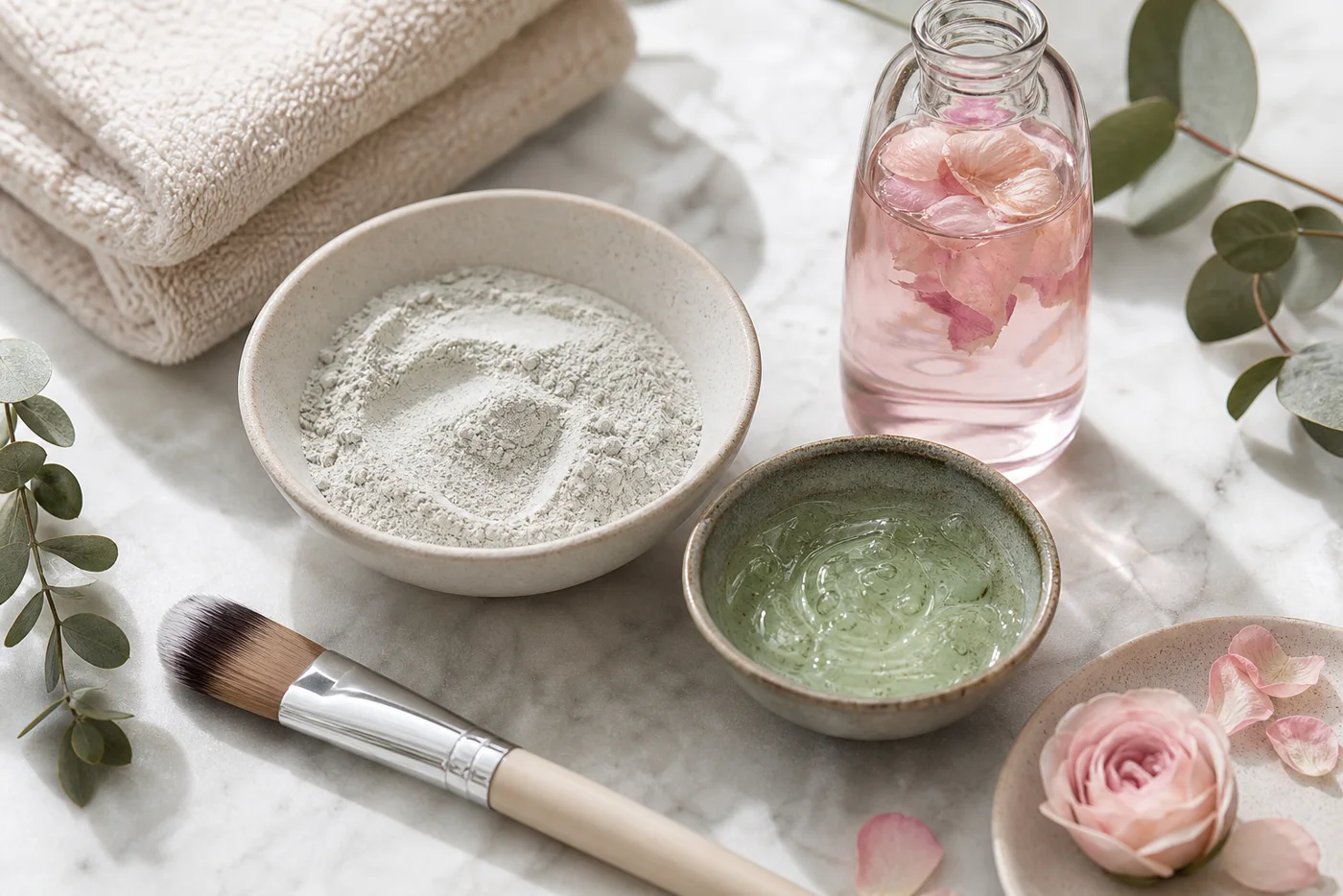
Mix 1 teaspoon kaolin clay, 1 teaspoon finely ground oat flour, and 1–2 teaspoons rose water or cooled green tea. Add ½ teaspoon aloe vera gel if the skin tends to feel tight. Apply a thin layer to the T-zone for 5–8 minutes, keeping it slightly damp. Rinse gently and moisturize.
Common mistakes that make pores look worse
- Letting clay crack. Fully dry clay can leave mature skin tight and reactive.
- Using gritty scrubs. Rough friction can make texture look more obvious.
- Skipping moisturizer. Dehydrated skin can make pores appear more visible.
- Masking daily. More is not gentler or better.
- Using lemon or baking soda. These are too harsh for a calm mature-skin routine.
Quick Checklist
- Choose kaolin or gentle clay over aggressive stripping masks.
- Use once weekly, or only on the T-zone.
- Rinse before the mask dries hard.
- Moisturize after every pore-focused mask.
- Expect a smoother-looking surface, not pore erasure.
Ingredients Mentioned In This Guide
Use shelf-stable product-type searches where helpful. Some links may use code FVQ4930.
Fresh foods and DIY liquids should be treated as grocery/kitchen ingredients, not guaranteed product recommendations.
FAQ
Can a clay mask shrink pores?
No. It may make pores look less noticeable temporarily by reducing surface oil, but it cannot permanently change pore size.
Which clay is gentlest?
Kaolin is usually a softer starting point than stronger clays. Keep the layer thin and rinse before it dries hard.
Can dry mature skin use a pore mask?
Yes, but use it only where needed and add soothing ingredients such as oats or aloe. Avoid using clay on already tight cheeks.
How often should I mask?
Once weekly is enough for most mature skin. Sensitive skin may prefer every other week.
Related Reading
Want softer weekly rituals?
Glow Rituals ebooks gather calm beauty recipes and routines for mature-looking skin, hair and body care.
Browse Glow Rituals ebooksRelated T-zone guide
Educational beauty content only. Patch test DIY masks first, avoid broken or irritated skin, and stop use if the skin stings or feels uncomfortable.