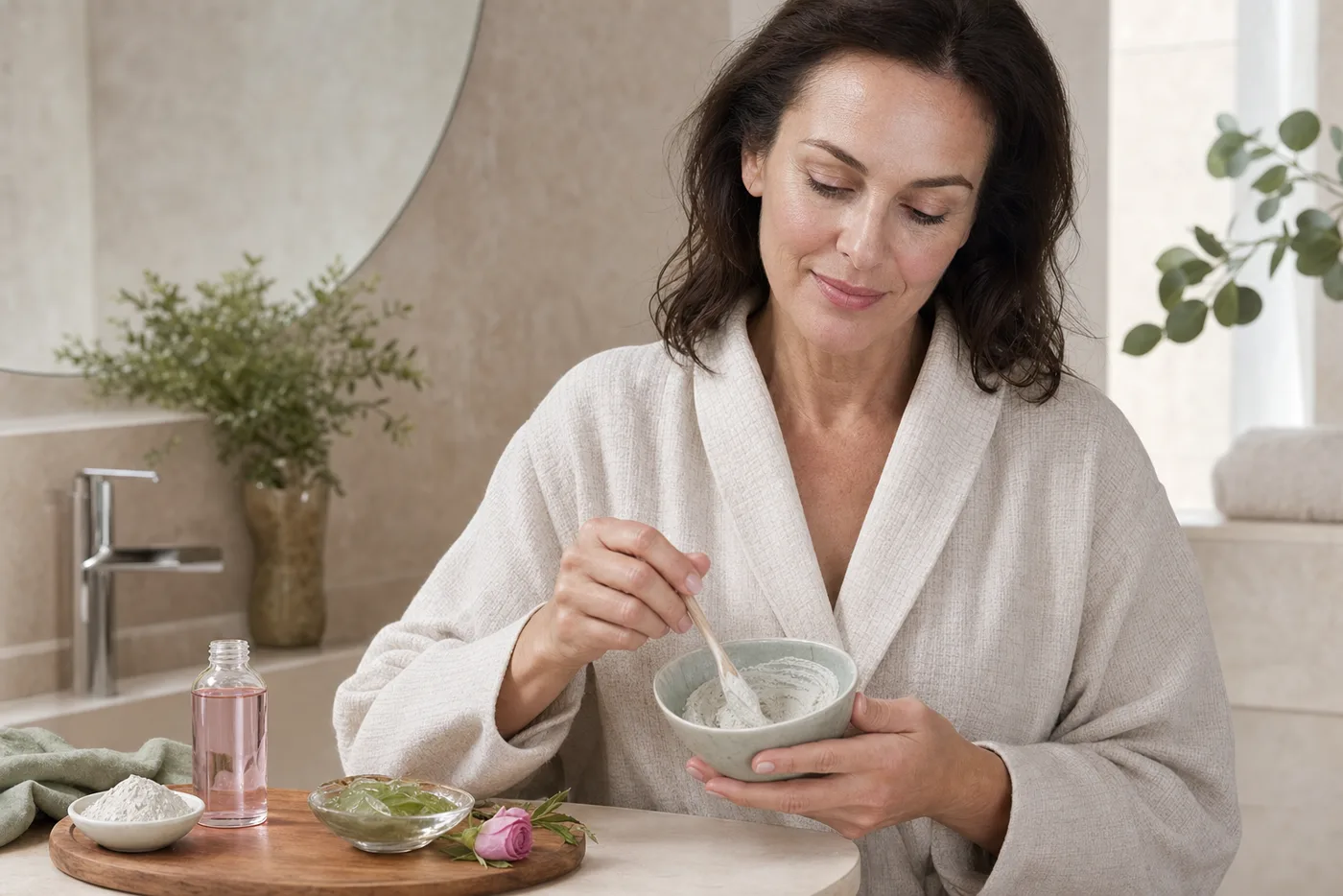
Kaolin, rose clay, and other fine clays can help a face mask feel fresh and clean, especially in warm weather or when the T-zone looks shiny. The mistake is treating clay like a harsh drying treatment. Mature-looking skin often prefers a thin layer, a short contact time, and a cushion of soothing ingredients.
This guide keeps the ritual simple: choose the mildest clay, add hydration, rinse before the mask cracks, and follow with barrier-friendly care.
Choose a mild clay first
For most mature or dry-leaning skin, kaolin is the easiest starting point. It gives a smooth texture without the intense pull of stronger clays. If your skin is sensitive, skip fragrance-heavy blends and avoid masks that feel hot, prickly, or tight within the first few minutes.
Keep the texture creamy, not dry
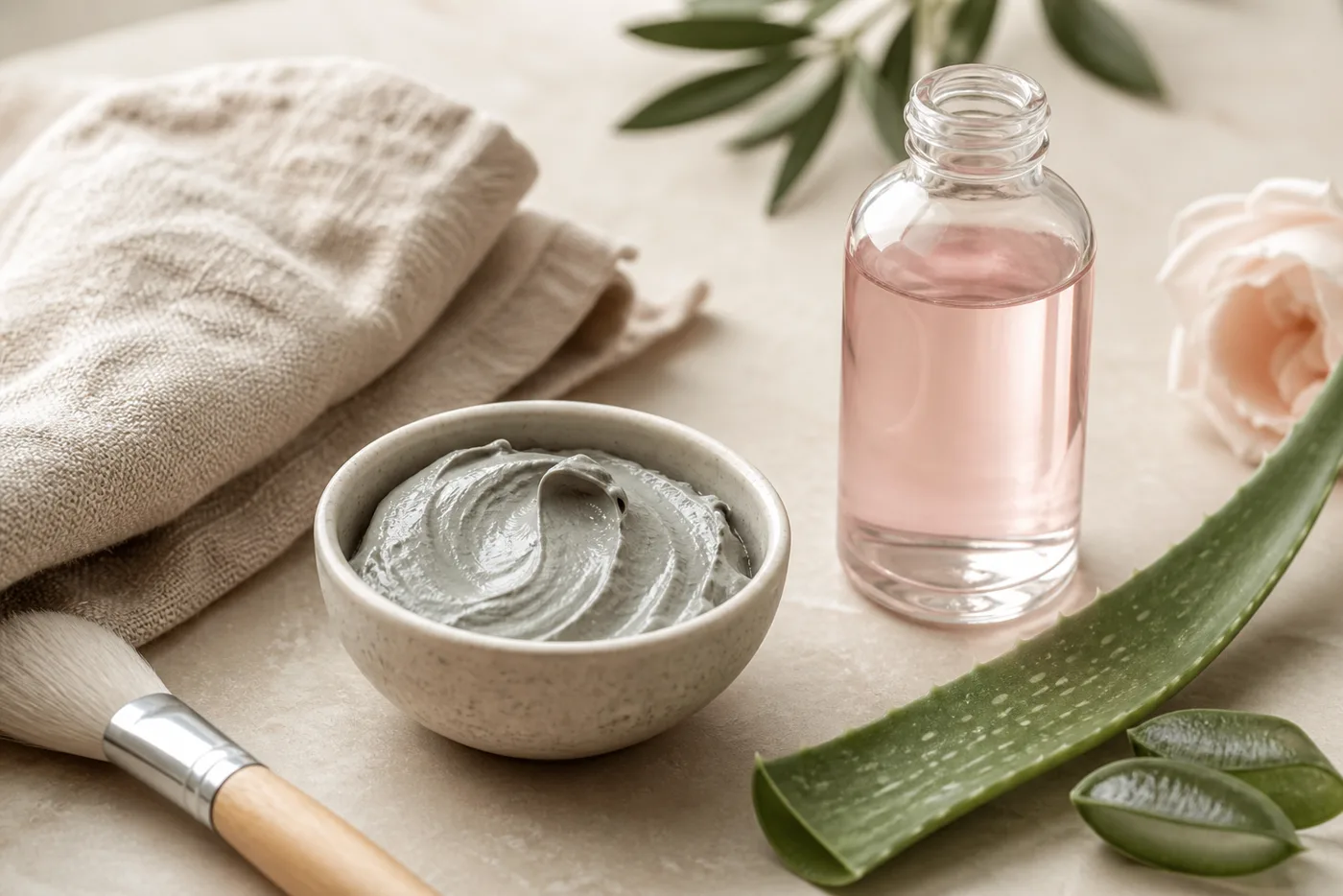
A comfortable clay mask should look like soft yogurt or cream. Mix the powder with rose water, aloe vera gel, or a simple hydrating mist instead of leaving the paste thick and chalky. A creamy texture spreads with less rubbing and rinses away more gently.
The timing rule after 40
Leave a clay mask on for about 5–7 minutes, then rinse while it is still slightly damp. Do not wait for a cracked, fully dry layer. That dry-down feeling can make skin look temporarily flat and feel uncomfortable, especially around the cheeks and mouth.
Where clay works best
Use clay where you actually want a clean-feeling finish: the nose, chin, forehead, or oily-looking areas. You do not need to cover the entire face. A T-zone-only mask is often more comfortable than a full-face layer.
Quick checklist
- Patch test before using a new clay or botanical blend.
- Use a thin, creamy layer.
- Keep it away from the eye area and lips.
- Rinse before the mask cracks.
- Follow with a simple moisturizer or a few drops of a skin-friendly oil.
Ingredients Mentioned In This Guide
Optional affiliate links may use iHerb code FVQ4930. Choose only products that fit your skin and patch test first.
Try these next
Want the complete Glow Rituals library?
Explore the recipe sections and save the rituals that fit your skin, hair, and season.
New pore and tone guides
New sensitive-skin mask
Educational beauty content only. Patch test DIY recipes, avoid known allergens, and do not use clay masks on irritated, broken, sunburned, or freshly exfoliated skin.