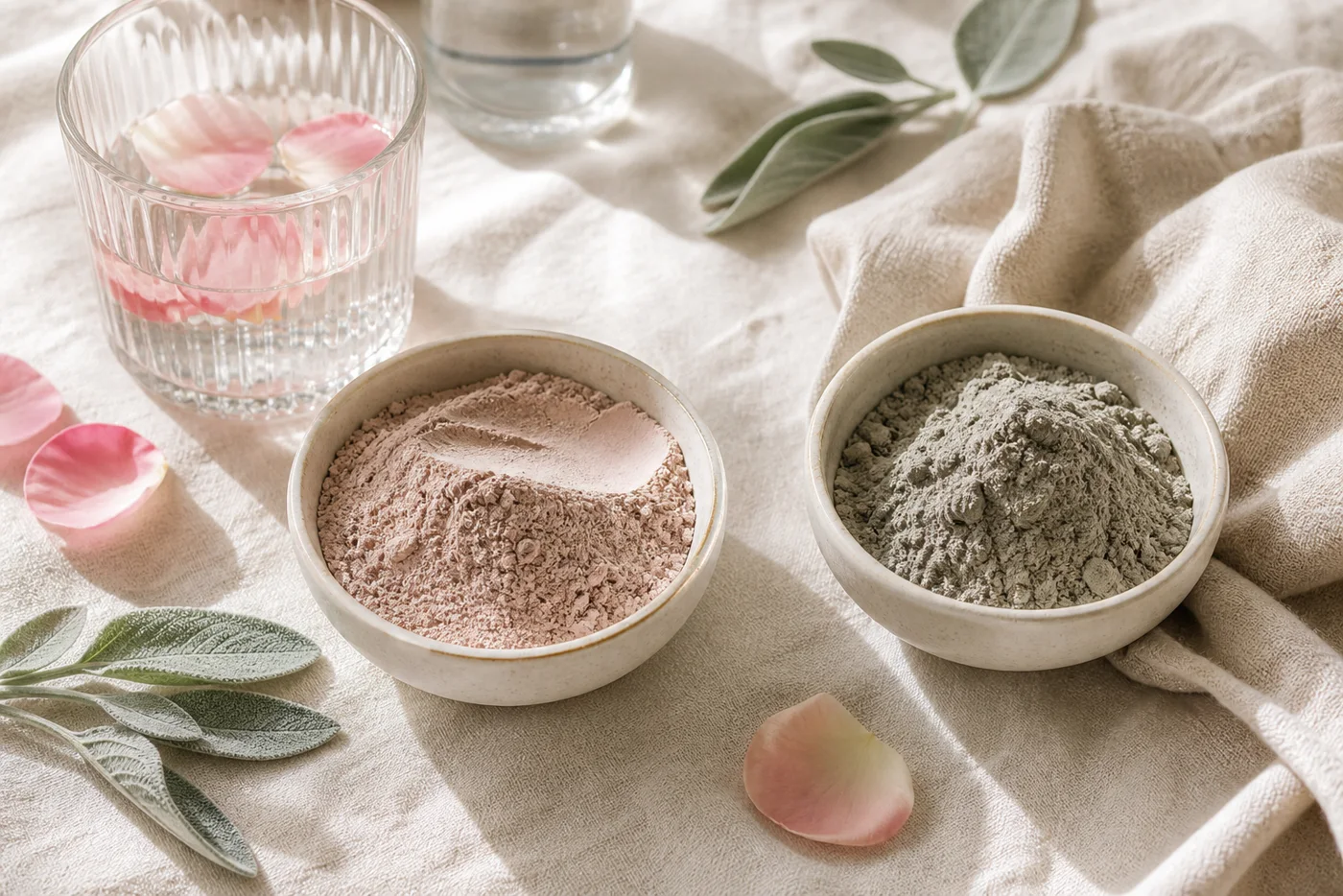
Clay masks can be useful in a mature-skin routine, but they are not all the same. Kaolin usually feels softer and creamier. Bentonite can feel more drying and “grippy,” especially if the mask is left on too long.
The gentlest choice depends less on the clay name and more on how you mix it, how long it stays on, and whether your skin is already dry, sensitive-feeling, sun-exposed, or freshly exfoliated.
The quick difference
- Kaolin clay: usually the softer option for dry, mature, or sensitive-feeling skin.
- Bentonite clay: stronger-feeling and better reserved for oily zones or short spot masks.
- Best comfort rule: rinse while the mask is still slightly damp, not cracked and tight.
Why kaolin is often gentler after 40
Kaolin has a fine, powdery texture that mixes into a smoother paste. For skin that feels drier after 40, this matters. A mask that spreads easily can be removed with less rubbing, and the ritual feels more like a soft reset than a stripping step.
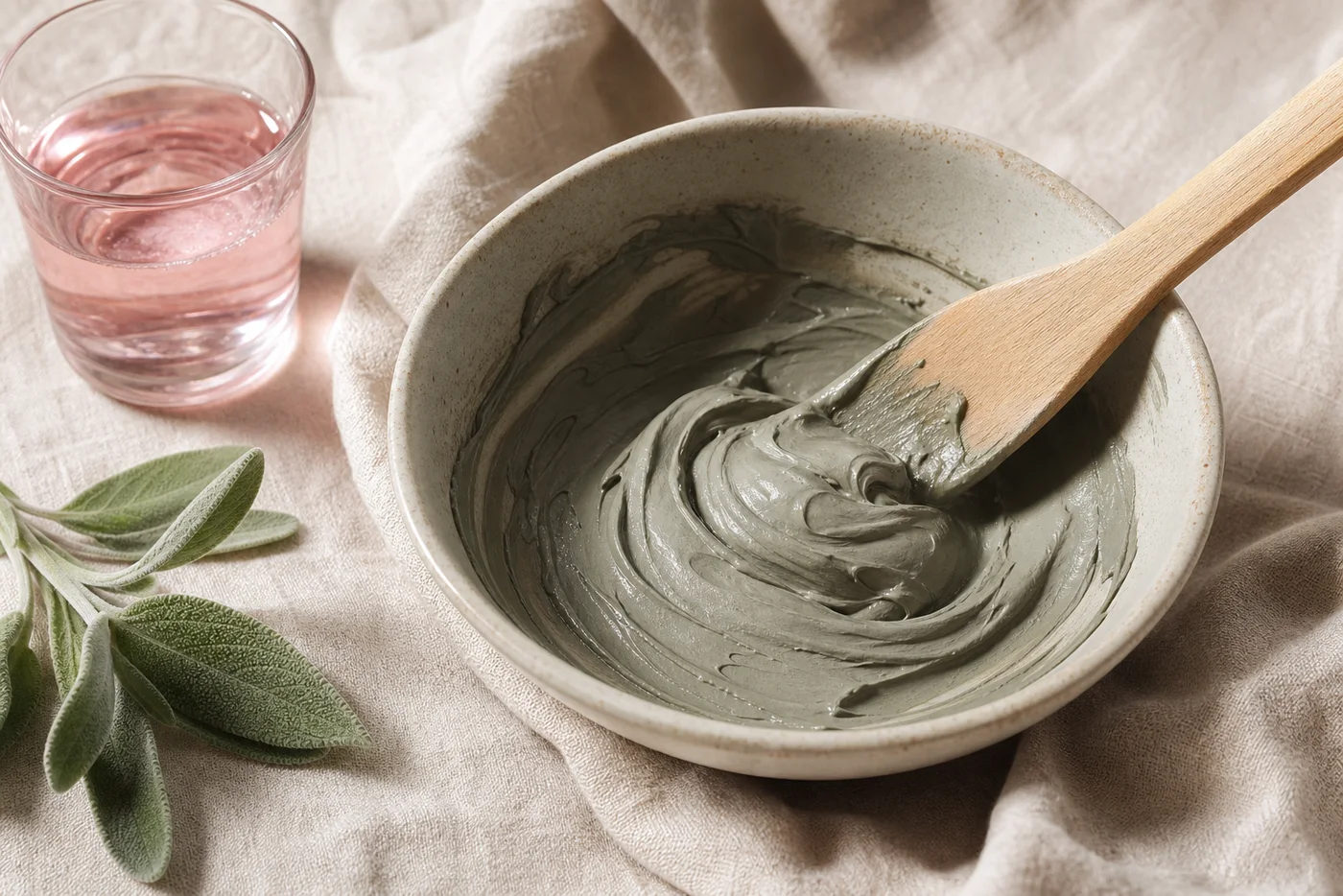
Try mixing 1 teaspoon kaolin with rose water or aloe vera gel until it looks creamy. Apply a thin layer for 5–8 minutes, then rinse before it fully dries.
Where bentonite can fit
Bentonite is not “bad,” but it asks for more caution. It can be useful on oily T-zone areas or for a very short weekly mask when skin feels congested-looking. For mature or dry-feeling skin, full-face bentonite masks can easily feel too tight.
If you use it, mix a small amount with plenty of liquid and keep the time short. Avoid using bentonite the same day as exfoliating acids, retinoids, shaving, or long sun exposure.
How to choose by skin need
- Dry or tight-feeling skin: choose kaolin, aloe, rose water, or a creamy mask base.
- Sensitive-feeling skin: choose kaolin and keep the recipe simple; patch test first.
- Oily T-zone: use bentonite only on that area for a short time.
- Freshly exfoliated or sun-stressed skin: skip clay and choose a bland moisturizer instead.
A gentle clay mask ratio
- Start with 1 teaspoon kaolin clay.
- Add 1 teaspoon rose water or cooled green tea.
- Add ½ teaspoon aloe vera gel if your skin likes it.
- Stir until creamy and spread a thin layer.
- Rinse after 5–8 minutes, before it dries hard.
Common mistakes
- Mixing clay with lemon juice or harsh acids.
- Leaving the mask until it cracks.
- Scrubbing during removal.
- Using a strong clay mask several times per week.
- Applying clay to irritated or broken skin.
Quick checklist
- Patch test first.
- Keep clay masks thin and short.
- Use kaolin as the comfort-first default.
- Use bentonite only where skin is oilier and resilient.
- Moisturize after rinsing.
FAQ
Is kaolin clay better for mature skin?
Often, yes. It is usually a softer-feeling clay and easier to keep comfortable when the skin is dry or delicate.
Can bentonite clay be too strong?
It can feel too drying for some people, especially on cheeks or dry mature skin. Use it briefly and only on areas that tolerate it.
Should a clay mask dry completely?
No. For comfort, rinse while it is still a little damp. A cracked mask usually means the skin may feel tight afterward.
How often should I use clay?
Once weekly is enough for many at-home routines. Sensitive-feeling skin may prefer less often.
Ingredients Mentioned In This Guide
These are product-type search links only. Availability changes, and some links may use iHerb code FVQ4930.
Related Reading
Want gentler weekly rituals?
Keep clay masks short, simple, and supportive. The Glow Rituals ebook collects soft beauty routines for mature-looking skin without harsh promises.
Browse Glow Rituals guides →Educational beauty content only. Patch test DIY masks first and avoid use on broken, irritated, sunburned, or freshly exfoliated skin. If irritation persists, ask a qualified professional.