Omega-3 fats often appear in beauty conversations because skin, scalp and hair all respond to the wider state of nutrition, comfort and inflammation balance. After 40, the useful question is not “Which capsule will transform my hair?” It is gentler: are you eating enough supportive fats, protein and colorful foods, and is a supplement actually appropriate for your body?
This guide keeps omega-3s realistic. They can support a food-first beauty routine, but they do not erase wrinkles, cure dryness or stop hair shedding on their own. If hair loss is sudden, heavy or patchy, or if skin discomfort is persistent, professional guidance matters.
What omega-3 fats can support
Omega-3s are essential fats involved in many normal body functions. In a beauty routine, they are best framed as nutrition support for skin comfort, scalp balance and healthy-looking hair quality over time. They work slowly and indirectly, alongside enough protein, minerals, vitamin D status, sleep, stress care and a gentle topical routine.
For mature-looking skin, the goal is not an overnight glow. It is steadier nourishment so the skin barrier, scalp and hair lengths are not trying to do their work from an under-fueled place.
Food first: simple sources
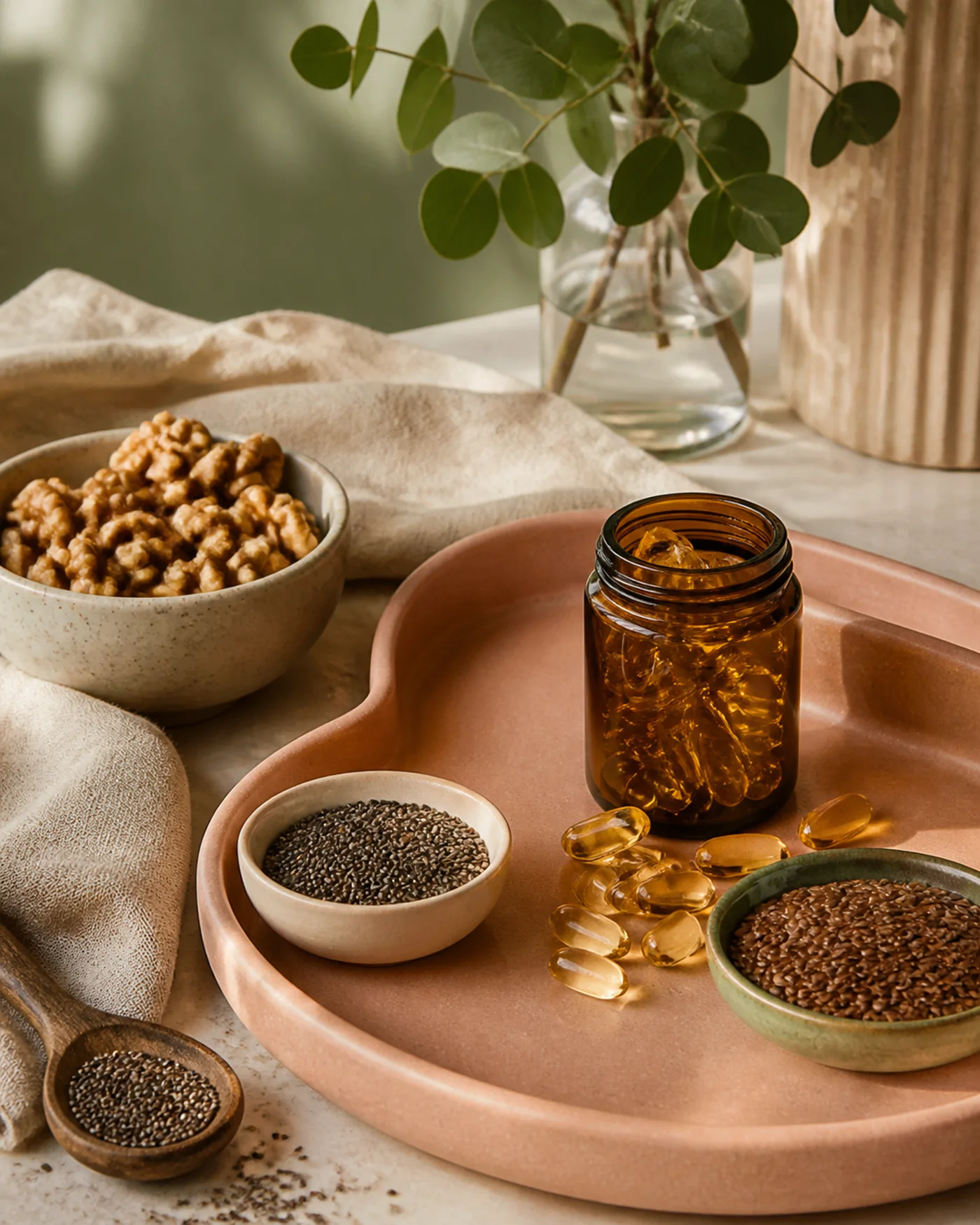
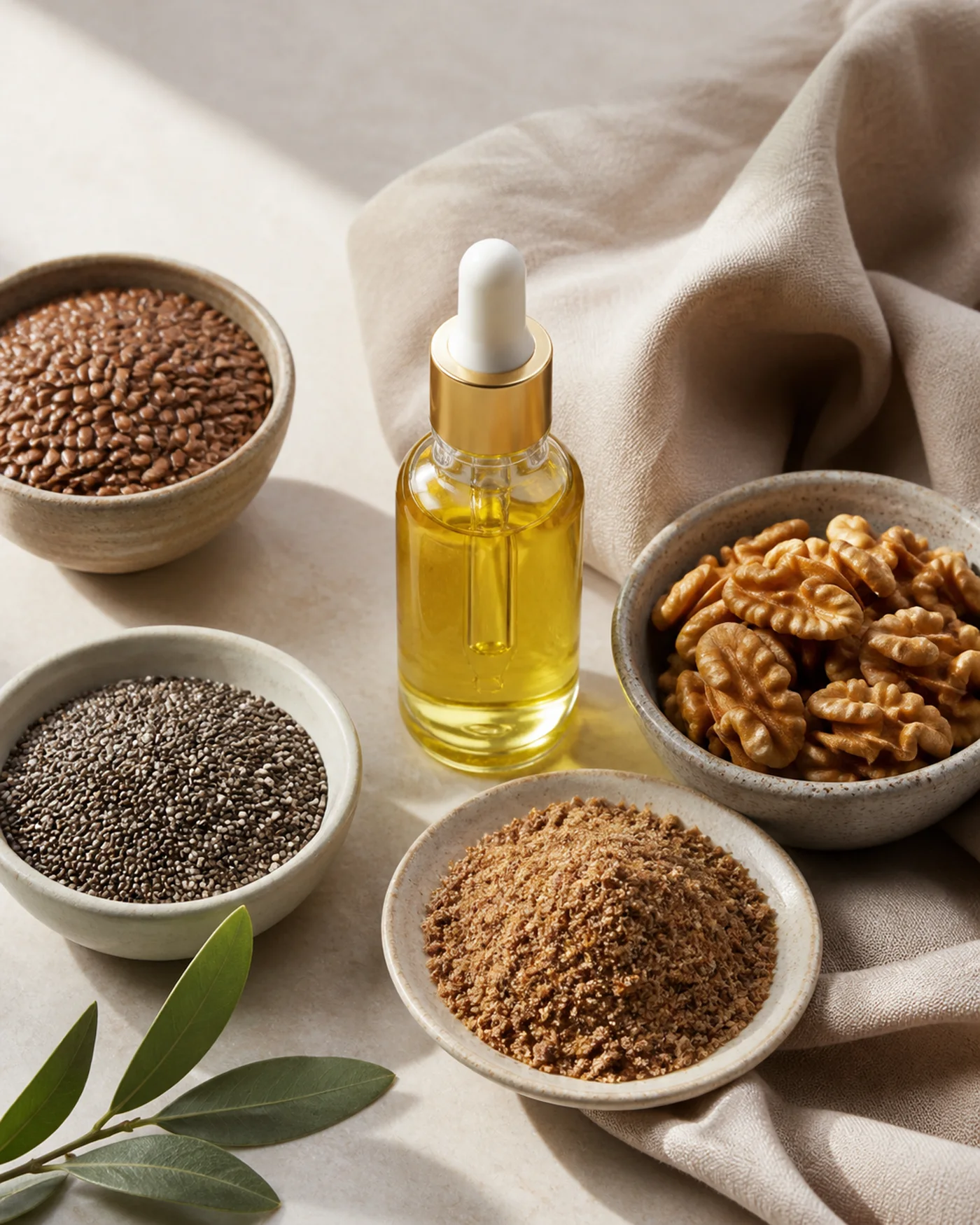
Good food sources include salmon, sardines, trout, walnuts, chia seeds, ground flaxseed and hemp seeds. Plant sources provide ALA, which the body converts only partly into EPA and DHA. That does not make them useless; it simply means oily fish or algae-based options may be more direct for some people.
A practical weekly rhythm might be two fish meals if you eat fish, plus small daily seed portions such as one teaspoon chia or ground flax in yogurt, oatmeal or a smoothie. Keep portions realistic and enjoyable so the habit lasts.
When supplements may be worth discussing
An omega-3 supplement may be useful when fish intake is low, plant-only eating is preferred, or a clinician recommends it for a broader health reason. Choose product types carefully: fish oil, krill oil and algae oil are different, and dose matters. More is not automatically better.
If you take blood thinners, have a bleeding disorder, have surgery planned, are pregnant or breastfeeding, have a fish/shellfish allergy, or manage a medical condition, ask your clinician before supplementing. Omega-3 products can also cause reflux or a fishy aftertaste for some people.
How to fit omega-3s into a Glow Rituals week
- Add chia or ground flax to a smoothie or kefir bowl.
- Use walnuts as a topping for yogurt or oatmeal.
- Choose oily fish when it fits your diet and budget.
- Keep scalp care gentle; nutrition is not a substitute for kind hair handling.
- Track changes in comfort and hair quality over months, not days.
Common mistakes
- Expecting a supplement to fix hair shedding without checking iron, thyroid, medication changes, stress or diet.
- Taking high doses without medical guidance.
- Using omega-3 language as a miracle anti-aging promise.
- Forgetting that sunscreen, moisturizer and gentle cleansing still matter for skin.
Quick checklist
- Food first where possible.
- Choose fish or algae sources based on your diet and allergies.
- Discuss supplements if you take medication or have health conditions.
- Give nutrition habits time.
- Keep claims realistic: support, not transformation.
Ingredients Mentioned In This Guide
Product-type search links only; availability can change. Use code FVQ4930 where supported.
Some links may use the Glow Rituals iHerb code FVQ4930.
Related Reading
Want a calmer beauty routine?
The Glow Rituals digital guides collect gentle skin, hair and beauty-drink rituals for women 40+ in one easy place.
Browse Glow Rituals guidesFAQ
Do omega-3s make hair grow faster?
Not as a promise. They can support overall nutrition, but hair growth depends on many factors including protein, iron status, hormones, scalp health and genetics.
Is fish oil better than chia seeds?
Fish oil provides EPA and DHA directly. Chia provides ALA, which still fits a healthy food pattern but converts only partly. The best choice depends on diet, tolerance and medical context.
Can omega-3s replace moisturizer?
No. Nutrition supports the body from within, while moisturizer and sunscreen remain daily topical basics.
Who should be careful with supplements?
Anyone on blood-thinning medication, with bleeding concerns, fish or shellfish allergy, pregnancy, breastfeeding, upcoming surgery or chronic health conditions should ask a clinician first.
Educational beauty and wellness content only; not medical advice. Supplements can interact with medication and health conditions. Ask a qualified professional for personal guidance.