We tend to treat skin as something we work on from the outside, with serums, masks and a hopeful new cream every few months. All of that matters. But skin is a living organ, the largest one you have, and it is built and renewed from what you eat, drink and how you live. That is why two people with the same routine can have quite different skin, and why no product works in a vacuum.
This is the idea behind beauty from within: feed the skin well and the outside has more to work with. Below are five nutrients most often linked to healthy-looking skin, where to find them in everyday food, and how to use them sensibly. None of this is about treating anything; it is about giving your skin good raw material.
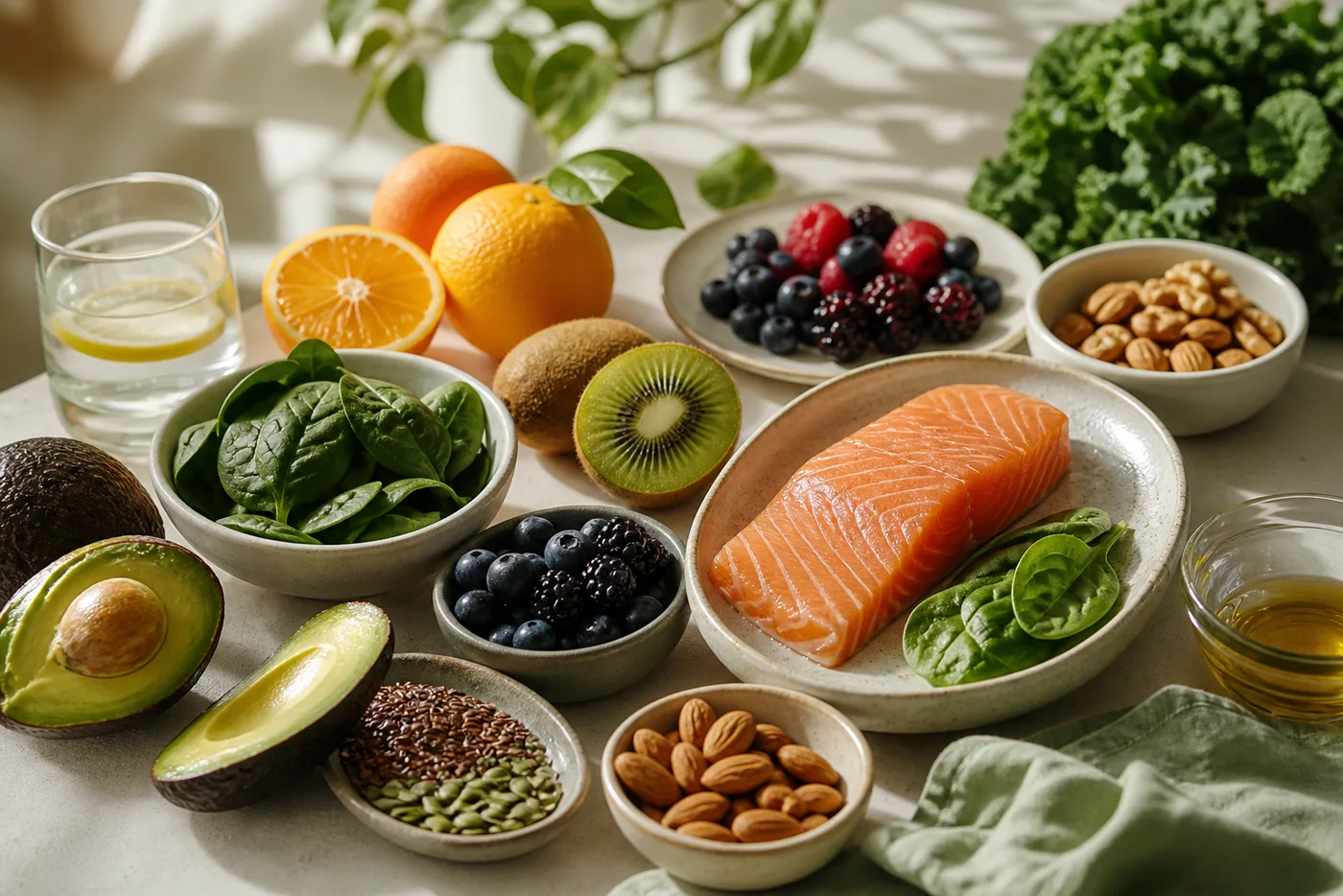
1. Vitamin C
Vitamin C is the nutrient most consistently tied to skin in both food and skincare, and for good reason. The body uses it to make collagen, the protein that keeps skin firm and springy, and it also works as an antioxidant, helping defend skin against the everyday stress of sun and pollution. It is one of the clearest examples of nutrition and skin overlapping.
Find it in: citrus, kiwi, strawberries, bell peppers, broccoli, tomatoes and leafy greens.
Worth paying attention to if: your diet is light on fresh fruit and vegetables, or you smoke, which tends to use up more of it.
2. Vitamin D
Vitamin D is a little different, because we make most of it through sun on the skin rather than food. It plays a role in the skin's normal renewal and barrier, and many people, especially in cooler climates or those who stay covered or indoors, run low without realising.
There is a gentle irony here: the same sun that makes vitamin D is also the main cause of skin ageing, so the answer is never to skip sun protection. Food and, where needed, a supplement are the safer route. Because levels are individual and easy to test, this is one worth a quick word with your doctor.
Find it in: oily fish like salmon and sardines, egg yolks, and fortified foods such as some milks and cereals.
Worth paying attention to if: you live somewhere with long winters, spend most of the day indoors, or rarely eat oily fish.
3. Omega-3 fatty acids
Omega-3s are the healthy fats that keep skin supple and comfortable. They support the skin's barrier, the layer that locks in moisture, which is why diets rich in them are so often linked with skin that looks hydrated rather than dry and tight. They matter more with age, as skin makes less of its own oil.
Find it in: oily fish, walnuts, chia seeds, flaxseed and their oils.
Worth paying attention to if: your skin tends to feel dry or tight, or you rarely eat fish or seeds.
4. Zinc
Zinc is a quiet, hardworking mineral that the skin relies on for normal healing and renewal, and it helps regulate oil, which is why it comes up so often in conversations about clearer-looking skin. It is not glamorous, but it is foundational.
Most people get enough from a varied diet, and this is one where more is not better, since very high doses can throw off other minerals. Food first is the sensible rule.
Find it in: pumpkin seeds, chickpeas, lentils, nuts, whole grains, shellfish and lean meat.
Worth paying attention to if: you eat little meat or seafood and your diet is low in beans, nuts and seeds.
5. Biotin
Biotin, a B vitamin, is the one splashed across hair, skin and nail products. The honest part marketing skips: true deficiency is rare, because it turns up in so many everyday foods, and for those who are not low in it, extra biotin tends to do less than the label suggests. A balanced diet usually has it covered. One note: high-dose biotin can skew certain blood tests, so tell your doctor if you take it.
Find it in: eggs, nuts, seeds, sweet potatoes, salmon and whole grains.
Can supplements replace a healthy diet?
It is tempting to think a few capsules could stand in for eating well. They cannot. Whole foods deliver these nutrients alongside fibre, water and dozens of other compounds that work together, in forms the body absorbs well. A pill delivers one or two nutrients in isolation, missing all that context.
Supplements have their place, filling a genuine gap, supporting a restricted diet, or covering something like vitamin D in winter. But they are a supplement to good food, as the name says, not a replacement for it. The most glow-supporting thing on this page is still a varied, colourful plate. If anything is worth investing in for your skin, it is the contents of your fridge.

Simple habits that support healthy-looking skin
Nutrients are only one piece. A handful of everyday healthy skin habits do just as much, and they cost nothing.
- Drink enough water. Hydration shows on the skin, and no cream fully makes up for being under-hydrated.
- Protect your sleep. Skin does much of its repair overnight, which is why short nights show on your face so quickly.
- Wear sun protection daily. The single most effective thing for how your skin ages, and the perfect partner to feeding it well.
- Eat a balanced, colourful diet. Variety naturally covers most of the nutrients above, no spreadsheet required.
- Manage stress where you can. Ongoing stress tends to show on the skin, so calm habits quietly help your face too.
Recommended supplements
Food comes first, always. But if you and your doctor decide a supplement makes sense, here is how to think about the main ones for skin, by type rather than brand.
Vitamin C
For those light on fresh fruit and vegetables
A straightforward daily vitamin C is one of the easiest to add. Buffered or gentler forms tend to sit more comfortably if a plain version bothers your stomach. A simple way to cover the gap when your plate is not always colourful.
Best for: dull-looking skin · diets light on fresh produce
Browse vitamin C →Omega-3
For dry-feeling skin or those who rarely eat fish
Fish oil is the classic source; algae-based omega-3 is a good plant option for vegetarians and vegans. Look for a clean, well-reviewed formula and store it properly, since these oils are delicate.
Best for: dry-looking skin · low fish intake
Browse omega-3 →Zinc
For low-meat or low-seafood diets
A modest daily zinc can help if your diet is short on its main sources. Keep the dose sensible rather than high, since too much can unbalance other minerals, and take it with food.
Best for: congested-looking skin · low-meat or low-seafood diets
Browse zinc →Biotin
For very limited diets, with realistic expectations
Often sold for hair, skin and nails, biotin mostly helps those actually low in it, which is uncommon. A modest dose is fine if you like the idea, just tell your doctor before any blood tests.
Best for: very limited diets
Browse biotin →Some links may use the Glow Rituals iHerb code FVQ4930. Talk to your doctor before starting any supplement, especially during pregnancy or breastfeeding, if you take medication, or have a health condition.
Frequently asked questions
What vitamins are most important for healthy-looking skin?
Vitamin C and omega-3 fats are two of the most consistently linked to skin, with vitamin D, zinc and a varied diet supporting the picture. No single vitamin is a magic answer; it is the overall balance that shows.
Can nutrition really affect skin appearance?
Yes. Skin is built and renewed from what you eat and drink, so a varied, nutrient-rich diet gives it better material to work with. The effect is gradual and works alongside, not instead of, good skincare.
Is vitamin C good for skin?
It is one of the clearest food-and-skin connections. The body uses vitamin C to make collagen and as an antioxidant, and it is easy to get from everyday fruit and vegetables.
Can supplements replace skincare products?
No, they work on different sides of the same goal. Supplements support skin from within; skincare and sun protection care for it from the outside. You want both, and neither replaces the other.
How long before diet changes show on my skin?
Think weeks to months, not days. Skin renews slowly, so consistency is what matters. The habit, kept up quietly, is where the difference appears.
The takeaway
Healthy-looking skin is rarely about one hero vitamin or one perfect product. It comes from the unglamorous basics done steadily: a colourful plate, enough water, good sleep, daily sun protection, and a little less stress where life allows.
Treat the nutrients here as a friendly checklist, not a shopping spree. Cover them mostly through food, add a supplement only where it genuinely helps, and let time do the rest.
Looking for more beauty-from-within ideas?
If you enjoy this approach, these digital books gather natural recipes, beauty drinks and simple rituals in one place, there whenever you feel like exploring.
INNER GLOW 101
Beauty drinks, smoothies, teas and simple daily glow ideas.
Download now →TIMELESS GLOW 101
Natural skincare recipes and routines for radiant-looking skin.
Download now →Related reading
New summer hydration guide
Glow Rituals Beauty shares educational beauty and wellbeing ideas only, not medical or nutritional advice. Talk to a qualified professional before starting any supplement, if you are pregnant or breastfeeding, take medication, have a health condition, or have any allergy or medical question.