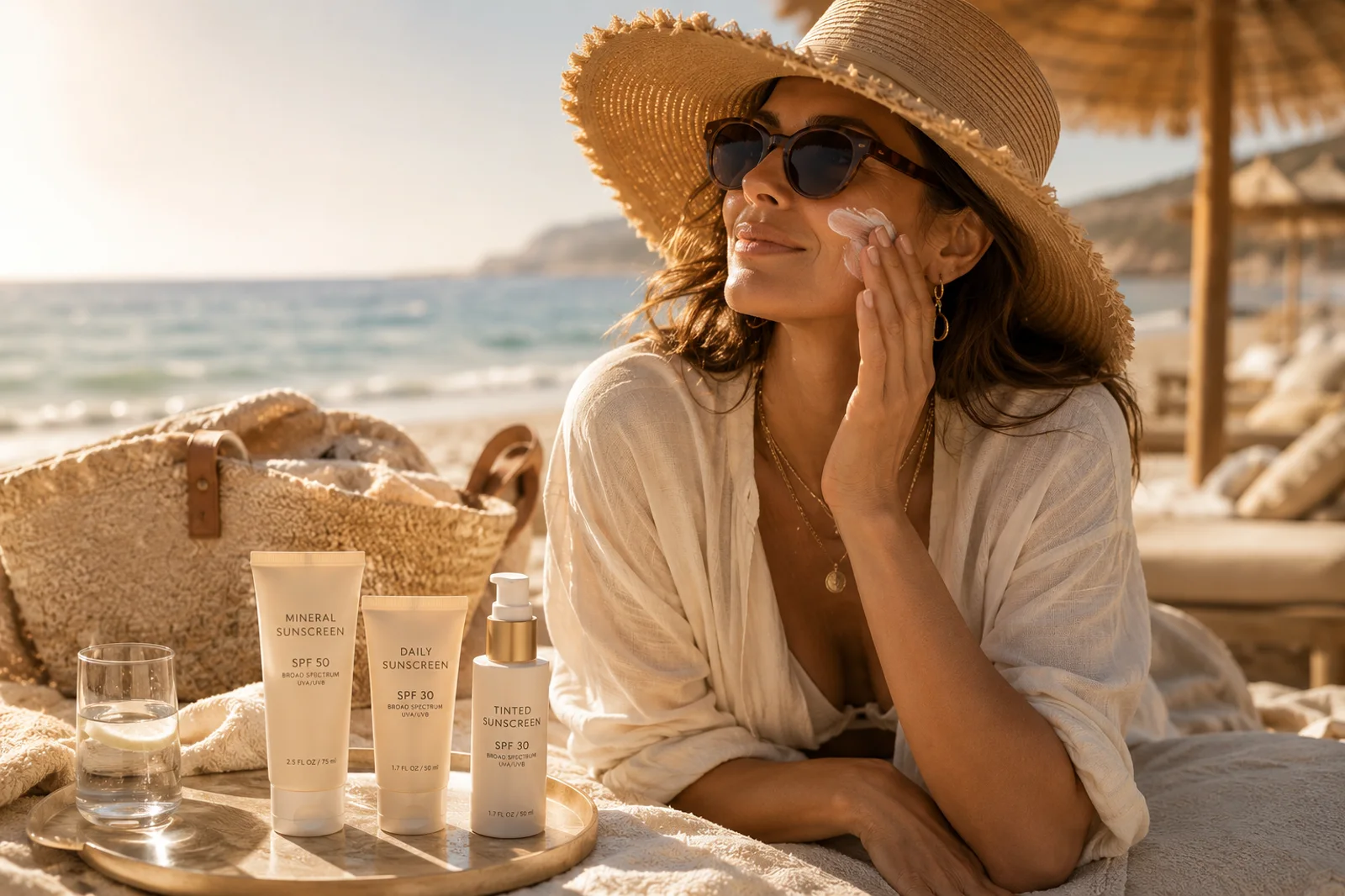
Half-used bottles of sunscreen sit at the back of bathroom shelves everywhere, bought with good intentions before a holiday and forgotten by autumn. Meanwhile the most reliable anti-aging step in skincare, the one dermatologists agree on more than almost anything, goes unused on ordinary days.
The gap is rarely knowledge or products. It is habit. Sun protection only does its quiet work when it becomes automatic, like brushing your teeth. No scare tactics here — just ten small habits that turn occasional sunscreen into real, everyday protection, and leave skin looking healthier for it.
1. Wear it every day, not just when it is sunny
UVA rays, the slow ageing kind, barely dip in winter and pass through cloud and glass. A grey commute or a desk by a window still counts.
How: apply every morning as part of getting ready, whatever the forecast. Common mistake: saving SPF for beach days and skipping ordinary mornings, where most sun exposure quietly adds up.
2. Use far more than feels natural
A sunscreen is only as strong as the amount applied, and nearly everyone uses too little. The protection on the label assumes a generous layer.
How: for the face, use about two finger-lengths of product, or roughly a quarter teaspoon. Common mistake: a thin, polite smear. A high SPF number cannot rescue a stingy layer.
3. Make it the last step of your morning skincare
Sunscreen works as a shield on top of everything else, so it goes on after serums and moisturizer, not buried beneath them.
How: cleanse, treat, moisturize, then finish with SPF before makeup — the natural last beat of any morning skincare routine. Common mistake: mixing it into moisturizer to save a step, which can weaken the even film it needs.
4. Top it up when you are out for the day
SPF wears down through sweat, touching your face, and time, especially outdoors. It is not a force field you switch on once.
How: a normal indoor day is different from a day outside. Outdoors, reapply every couple of hours, easiest with a stick, cushion, or spray. Common mistake: one 8am application before a full day at the beach.
5. Do not stop at your jawline
A perfectly protected face often sits above a bare neck and chest, areas that are thinner, well exposed, and quick to show sun.
How: carry SPF down the neck and chest, onto the backs of the hands and the tops of the ears. Common mistake: a flawless face and a forgotten chest, where uneven tone often appears first.
6. Use shade and timing as your first layer
The sun is strongest in the middle of the day, and a little planning protects you with no product at all.
How: take walks and errands in the earlier morning or later afternoon, and sit under the umbrella when you can. Common mistake: treating SPF as a licence to bake at noon.
7. Protect your eyes and the skin around them
The skin around the eyes is the most delicate on the face, and awkward to cover right up to the lash line.
How: wear sunglasses with proper UV protection, which also helps reduce squinting; a wide brim shields the whole face. Common mistake: dark lenses with no real UV filter.
8. Give your lips some protection too
Lips have very little natural defence and are easy to forget, yet they sit exposed at the front of your face all day.
How: keep an SPF lip balm in your bag and reapply like any balm. Common mistake: assuming a glossy lipstick does the job; most offer no real sun protection.
9. Let makeup support your SPF, not replace it
Foundations with SPF are lovely, but reaching the labelled protection would take far more makeup than anyone wears.
How: treat SPF in makeup as a bonus over a proper sunscreen, applied first. Common mistake: counting on the SPF in foundation as your only protection.
10. Choose a formula you genuinely enjoy
The best sunscreen is the one you will reach for daily. If it feels greasy, pills under makeup, or leaves a heavy cast, you quietly stop using it.
How: try a few textures until one feels like skincare, not a sacrifice, and keep it next to your toothbrush. Common mistake: forcing yourself to use one you dislike out of guilt.
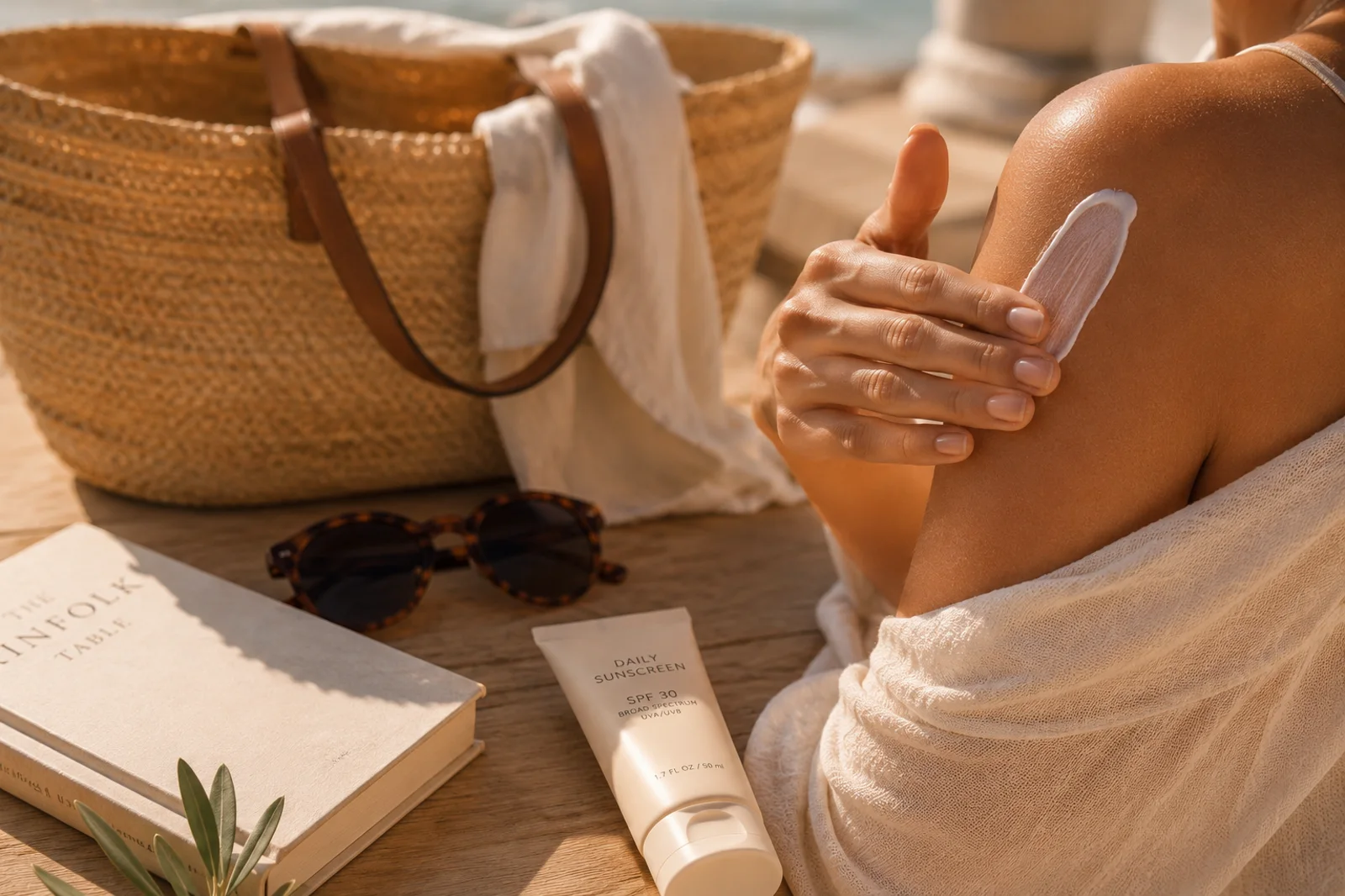
Recommended products
You do not need anything expensive, just a formula that suits your skin and that you like enough to keep using. Here are a few practical iHerb search picks by skin type:
Mad Hippie Hydrating Facial SPF 25+
Best for dry, sensitive or mature skin
A mineral face sunscreen style with a more skincare-like feel. A good direction if your skin tends to feel tight and you prefer fragrance-free, comfort-focused formulas.
Find on iHerb →APLB Glutathione Niacinamide Sunscreen SPF 50+
Best for combination skin and high-protection daily wear
A lightweight Korean-style SPF 50+ PA++++ option with niacinamide, useful when you want a smooth everyday texture under makeup.
Find on iHerb →Eucerin Clear Skin Lightweight Sunscreen SPF 50
Best for oily or breakout-prone skin
A lightweight, shine-conscious sunscreen direction from a sensitive-skin friendly brand family, useful if richer creams feel heavy.
Find on iHerb →think Thinkdaily Tinted Face Zinc Oxide SPF 30
Best for low-effort, no-makeup days
A tinted mineral sunscreen option that can soften visible white cast and even the look of skin tone on simple mornings.
Find on iHerb →Cetaphil Sheer Mineral Sunscreen SPF 50
Best for sensitive skin, face and body
A gentle mineral sunscreen direction from a classic sensitive-skin brand, useful when you want one simple face-and-body option.
Find on iHerb →Some links use the Glow Rituals iHerb code FVQ4930. Prices, ingredients and availability change; always check the current product page and patch test a new sunscreen if you have sensitivities.
Frequently asked questions
Do I really need sunscreen indoors or on cloudy days?
For everyday life, yes. UVA rays pass through cloud and windows, so a cloudy commute or a sunny desk still adds up. A full day in a windowless room matters far less, but a daily habit is the simpler rule to keep.
Is a higher SPF always better?
Not dramatically. SPF 30 and 50 are closer in real protection than the numbers suggest, and both work well when applied generously. SPF 30 or above is a good everyday target; how much you use matters more than chasing the highest number.
Mineral or chemical sunscreen?
Both can protect well, and the better one is the one you will actually wear. Mineral filters often suit sensitive skin; chemical filters tend to feel lighter and blend in more invisibly. It comes down to preference and tolerance.
Does deeper skin tone need sunscreen?
Yes. Deeper tones have more natural protection, but not enough to skip SPF, and sun can still contribute to uneven tone and visible ageing. If white cast is a concern, tinted or modern lightweight formulas may wear more invisibly.
Can I rely on the SPF in my moisturizer or foundation?
Treat it as a bonus, not your main protection. Reaching their stated SPF would take far more product than most people apply. Use a dedicated sunscreen as the base, with makeup on top.
Will daily sunscreen affect my vitamin D?
For most people, everyday use does not cause a deficiency, since we still get incidental sun and vitamin D from food. If you are concerned about your levels, that is a good conversation to have with your doctor.
The takeaway
None of this asks you to fear the sun. Sunlight is part of a good life, and the aim is to enjoy it while looking after your skin.
Wear SPF daily, use enough, cover the bits you forget, lean on shade and sunglasses, and pick a formula you like. Build it into your everyday skin care now, and years from now your skin will quietly thank you with a more even, healthier-looking glow.
Want the recipes organized for you?
If you prefer a ready-to-save guide, these digital books collect natural beauty recipes, routines and drink ideas in one place.
TIMELESS GLOW 101
Natural skincare recipes and routines for radiant-looking skin.
Download now →INNER GLOW 101
Beauty drinks, smoothies, teas and simple daily glow ideas.
Download now →Glow Rituals Beauty shares educational beauty ideas only and does not provide medical advice. Patch test new sunscreens, follow the directions on the product you choose, and talk to a qualified professional about a skin condition, a changing spot, vitamin D concerns, pregnancy, an allergy or any medical question.