Walk down any pharmacy aisle and you will find shelves of pretty bottles promising thicker hair and glowing skin. Most make the same broad promises, and most people buy on hope rather than need. The truth is gentler and more useful: hair and skin are both built from what your body takes in, so the right nutrient can genuinely help, especially when you were short on it to begin with.
What follows is an honest look at the supplements most often linked to healthy hair and skin: what each one really does, where food does the job better, and how to use them sensibly. No promises of overnight transformations, because hair grows slowly and skin renews on its own quiet schedule. Patience, as ever, is half the recipe.
Collagen
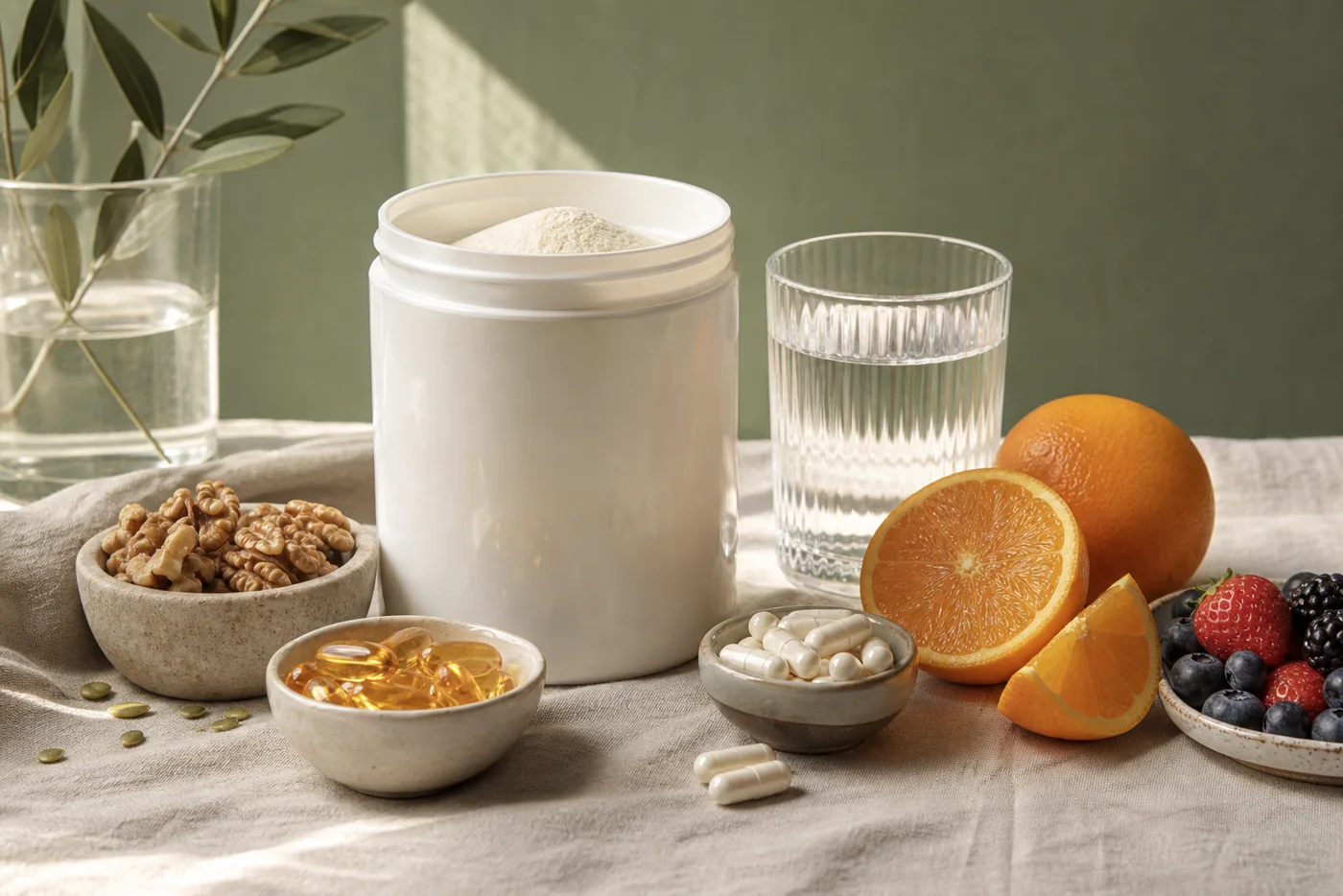
Collagen is the protein that gives skin its firmness and is part of the structure around hair and nails too, which is why it has become the headline act of the beauty-from-within world. The body makes its own, and production naturally slows with age.
Let us keep it balanced. Some people feel their skin looks a little plumper and more hydrated with regular collagen, and the early research is cautiously positive, but the effect is gradual and subtle, not dramatic. If you enjoy it, a scoop in coffee or a smoothie is a pleasant daily habit.
Food sources of the building blocks: bone broth, eggs, fish, lean meat, plus vitamin C to help your body make its own.
Biotin
Biotin is the name plastered across nearly every hair and nail product on the shelf. Here is the part the marketing skips: true deficiency is rare, because biotin is in so many everyday foods, and for people who are not low in it, extra biotin tends to do far less than the label suggests. A balanced diet usually has it covered. One practical note, high-dose biotin can skew certain blood tests, so tell your doctor if you take it.
Food sources: eggs, nuts, seeds, sweet potatoes, salmon and whole grains.
Omega-3 fatty acids
Omega-3s are the healthy fats that help keep skin supple and the scalp comfortable, and a happy scalp is the foundation of healthy-looking hair. They support the skin's barrier, the layer that holds in moisture, which is why diets rich in them are so often linked with skin that looks hydrated rather than dry and dull.
They become more worthwhile with age, as skin makes less of its own oil, and they are simple to top up.
Food sources: oily fish, walnuts, chia seeds, flaxseed and their oils.
Zinc
Zinc is a quiet, foundational mineral. Skin relies on it for normal healing and renewal, and the body needs it for the hair growth cycle, which is why a genuine shortfall can show up as more shedding than usual. Most people get enough from a varied diet, and this is one where more is not better, since high doses can unbalance other minerals.
Food sources: pumpkin seeds, chickpeas, lentils, nuts, whole grains, shellfish and lean meat.
Iron, with an important caution
Iron deserves a section of its own, and a careful one. Low iron is one of the more common reasons women notice extra hair shedding, so it matters here. But iron is not a supplement to take on a hunch.
Too much iron is genuinely harmful, and you cannot tell your levels by how you feel. So the rule is simple and firm: only supplement iron if a blood test shows you are low and your doctor recommends it. If your hair is shedding more than usual, that is a reason to get your levels checked, not a reason to start buying iron off the shelf.
Food sources: lean red meat, lentils, beans, tofu, spinach, and pair plant sources with vitamin C to absorb more.
The supporting cast: vitamin C and vitamin D
Two more worth a mention. Vitamin C helps the body make collagen and helps it absorb iron from food, so it quietly supports both skin and hair. Vitamin D plays a role in the hair follicle cycle and in skin renewal, and many people run low in cooler months. Since vitamin D levels are individual and easy to test, it is another one worth checking with your doctor rather than guessing.
Can supplements replace good food and good care?
No, and it helps to be clear-eyed about it. Whole foods deliver these nutrients alongside fibre, water and dozens of other compounds working together, in forms the body absorbs well. A capsule offers one nutrient in isolation. Supplements are there to fill a real gap, not to stand in for a varied plate.
And for hair and skin specifically, what you do on the outside still matters. Gentle hair care, not over-washing or over-heating, and a calm skincare routine work hand in hand with good nutrition. If your hair feels dry or brittle, the right oils for soft, shiny hair often help more directly than any pill.
When to see a professional
Sudden or heavy hair loss, bald patches, or shedding that comes with other symptoms can have causes worth investigating, from thyroid issues to hormonal changes to low iron, and these need a proper diagnosis rather than a supplement. If something feels off, a doctor can test and guide you. It is the most useful step you can take, and the one a bottle cannot replace.
Recommended supplements
Food first, always. But if you and your doctor decide a supplement makes sense, here is how to think about the main ones, by type rather than brand.
Collagen
A daily scoop of collagen powder blends easily into coffee, tea or a smoothie. Marine and bovine forms are both common; choose a clean, well-reviewed one, ideally taken alongside a little vitamin C.
Best for: mature skin · those who like an easy daily ritual
Browse collagen →Omega-3
Fish oil is the classic source; algae-based omega-3 is a good plant option for vegetarians and vegans. These oils are delicate, so pick a fresh, well-reviewed formula and store it properly.
Best for: dry-looking skin · a dry or flaky scalp · low fish intake
Browse omega-3 →Zinc
A modest daily zinc can help if your diet is short on its main sources. Keep the dose sensible rather than high, take it with food, and do not stack it with other strong mineral supplements without advice.
Best for: low-meat or low-seafood diets · congested-looking skin
Browse zinc →Biotin
Often sold for hair, skin and nails, biotin mainly helps those who are actually low in it, which is uncommon. A modest dose is fine if you like the idea, just remember to mention it before any blood tests.
Best for: very limited diets · realistic expectations
Browse biotin →Some links may use the Glow Rituals iHerb code FVQ4930. Iron is deliberately not listed here because it should only be taken if a blood test shows you need it. Talk to your doctor before starting any supplement, especially during pregnancy or breastfeeding, if you take medication, or have a health condition.
Frequently asked questions
What are the best supplements for hair and skin?
Collagen and omega-3 are the two most often linked to both, with zinc and vitamin C supporting the picture. None work like magic; they help most when they fill a genuine gap in your diet.
Does biotin really help hair grow?
Mostly only if you are actually deficient, which is uncommon. For everyone else, the benefit tends to be smaller than the marketing suggests, and a balanced diet usually covers your needs.
Can supplements stop hair loss?
Not on their own. Shedding has many causes, from low iron to thyroid or hormonal changes, and these need a proper diagnosis. A supplement only helps if a specific deficiency is the cause.
Should I take iron for hair shedding?
Only if a blood test shows you are low and your doctor recommends it. Too much iron is harmful, so this is one to confirm before supplementing, never to guess at.
How long until I see a difference?
Months, not days. Hair grows slowly and skin renews gradually, so consistency matters far more than any single product. Give any change a couple of months.
Do supplements replace skincare and haircare?
No, they work on different sides of the same goal. Supplements support from within; gentle skincare, haircare and sun protection care for hair and skin from the outside. You want both.
The takeaway
Healthy hair and skin rarely come from one clever supplement. They come from the steady basics: a varied, colourful diet, enough water, good sleep, gentle care, and topping up a nutrient only where you genuinely need it.
Use the list here as a calm guide rather than a shopping spree. Cover the essentials through food, add a supplement where it earns its place, check with your doctor when in doubt, and let time do the quiet rest.
Looking for more beauty-from-within ideas?
If you enjoy this approach, these digital books gather natural recipes, beauty drinks and simple rituals in one place, there whenever you feel like exploring.
INNER GLOW 101
Beauty drinks, smoothies, teas and simple daily glow ideas.
Download now →TIMELESS GLOW 101
Natural skincare recipes and routines for radiant-looking skin.
Download now →Related reading
Glow Rituals Beauty shares educational beauty and wellbeing ideas only, not medical or nutritional advice. Do not supplement iron without a blood test and medical guidance. Talk to a qualified professional before starting any supplement, if you are experiencing hair loss, are pregnant or breastfeeding, take medication, have a health condition, or have any allergy or medical question.