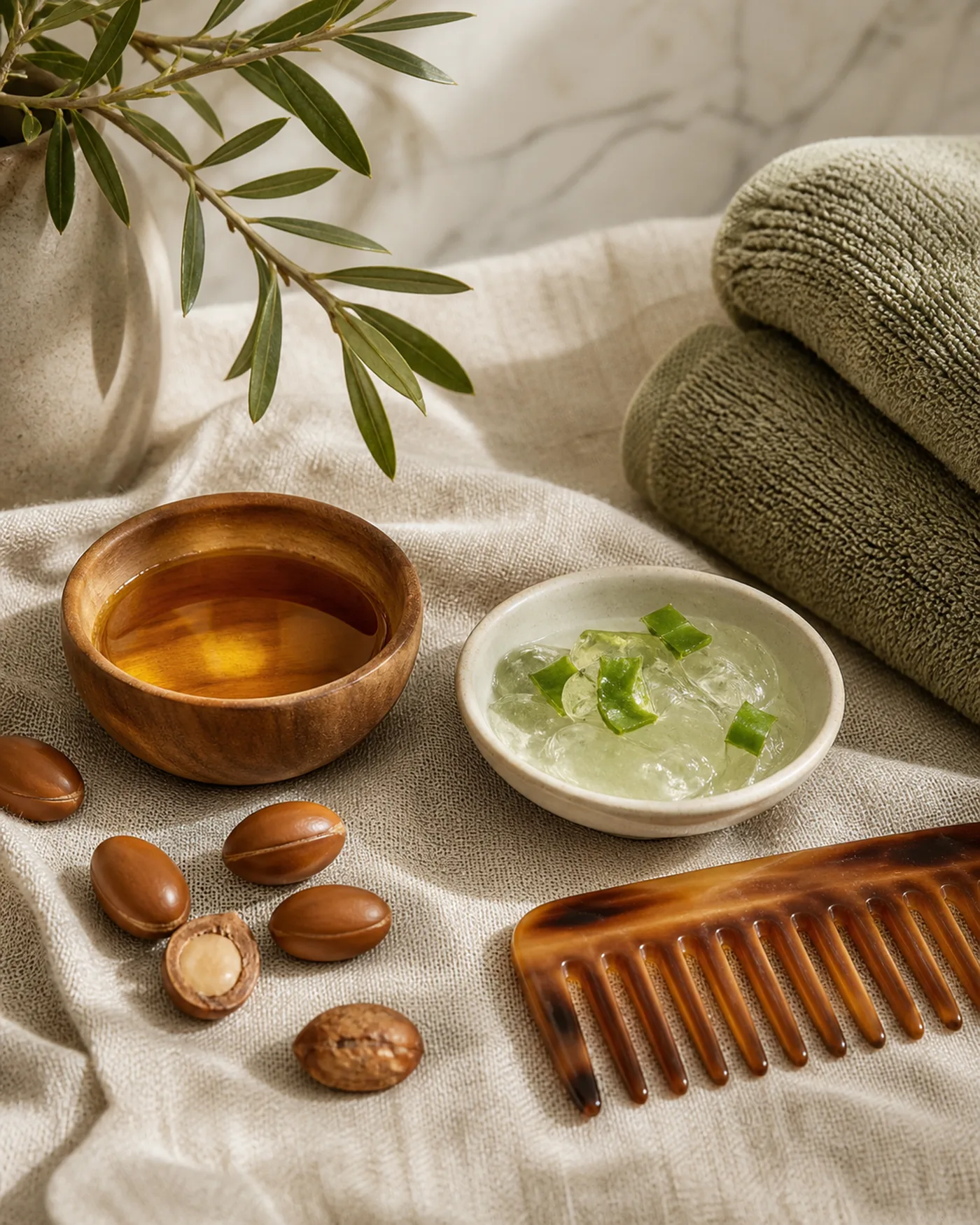
After 40, hair often feels different even when the products have not changed. Color, heat styling, hormones, sun exposure, hard water and repeated washing can make the lengths feel rough sooner. The answer is rarely a very heavy oil or a complicated ten-step routine. Most dry hair needs a softer wash day, enough slip during detangling, and small conditioning habits repeated well.
This guide is written for hair that feels dry, brittle, frizzy, dull or hard to smooth. It is not a treatment for sudden shedding or scalp disease. If hair loss is heavy, patchy, painful or new, check with a qualified professional.
Start with the wash day, not the oil shelf
Dry hair often becomes worse when every wash removes too much oil from the lengths. Focus shampoo on the scalp, let the foam run through the ends, and avoid scrubbing the oldest hair. If the ends feel very rough, apply a little conditioner to the lengths before shampooing the scalp. This simple buffer can make detangling easier.
- Use lukewarm water instead of hot water.
- Choose a gentle shampoo rhythm that matches your scalp, not a trend.
- Condition from mid-lengths to ends every wash.
- Detangle with conditioner in the hair, using fingers or a wide-tooth comb.
Choose oils by texture
Oils can support shine and softness, but too much oil can leave mature hair flat or stringy. The texture matters. Jojoba oil is light and easy to use on ends. Argan oil gives a smoother, polished feel. Coconut oil can feel too heavy for some hair types and may make coarse or color-treated hair feel stiff, so use it carefully if you already know your hair likes it.
Use masks as a comfort step, not a rescue mission
A weekly mask can make dry hair feel easier to comb, especially when it combines water-rich ingredients with a little oil. Keep homemade masks simple and rinse thoroughly. Fresh foods such as yogurt or honey belong in the kitchen-and-rinse category; shelf-stable oils and aloe gel can be easier to keep consistent.
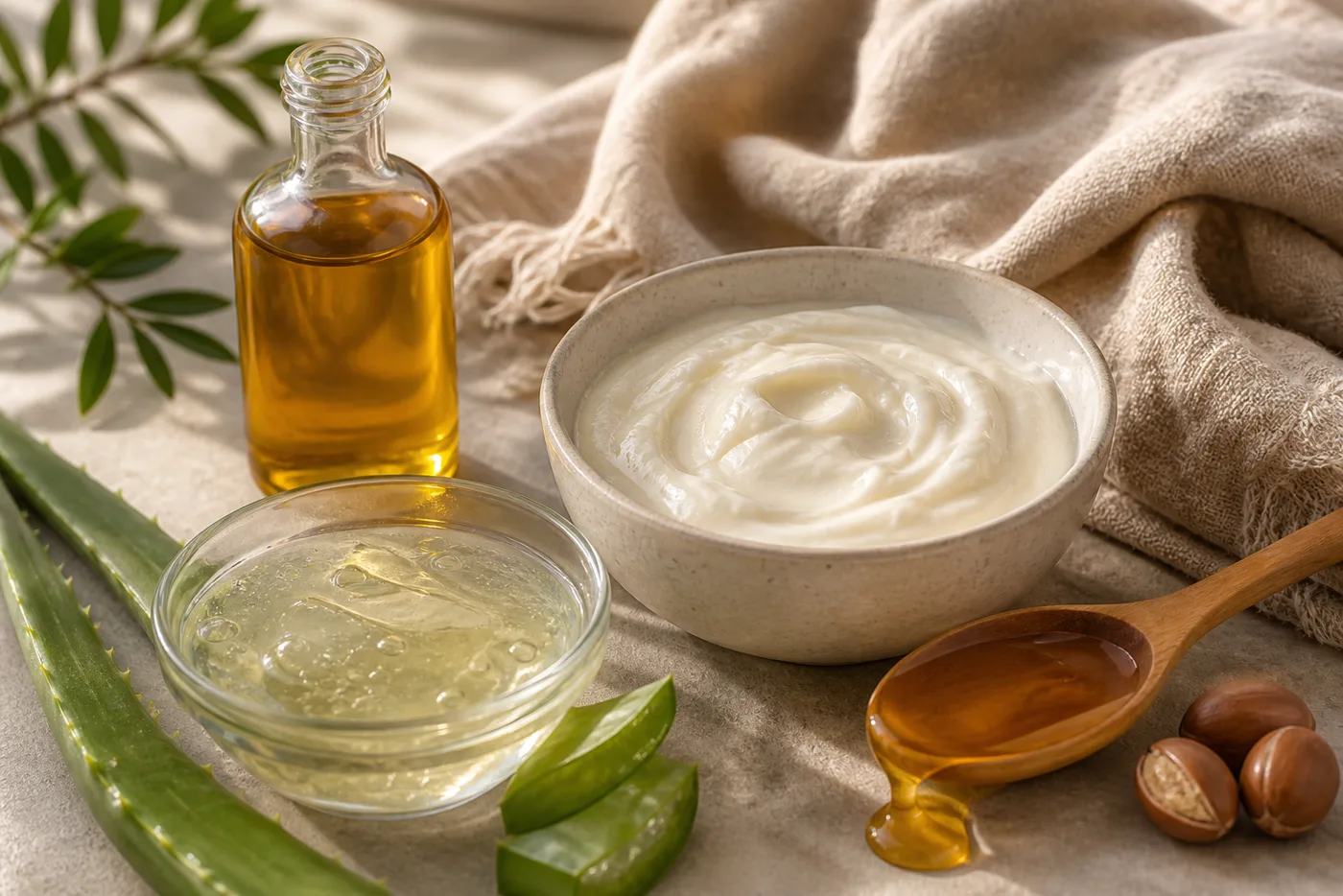
A simple dry-hair mask idea
Mix 1 tablespoon aloe vera gel, 1 teaspoon honey, and ½ teaspoon argan or jojoba oil. Apply to damp mid-lengths and ends only. Leave for 10–15 minutes, then shampoo or rinse very well depending on your hair type. Avoid the scalp if it becomes easily itchy or oily.
Common mistakes that make dry hair feel worse
- Sleeping with wet, loose hair. Friction can make the ends rougher.
- Using oil instead of water-based conditioning. Oil seals better when hair already has enough moisture and slip.
- Brushing dry curls or waves aggressively. Detangle when conditioned and damp.
- Leaving DIY masks too long. More time does not always mean softer hair.
- Skipping trims forever. Very split ends cannot be repaired by oil.
Quick Checklist
- Shampoo mainly the scalp.
- Condition the lengths every wash.
- Use 1–2 drops of light oil on ends only.
- Try a simple 10–15 minute mask once weekly.
- Protect hair from heat, tight elastics and rough towels.
Ingredients Mentioned In This Guide
Product-type search links only; availability can change. Use code FVQ4930 where supported.
Some links may use the Glow Rituals iHerb code FVQ4930.
FAQ
How often should dry hair be washed?
There is no universal schedule. Wash when the scalp needs it, and protect the lengths with conditioner and gentle detangling.
Can oil repair split ends?
No. Oil can make ends look smoother temporarily, but split ends need trimming. Use oil to reduce friction, not as a repair promise.
Should mature hair avoid protein?
Not always. Some hair likes occasional protein, while other hair feels stiff. If a protein product makes hair rough, alternate with richer conditioning.
Is this safe for color-treated hair?
Keep DIY masks mild and avoid lemon, baking soda or harsh clarifying recipes. If color is fresh or expensive, test on a small hidden section first.
Related Reading
Want a softer weekly ritual?
The Glow Rituals guides collect gentle recipes and routines for mature-looking skin, hair and body care in one calm place.
Browse Glow Rituals ebooksNew dry-end ritual
New botanical hair rinse
New dry-ends recipe
This article is educational beauty content only. It does not diagnose or treat hair loss, scalp conditions or medical concerns. Patch test topical ingredients and stop use if the scalp or skin feels uncomfortable.