Vitamin E has a glossy reputation in beauty. It appears on supplement bottles, facial oils and skin-support lists, which can make it sound like a single answer for mature skin. The calmer truth is better: vitamin E is an important antioxidant nutrient, but skin after 40 still depends on a wider rhythm — enough protein, colorful foods, daily SPF, gentle skincare, sleep and realistic consistency.
This guide keeps vitamin E practical. It focuses on foods first, when supplements deserve caution, and how to use oils without turning a simple routine into a heavy or irritating one.
What vitamin E does in the body
Vitamin E is a fat-soluble antioxidant nutrient. In plain language, it helps protect cells from oxidative stress as part of normal body function. That does not mean a capsule can erase lines or reverse sun damage. It means vitamin E belongs in the overall nutrition picture that supports healthy-looking skin, hair and nails over time.
Because it is fat-soluble, more is not automatically better. Very high supplemental amounts may not suit everyone and can interact with some medications. Food sources are usually the gentler starting point.
Best food sources for a beauty routine
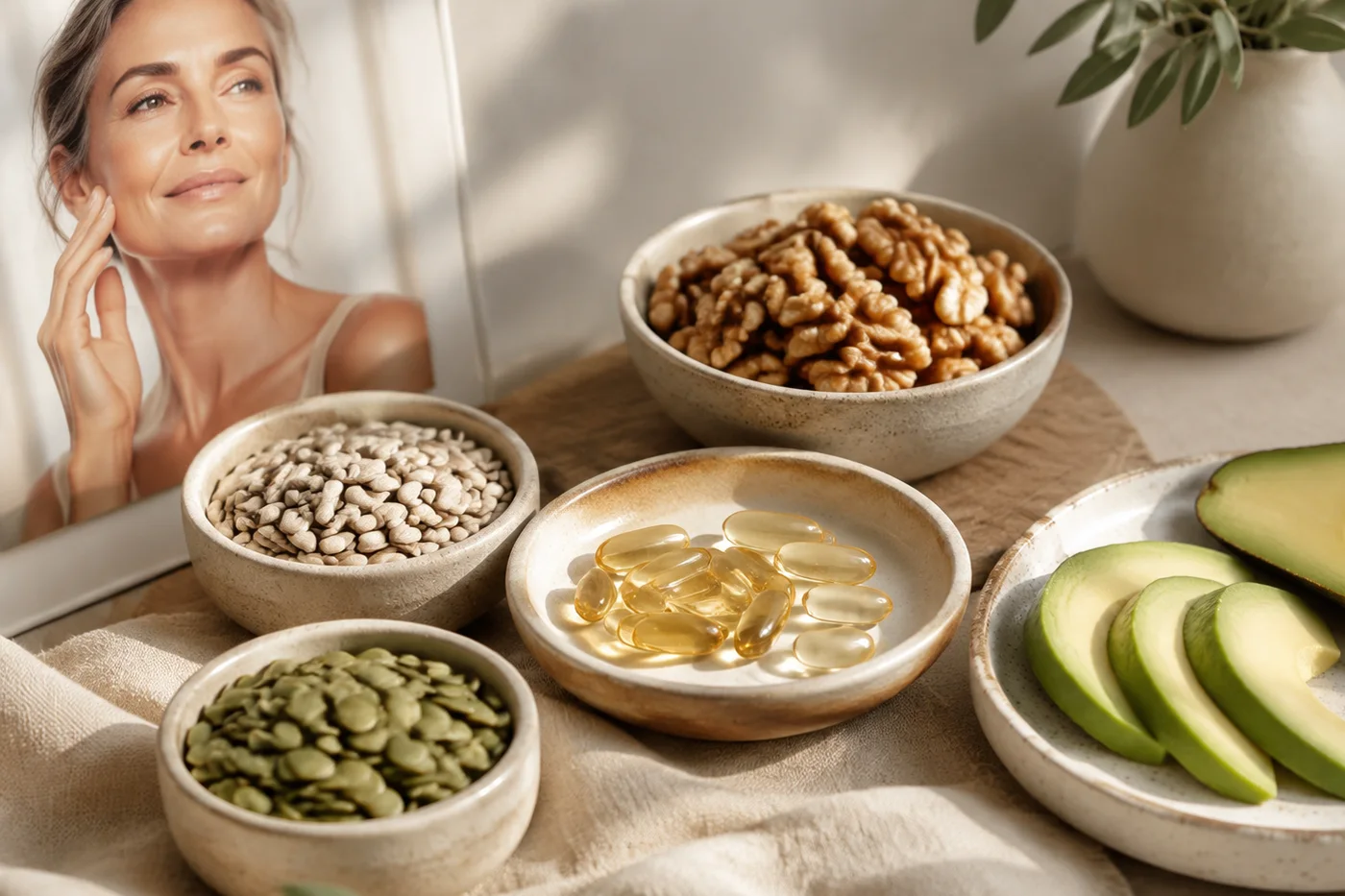
Vitamin E appears naturally in nuts, seeds, plant oils and some green foods. A beauty plate does not need to be complicated. Try sunflower seeds over yogurt, almonds with fruit, avocado on toast, olive oil in a salad, or a handful of walnuts with a protein-rich snack.
- Sunflower seeds: easy to sprinkle over oats, salads or smoothie bowls.
- Almonds: a practical snack with healthy fats.
- Avocado: useful in meals, not a miracle skin food.
- Olive or avocado oil: helpful for meals when used in normal amounts.
- Spinach and greens: lower in vitamin E than seeds, but useful as part of the overall plate.
Why food-first is safer
Food brings vitamin E together with fiber, minerals, protein, fats and other antioxidants. Supplements isolate one nutrient, which can be useful in certain situations but is not always necessary. If your diet already includes nuts, seeds and plant oils, a separate vitamin E capsule may add little benefit.
Food-first also keeps expectations grounded. Skin that looks fresh usually reflects many small habits, not one nutrient taken in high amounts.
Vitamin E supplements: when to be careful
Vitamin E supplements can be inappropriate with blood thinners, upcoming surgery, bleeding disorders, certain heart conditions or a complex medication routine. Pregnancy, breastfeeding and chronic health conditions also deserve professional guidance. This is especially true for high-dose capsules.
If you are considering a supplement, bring the label to a pharmacist or clinician. Ask whether it fits your medications and whether you actually need it. A supplement should fill a clear gap, not simply follow a beauty trend.
Topical vitamin E oils and mature skin
Vitamin E often appears in face oils, balms and body products. Some skin loves it; some skin finds it heavy or pore-clogging. For mature skin, the safest test is small and slow. Try a tiny amount on a dry body area or mix one drop into body lotion before using it on the face.
If your skin is sensitive, acne-prone, rosacea-prone or recently exfoliated, avoid heavy oil experiments. A simple moisturizer with ceramides or glycerin may be more comfortable than a pure vitamin E oil.
A simple daily pattern
- Include one vitamin E-rich food most days, such as seeds, nuts or avocado.
- Pair fats with protein and colorful plants rather than eating them alone.
- Use SPF every morning; antioxidants do not replace sun protection.
- Keep topical oils light and patch test first.
- Ask before using high-dose supplements, especially with medication.
What vitamin E cannot do
Vitamin E cannot erase wrinkles, treat skin disease, replace retinoids or sunscreen, stop hair shedding, or fix a diet that lacks protein and minerals. It may support the larger picture, but it is not a beauty shortcut.
This realistic view is not disappointing. It makes vitamin E easier to use well: a handful of seeds, a balanced meal, a gentle moisturizer and a routine that respects your skin barrier.
How to build a vitamin E-rich day
Start gently at breakfast. Plain yogurt with oats, berries and a teaspoon of sunflower seeds gives the routine texture without turning it into a supplement project. At lunch, add olive oil to a salad or avocado to eggs, beans or fish. At dinner, use greens, lentils, salmon, tofu or chicken with a small handful of nuts if they suit your digestion.
The beauty value is the pattern, not perfection. A few vitamin E-rich foods across the week are more sustainable than one dramatic “skin food” day followed by a restrictive plan. Women after 40 often do better with steady nourishment that supports energy, hair routines and skin comfort together.
How vitamin E fits with other nutrients
Vitamin E works best as part of a team. Vitamin C-rich foods support collagen formation in normal body function. Zinc and protein matter for hair and skin structure. Omega-3-rich foods can support overall wellness. Magnesium, hydration and sleep do not replace skincare, but they influence how consistent a routine feels.
This is why Glow Rituals keeps the message food-first and simple. If you already have a balanced plate, you may not need another capsule. If your meals are rushed and low in protein, the first upgrade is usually breakfast, lunch and water — not a high-dose antioxidant.
Signs your routine is becoming too complicated
If you are adding vitamin E oil, vitamin C serum, exfoliating acids, retinoids and several supplements in the same week, slow down. Skin cannot tell you which step helped when everything changes at once. Mature skin often looks better with fewer experiments and more consistency.
Choose one topical change or one nutrition change at a time. Give it two to three weeks, unless irritation or side effects appear. Keep notes on dryness, tightness, breakouts, sleep and meals. This calm tracking prevents the cycle of buying more products because the last change was impossible to judge.
Quick checklist
- Start with food sources before capsules.
- Use high-dose supplements only with guidance.
- Patch test topical vitamin E oils.
- Do not rely on antioxidants instead of SPF.
- Keep claims realistic and watch how your skin actually responds.
Ingredients Mentioned In This Guide
Optional product-type/search shortcuts only. Fresh foods are grocery items. Links may use iHerb code FVQ4930.
FAQ
Is vitamin E good for skin after 40?
It can support overall antioxidant nutrition, especially from foods, but it is not a direct wrinkle treatment. Skin still needs SPF, moisturizer, protein and gentle consistency.
Should I take a vitamin E supplement?
Not automatically. Ask a qualified professional if you use medications, have health conditions, are pregnant or breastfeeding, or are considering high doses.
Can I put vitamin E oil on my face?
Some people tolerate it, but it can feel heavy. Patch test first and avoid using it on irritated, acne-prone or freshly exfoliated skin.
What foods are easiest to add?
Sunflower seeds, almonds, avocado, olive oil and greens are practical options. Use normal food portions rather than chasing large amounts.
Related Reading
Keep the ritual simple
For a calmer beauty routine, choose a few repeatable foods, protect your skin from the sun and keep supplements thoughtful rather than impulsive.
Educational beauty and wellness content only. This article is not medical advice. Ask a qualified professional before using vitamin E supplements if pregnant, breastfeeding, managing health conditions, preparing for surgery or taking medication, especially blood thinners.