
Dry mature skin can feel confusing at cleansing time. You want to remove sunscreen, makeup, sweat and the day’s residue, but you do not want that tight, squeaky feeling afterward. If your face feels comfortable before cleansing and uncomfortable afterward, the routine may be doing too much.
A gentle cleansing routine after 40 is less about chasing a special cleanser and more about the whole rhythm: water temperature, texture, pressure, timing and what you apply immediately after. Small changes can make skin feel calmer before moisturizer even starts working.
Why cleansing can make mature skin feel tight
Skin can feel drier after 40 because the surface may lose comfort more easily. Strong foaming cleansers, hot water, repeated washing and rough towels can all make that feeling worse. The cleanser may not be the only problem; often it is the combination of product plus technique.
After cleansing, your skin should feel clean but still flexible. If it feels like it needs moisturizer immediately to “rescue” it, review these details:
- the cleanser texture;
- how long you massage;
- whether the water is hot or lukewarm;
- how much pressure you use with cloths or cotton pads;
- whether you moisturize while skin is still slightly damp.
For a broader comfort routine, see Skincare for Dry & Sensitive Mature Skin.
Morning vs night cleansing after 40
Many dry-skin routines become easier when morning and night are treated differently. In the morning, you may not need a full cleanse if your skin is dry and you did not apply heavy products overnight. A lukewarm rinse, soft damp cloth, or very small amount of creamy cleanser may be enough.
At night, cleansing matters more because sunscreen, makeup and city residue need to come off. The key is patience. Let the cleanser loosen product before you wipe. If you wear makeup, remove it in stages instead of scrubbing everything away at once.
- Start with dry or damp hands according to your cleanser directions.
- Massage gently for 20–30 seconds, not several minutes.
- Use lukewarm water, never hot water.
- Pat dry with a soft towel.
- Apply moisturizer while skin is slightly damp.
Best cleanser textures for dry mature skin
Texture matters. Dry mature skin often prefers cleansers that feel creamy, milky, balm-like or lotion-like. These textures can remove daily residue without leaving the skin feeling bare. Very strong foams can work for some people, but they are often too much when skin already feels tight.
Look for words such as gentle, creamy, hydrating, fragrance-free, sensitive skin, milk cleanser or cleansing balm. If a product leaves your face squeaky clean, shiny-tight or red, that “clean” feeling may actually be too harsh for daily use.
What usually makes things worse
The most common cleansing mistakes are ordinary habits, not dramatic errors. They are easy to miss because they feel like being thorough.
- Using hot water. Warm steam can feel relaxing, but hot water often leaves dry skin tighter.
- Rubbing with towels. A towel should press and pat, not polish the face.
- Double cleansing every morning. Dry mature skin may not need that much cleansing twice a day.
- Leaving cleanser on too long. A longer massage is not always gentler.
- Using grainy scrubs near dry patches. This can make flakes look worse and skin feel more reactive.
- Waiting too long before moisturizer. Moisturizer usually feels better when applied while skin is still slightly damp.
How to remove sunscreen and makeup gently
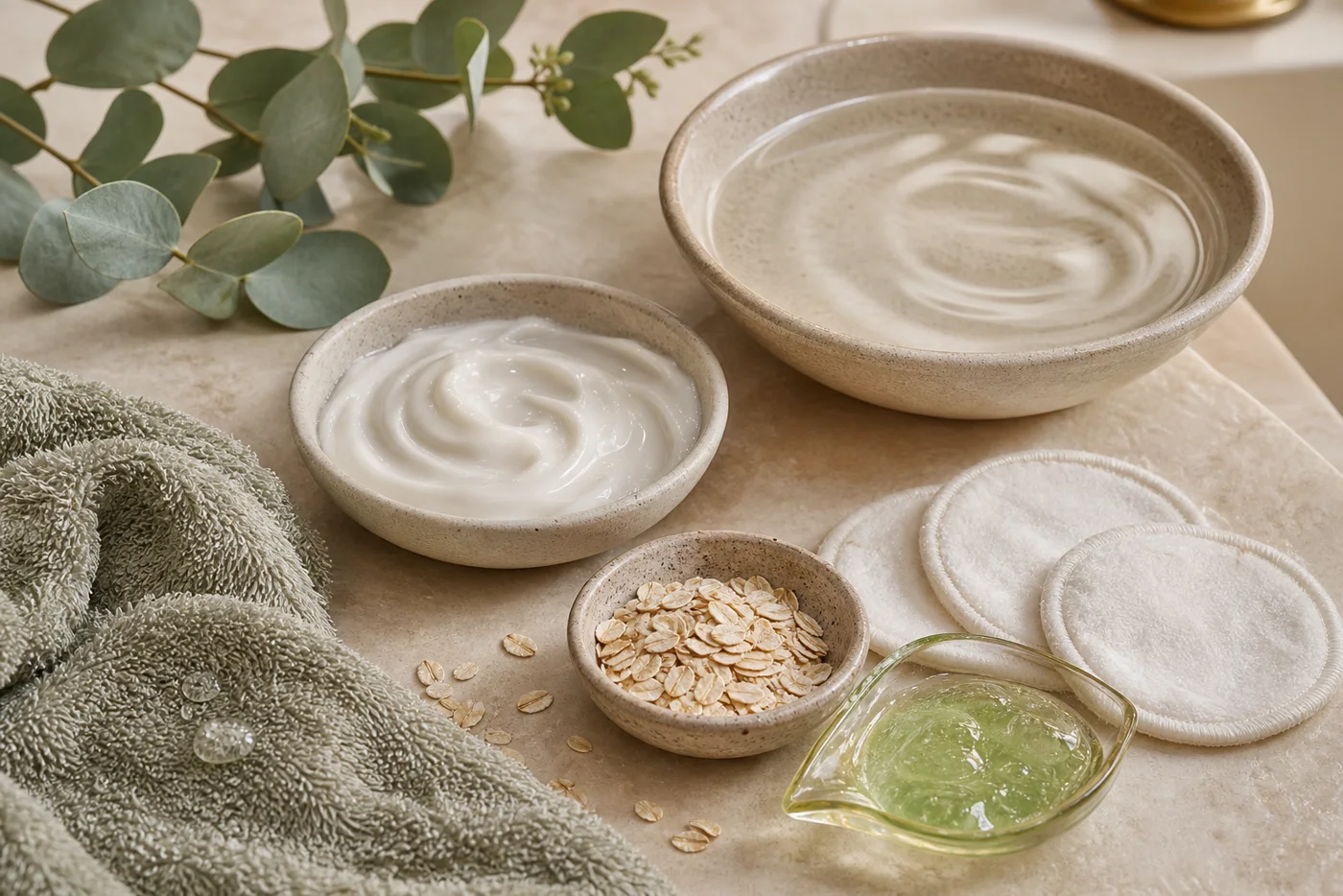
Sunscreen and makeup need removal, but dry skin does not need punishment. If you wear a long-wear product, start by loosening it. Press cleanser or a damp soft pad over the area for a few seconds before wiping. Around the eyes, be especially patient and keep product out of the lash line.
A balm or milky cleanser can be useful at night. If you prefer a second cleanse, make the second step extremely gentle and short. Your skin should not feel cleaner after the second cleanse only because it feels stripped.
What to do immediately after cleansing
The minute after cleansing is important. Do not leave dry skin bare while you brush teeth, answer messages or make tea. Pat the face lightly, then apply your hydrating product or moisturizer before the surface feels completely dry.
If your skin is very dry, use a simple sequence: gentle cleanse, hydrating serum or mist if tolerated, moisturizer, then a richer cream only on dry patches at night. The guide on Best Natural Moisturizer Ingredients for Mature Skin explains how humectants, emollients and occlusives work together.
A simple routine for different days
Your cleansing routine does not have to look identical every day. Dry mature skin often does better with a flexible rhythm than a strict rule. On a quiet morning, a rinse and moisturizer may be enough. After sunscreen, makeup, heat or a long day outside, a fuller evening cleanse makes more sense.
Use this as a starting point:
- Low-product morning: lukewarm rinse, pat dry, moisturizer, sunscreen.
- Dry winter morning: skip cleanser unless needed; use a damp cloth only around areas that feel oily.
- Normal evening: one creamy cleanser, gentle massage, rinse, moisturizer.
- Makeup or heavy sunscreen evening: balm or milk cleanser first, then a very short second cleanse only if skin still feels coated.
The routine should leave your face calm enough that moisturizer feels like support, not emergency repair. If you need several layers just to stop tightness, the cleanse may still be too strong.
How to know a cleanser is not right for you
A cleanser does not need to burn to be wrong for your skin. Sometimes the signs are quieter: cheeks feel tight by the time you reach for moisturizer, fine flakes look more obvious, or your face feels shiny but uncomfortable. Those are useful clues.
Consider changing the cleanser or technique if you notice:
- tightness that appears immediately after rinsing;
- stinging when you apply a simple moisturizer afterward;
- redness that lasts more than a few minutes;
- dry patches that look worse after washing;
- a need to scrub because the cleanser does not loosen makeup well.
When in doubt, make the routine simpler for one week: fewer products, less rubbing, lukewarm water and a gentle moisturizer right after cleansing. If skin still feels irritated, it is worth asking a professional instead of adding more active ingredients.
Do not judge the routine only by how skin feels during cleansing. Judge it ten minutes later too. Comfortable skin should not feel hot, shiny-tight or desperate for a heavy cream. That delayed check is often the easiest way to tell whether the cleanse is truly gentle enough for daily use, especially in colder seasons and dry climates.
Quick checklist
- Choose creamy, milky, balm or fragrance-free gentle cleanser textures.
- Use lukewarm water instead of hot water.
- Massage for 20–30 seconds with light pressure.
- Pat dry; do not rub with a towel.
- Moisturize while skin is slightly damp.
- Keep morning cleansing lighter than night if your skin feels dry.
Ingredients Mentioned In This Guide
Use these as product-type search ideas for gentle cleansing support. Patch test first and avoid fragrance if your skin feels reactive.
Some links may use the Glow Rituals iHerb code FVQ4930. Product links are search-style recommendations, not guaranteed individual product endorsements.
Related Reading
Want the routine organized?
Timeless Glow gathers gentle mature-skin rituals into one easy digital guide.
View the ebook →Browse Glow Rituals guides
See the ebook bundle and ingredient shortcuts in the shop.
Open shop →Glow Rituals Beauty shares educational beauty ideas only. Patch test new skincare before using it widely, especially if your skin is sensitive or reactive. This guide does not diagnose or treat skin conditions. If dryness, burning, rash or irritation persists, ask a qualified professional for advice.