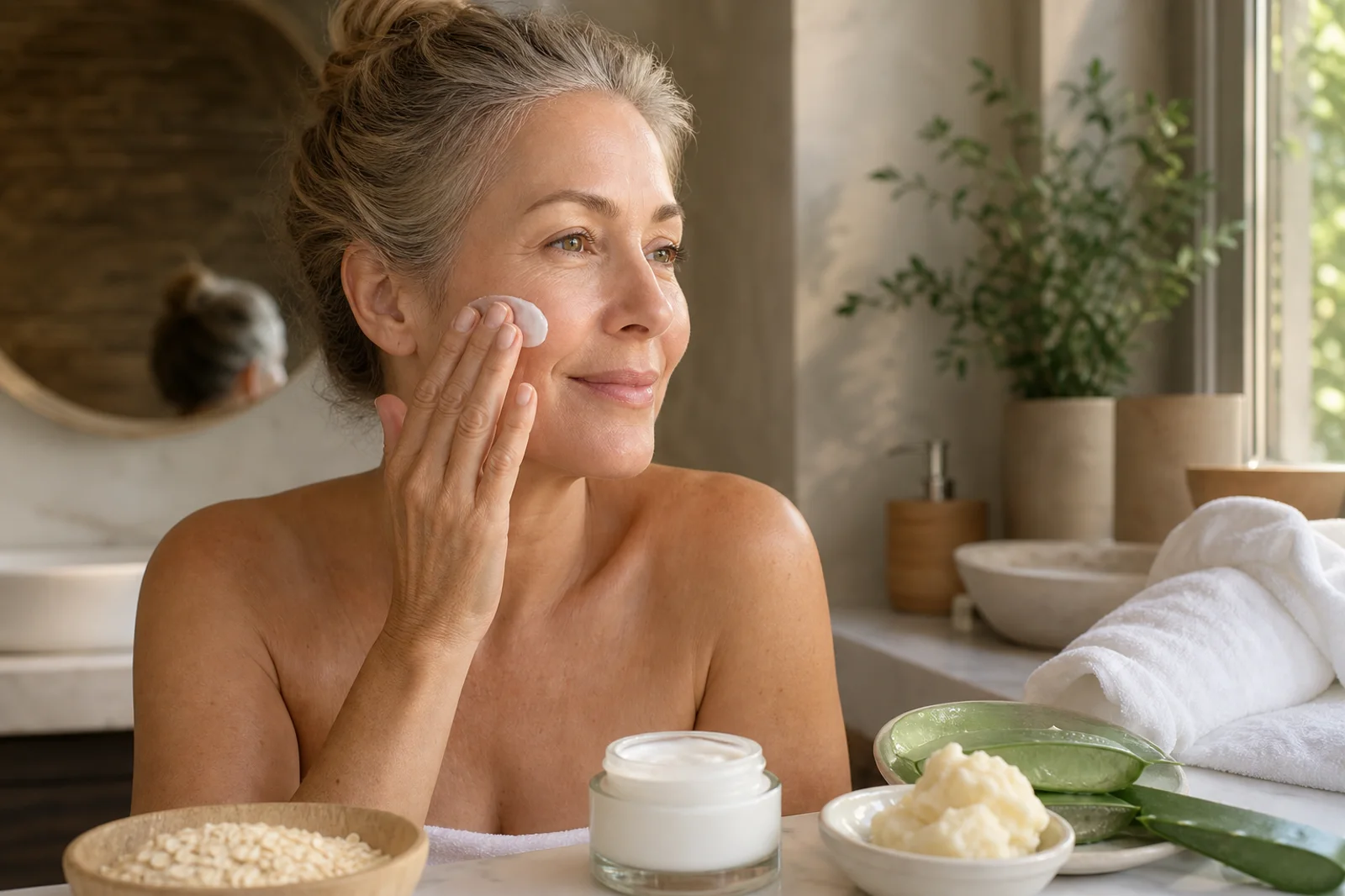
Mature skin can feel dry for many reasons: weather, cleansing habits, hormones, sun exposure, indoor heating, or simply a routine that no longer gives enough comfort. The answer is not always the richest cream on the shelf. Often, the best moisturizer is the one that balances three ingredient families well.
This guide keeps the idea simple. Humectants help skin feel hydrated. Emollients help the surface feel softer. Occlusives help reduce the feeling of moisture loss. When you understand those roles, choosing a moisturizer after 40 becomes calmer and more practical.
Why mature skin often needs a smarter moisturizer strategy
After 40, skin may feel comfortable in the morning but tight by afternoon. It may look dull after cleansing, or certain creams may sit on top without making the skin feel truly comfortable. That does not mean your skin is “bad.” It usually means the routine needs better support.
A smarter moisturizer strategy starts with noticing what your skin is asking for:
- Tight after cleansing: the routine may need gentler cleansing and more humectants.
- Rough or flaky texture: emollients can help the surface feel smoother.
- Dry again quickly: an occlusive or richer night cream may help seal comfort.
- Easily reactive: fragrance-free, simple formulas are usually safer.
If your skin is also sensitive, pair this guide with Skincare for Dry & Sensitive Mature Skin.
The three moisturizer ingredient families
Moisturizers can sound complicated because labels are full of ingredient names. Instead of trying to memorize every name, group them by job.
- Humectants help attract water and support a hydrated feel.
- Emollients soften the skin surface and make texture feel smoother.
- Occlusives help reduce moisture loss and add comfort when skin feels dry.
Many good creams contain all three. Lightweight lotions may focus more on humectants. Rich night creams may contain more emollients and occlusives. Neither is automatically better. The right choice depends on how your skin feels.
Best humectants for comfortable hydration after 40
Humectants are often helpful when mature skin feels dehydrated rather than just dry. They work best when followed by a moisturizer that helps keep that comfort in place.
- Glycerin is a classic hydration-support ingredient that appears in many gentle creams.
- Aloe vera can feel fresh and soothing in simple formulas. Read more on the aloe vera ingredient page.
- Hyaluronic acid can make skin feel plumper and more hydrated, especially when layered under moisturizer.
- Oat-based ingredients can support comfort for dry-feeling skin. See the oats ingredient guide.
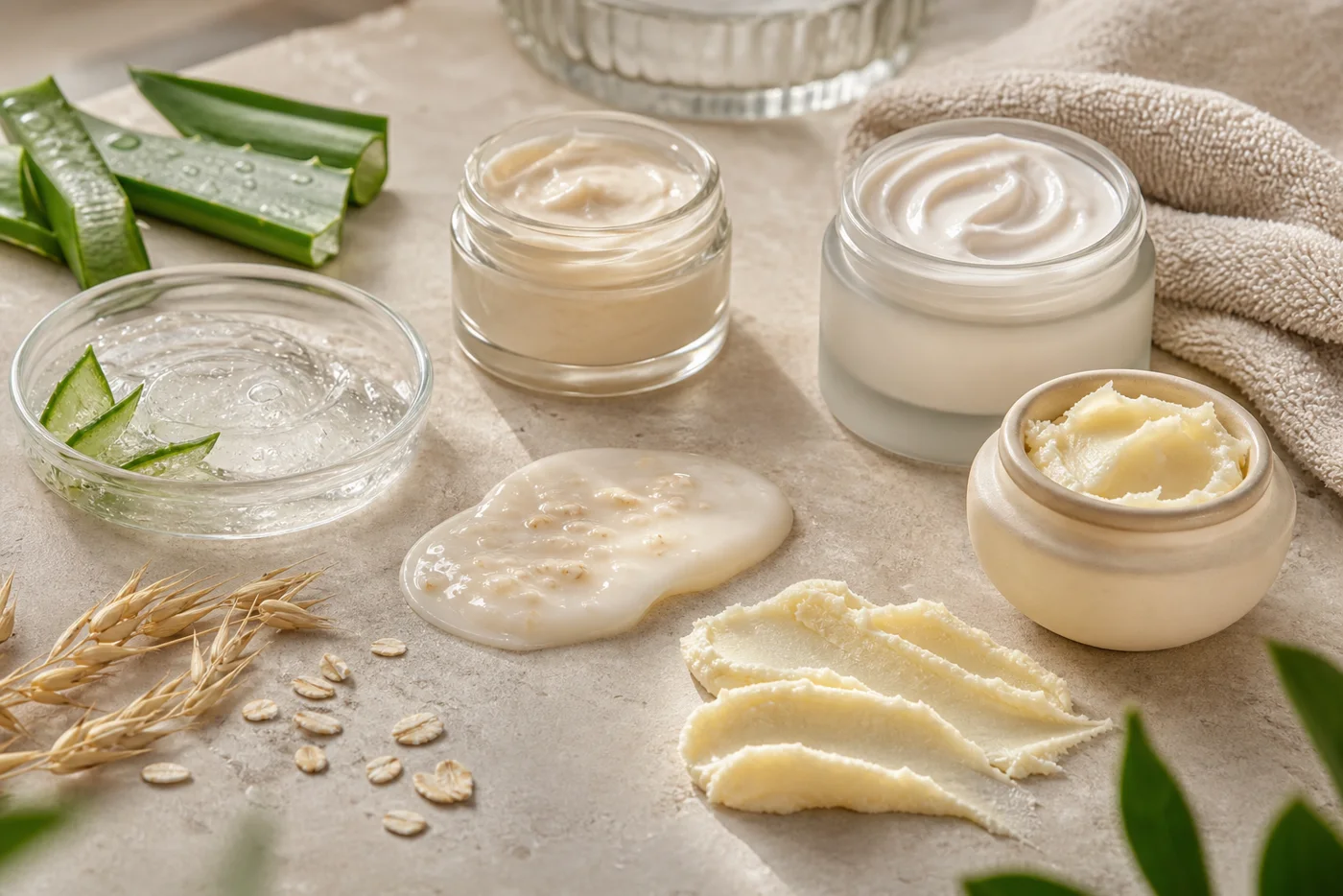
Best emollients for softness and smoother-feeling texture
Emollients are the ingredients that make skin feel more flexible and comfortable. They are useful when the surface feels rough, dry or less smooth than it used to.
Look for gentle plant oils, fatty acids, squalane, shea butter or similar softening ingredients. If you enjoy oils, use only a few drops and apply them over moisturizer or only on dry patches. More oil is not always more comfort.
For very dry skin, shea butter can be a helpful ingredient to understand, but it may feel too rich for some faces. Patch test first and use a lighter hand around areas that clog easily.
Best occlusives for dry or tight-feeling skin
Occlusives help create a soft protective layer. They are especially useful at night, in cold weather, or when skin feels dry again soon after moisturizing.
- Use richer creams at night if daytime creams feel too heavy.
- Seal only the driest patches instead of covering the whole face with a heavy balm.
- Avoid placing thick occlusive products too close to the eyes if they migrate or sting.
- Keep the morning routine lighter if you wear sunscreen and makeup.
The Moisturizers section has more routine ideas and product-pick shortcuts.
How to layer moisturizer ingredients simply
A simple routine is enough for most days. In the morning, cleanse gently or rinse, apply a hydrating layer if you use one, then moisturizer and sunscreen. At night, cleanse patiently, apply moisturizer while skin is slightly damp, and add a richer layer only where needed.
- Start with damp, freshly cleansed skin.
- Apply a humectant serum or a lightweight hydrating product if your skin likes it.
- Follow with moisturizer.
- Use a richer cream or a tiny amount of oil only on dry patches at night.
- Pause anything that stings or makes skin feel hot, itchy or bumpy.
Quick checklist
- Choose fragrance-free if your skin feels reactive.
- Look for humectants plus emollients, not only one trendy ingredient.
- Use richer products at night instead of overloading the morning routine.
- Patch test new creams before using them on the whole face.
- Pair moisturizer with daily SPF when your skin tolerates it.
Ingredients Mentioned In This Guide
Use these as product-type search ideas, not miracle promises. Choose gentle formulas and patch test first.
Some links may use the Glow Rituals iHerb code FVQ4930. Product links are search-style recommendations, not guaranteed individual product endorsements.
Related Reading
Want the routines organized?
Timeless Glow gathers gentle mature-skin rituals into one easy digital guide.
View the ebook →Browse Glow Rituals guides
See the current ebook bundle and ingredient shortcuts in the shop.
Open shop →Related Reading
Glow Rituals Beauty shares educational beauty ideas only. Patch test new skincare before using it widely, especially if your skin is sensitive or reactive. This guide does not diagnose or treat skin conditions. If dryness, irritation, burning, swelling or rash persists, ask a qualified professional for advice.