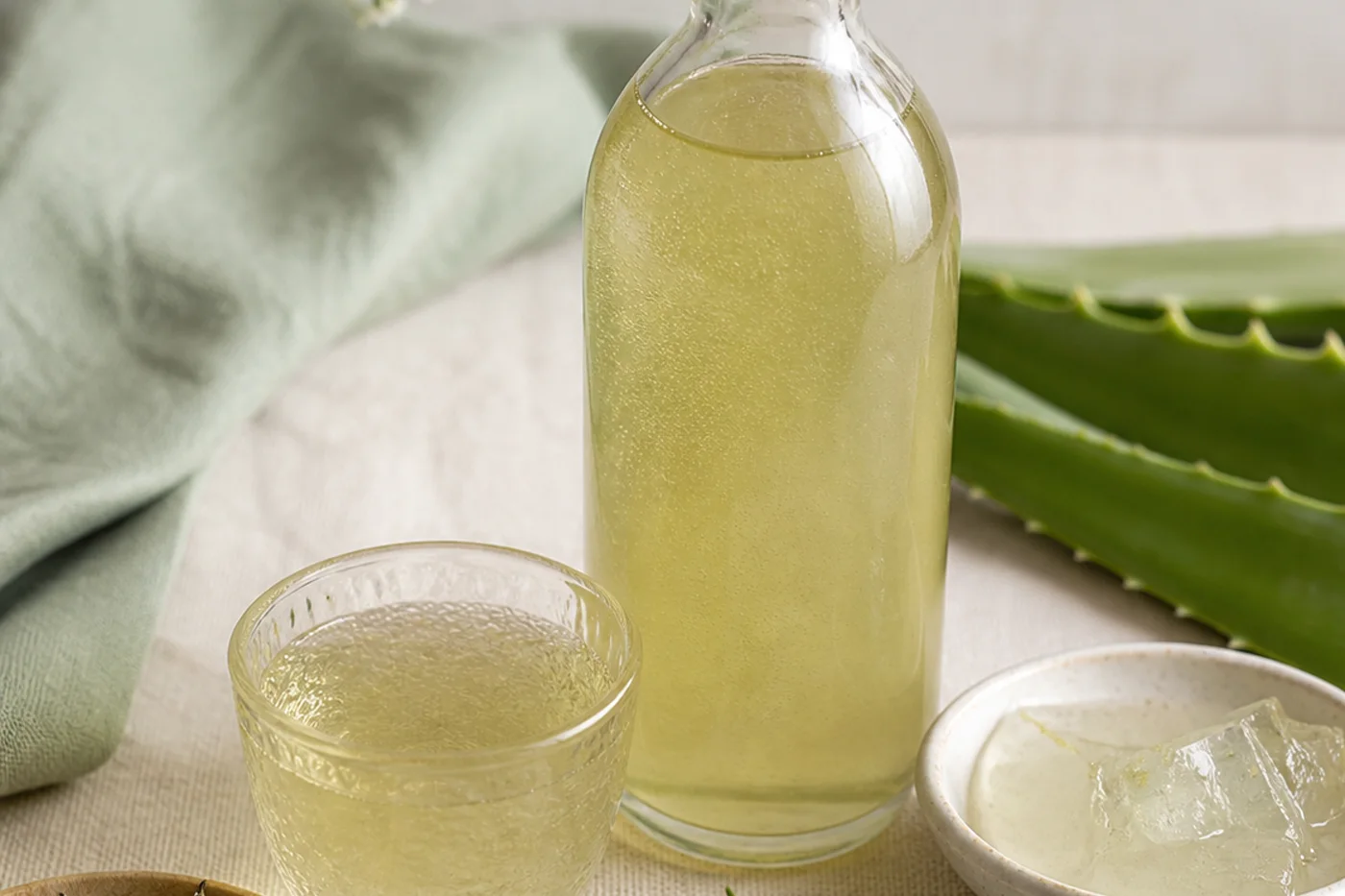
Best for: a small fresh batch with exact quantities, short timing and gentle safety boundaries.
Why this rinse is light
White tea makes a soft, watery base and aloe gives the rinse a little slip without making hair feel coated. It is a cosmetic shine-and-softness ritual for the lengths, not a hair-growth treatment or scalp medicine.
Recipe ingredients
- 1/2 cup strong white tea, cooled and strained
- 1/2 cup cool water
- 1 teaspoon plain aloe vera gel
- Optional: 1 teaspoon rose water if tolerated
- Optional: 2 drops jojoba oil for very dry ends only
How to prepare it
- Steep white tea for 5 minutes, then cool completely.
- Whisk aloe vera gel into the tea until the liquid looks mostly smooth.
- Add cool water and rose water if using.
- Pour into a clean applicator bottle or cup.
How to use it
- After shampooing, pour through mid-lengths and ends.
- Comb gently with a wide-tooth comb.
- Leave for 2–3 minutes, then rinse lightly or leave a small amount on the ends if your hair tolerates it.
- Use once weekly and discard leftovers the same day.
Common mistakes
- Using hot tea on the scalp.
- Adding too much oil and making fine hair stringy.
- Saving homemade rinses for days.
- Using it on an irritated scalp instead of keeping the routine simple.
Quick checklist
- Cool completely before use.
- Patch test near the hairline.
- Focus on lengths and ends.
- Discard leftovers after one use.
Ingredients Used In This Recipe
- 1/2 cup strong white tea, cooled and strained
- 1/2 cup cool water
- 1 teaspoon plain aloe vera gel
- Optional: 1 teaspoon rose water if tolerated
- Optional: 2 drops jojoba oil for very dry ends only
Fresh foods are grocery ingredients; shelf-stable basics and tools may use optional iHerb search links.
Related Reading
RelatedNormal Hair recipesMore recipes in this section.RelatedHair CareBrowse the main section.RelatedRelated Glow Rituals ingredientA relevant existing ingredient page.RelatedNatural Care for Gray and Aging Hair After 40Today’s hair care guide.
Educational beauty content only. Patch test topical recipes first; adapt food recipes for allergies, pregnancy, medication, diabetes or health conditions. Do not use topical recipes on broken, irritated, sunburned or freshly shaved skin/scalp.