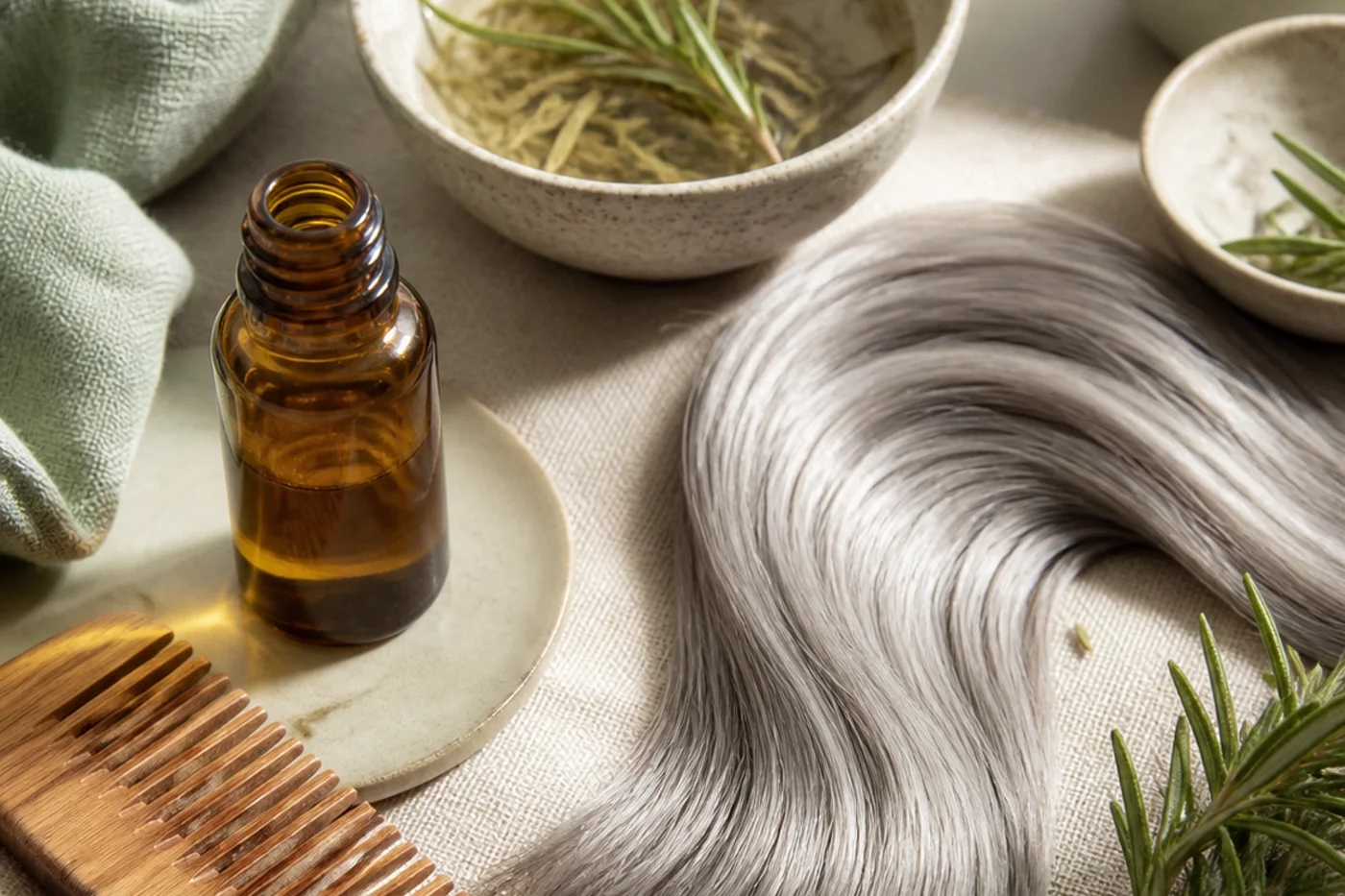
Gray hair can be beautiful and expressive, but many women notice that it behaves differently after 40. Strands may feel drier, wirier, less glossy or more reactive to heat styling. The goal is not to force silver hair to act like it did at 25. The goal is to help it look polished, feel comfortable and move softly without piling on heavy products.
Aging hair care works best when it is steady and gentle. Small choices — less heat, better detangling, a softer shampoo rhythm and lightweight conditioning — often matter more than one dramatic mask. Silver strands can reflect light beautifully when the cuticle is calm and the routine is not too rough.
Why gray hair can feel different
As pigment changes, the feel of the strand can change too. Some gray strands grow in coarser or more textured than the surrounding hair. At the same time, the scalp may produce less oil than before, so the lengths can feel dry even when the roots are normal.
This does not mean your hair is damaged simply because it is gray. It means the routine may need more slip, more patience and fewer stripping steps. If hair suddenly sheds heavily, breaks in patches or the scalp feels painful, that is a reason to check with a professional rather than treating it as a cosmetic routine issue.
The wash-day rhythm that keeps silver hair softer
Most gray or aging hair does better with gentle cleansing instead of aggressive clarifying every wash. Choose a mild shampoo, massage the scalp with fingertips, and let the suds rinse through the lengths rather than scrubbing the ends. If your hair feels coated, clarify occasionally, then return to a softer routine.
Conditioner is not just an afterthought. Apply it through mid-lengths and ends, comb gently with a wide-tooth comb, and give it a minute to soften the strand before rinsing. For fine hair, use a lighter conditioner more often instead of a heavy mask that leaves the roots flat.
What usually makes gray hair look dull
- Very hot tools used on the same pieces every week.
- Rough towel twisting that raises frizz around the crown.
- Heavy oils placed too close to the roots.
- Skipping trims while dry ends catch on each other.
- Using purple products too often and leaving a smoky cast.
Purple shampoo can be useful when silver hair looks yellow, but it should be occasional and controlled. If the hair begins to look flat, lavender or gray-blue, pause and return to gentle cleansing and conditioning.
Lightweight ingredients that suit aging hair
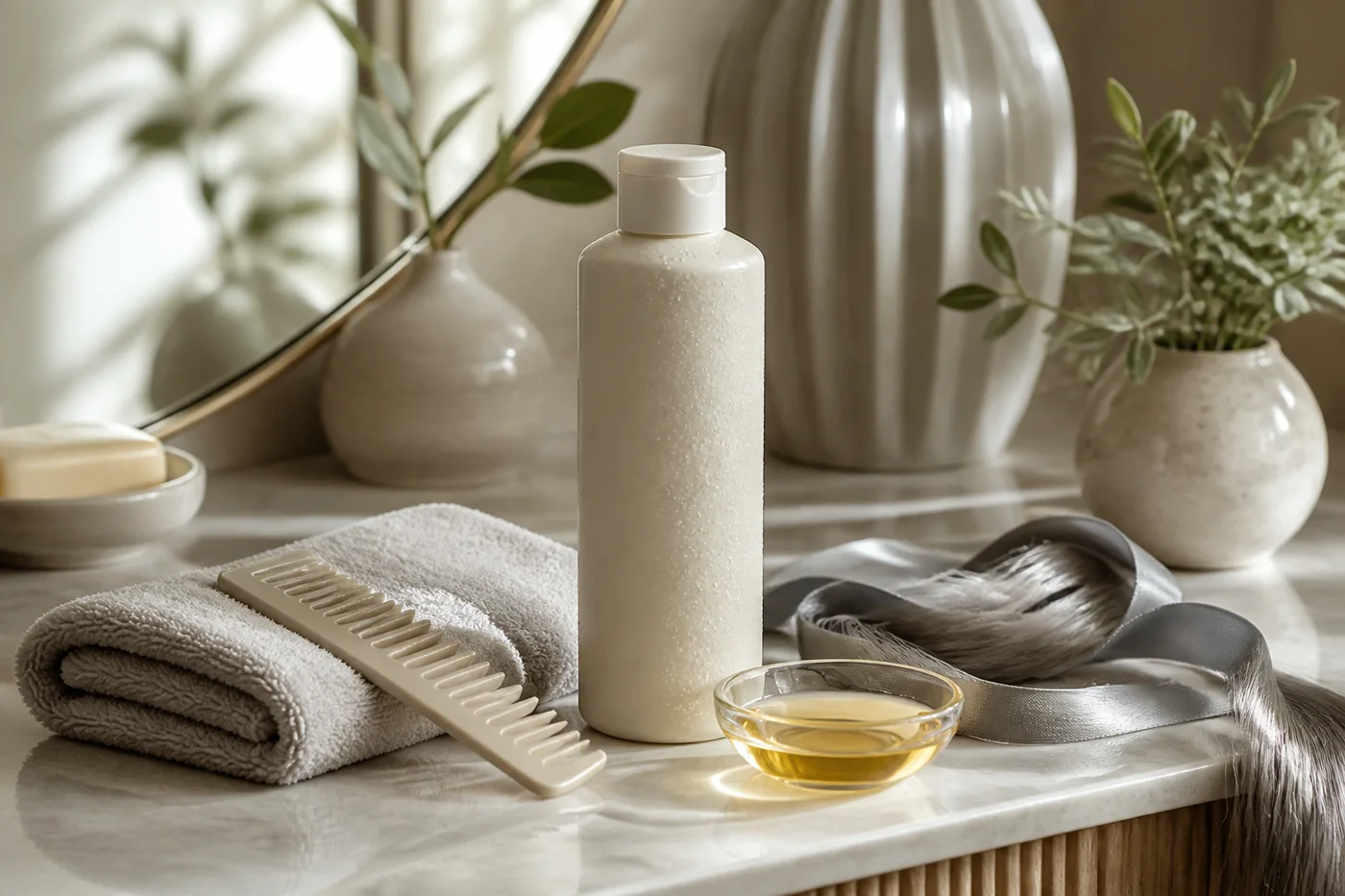
Look for product types that add slip without weight: aloe-based leave-ins, lightweight oils on the ends, gentle conditioners, and occasional botanical rinses. Rosemary water can make a rinse feel fresh, while oils such as jojoba or black currant seed oil can be used in tiny amounts on very dry ends.
For oils, use less than you think. One or two drops warmed between the palms is enough for many people. Focus on the last few inches of hair. If the scalp is easily irritated, keep fragrance, essential oils and homemade mixtures away from the roots.
A simple weekly routine
- Wash with a mild shampoo when the scalp truly needs it.
- Condition mid-lengths and ends, then detangle slowly.
- Blot with a soft towel instead of twisting tightly.
- Use a pea-size amount of leave-in or a tiny amount of oil on ends.
- Air-dry partway before using heat, and keep heat moderate.
This routine is intentionally simple. Gray hair often looks more expensive when it is not overloaded. If you color, tone or highlight, follow your stylist’s timing and avoid stacking strong DIY treatments around salon services.
Color and tone: keep it subtle
Silver hair can pick up dullness from hard water, product buildup, smoke, sunscreen transfer or pollution. A clarifying wash now and then can help, but constant strong cleansing can make the lengths feel thirsty. Balance is the useful word: clarify only when needed, condition well afterward, and avoid treating toning shampoo as a daily product.
How to make gray hair look glossy without making it greasy
Gloss on gray hair usually comes from a smooth surface, not from a large amount of oil. Start by reducing friction: use a soft towel, detangle from the ends upward, and avoid brushing aggressively when hair is wet and stretchy. A leave-in cream or a very light oil can be helpful, but it should disappear into the hair rather than sit on top.
If your hair is fine, place any finishing product only on the outer layer and the ends. If your hair is coarse or wavy, divide it into two or three sections and use a tiny amount in each section so the product spreads evenly. The best result is not a shiny coating; it is hair that catches light while still moving naturally.
Scalp comfort matters too
Aging hair routines often focus only on the visible lengths, but the scalp sets the tone for wash day. Keep scalp care simple: gentle massage, thorough rinsing, and fewer heavily fragranced experiments. If you use dry shampoo, do not let it replace washing for too long, because buildup can make the roots feel dull and uncomfortable.
Homemade rinses should be used with extra caution near the scalp. Cool them fully, strain them well, and keep them fresh. If your scalp is itchy, flaky, sore or suddenly more sensitive, pause DIY mixtures and get advice instead of layering more botanicals.
What to ask your stylist
A good cut can make gray hair care easier. Ask for soft shaping that removes dry ends without thinning the hair too much. If you tone your silver, ask how often you truly need purple shampoo and whether your water or styling products are contributing to yellowing. Professional guidance can prevent the cycle of over-toning, over-washing and then needing heavier masks to recover softness.
For women growing out color, a transitional plan can be more comfortable than fighting every line of demarcation at home. Gentle highlights, a gloss, or a better shape may help the grow-out look intentional while your daily routine stays simple.
Quick checklist
- Use gentle shampoo most wash days.
- Detangle with conditioner and a wide-tooth comb.
- Keep oils on the ends, not the roots.
- Use purple shampoo only when tone needs it.
- Protect hair from repeated high heat.
Ingredients Mentioned In This Guide
These are product-type/search suggestions, not guaranteed direct product endorsements. Optional links may use iHerb code FVQ4930.
FAQ
Why does my gray hair feel wiry?
Some gray strands grow with a different texture, and aging hair may have less natural oil along the lengths. Gentle cleansing, conditioner slip and less heat often help the hair feel softer.
Should I use oil on gray hair?
Yes, but lightly. One or two drops on the ends can add polish, while too much oil near the roots can make hair look flat or separated.
Is purple shampoo necessary?
Only if silver hair looks yellow or brassy. Use it occasionally and follow with conditioner. Overuse can make hair look dull or smoky.
Can DIY rinses make gray hair grow?
No home rinse should be presented as a growth treatment. Botanical rinses can support softness or freshness, but sudden hair shedding needs professional guidance.
Related Reading
Build a softer Glow Ritual
If you are simplifying your beauty shelf, keep one gentle cleanser, one conditioner with slip and one lightweight finishing product before adding stronger treatments.
Educational beauty content only. Patch test topical products, avoid irritated scalp, and seek professional advice for sudden shedding, scalp pain, medication-related changes or health concerns.