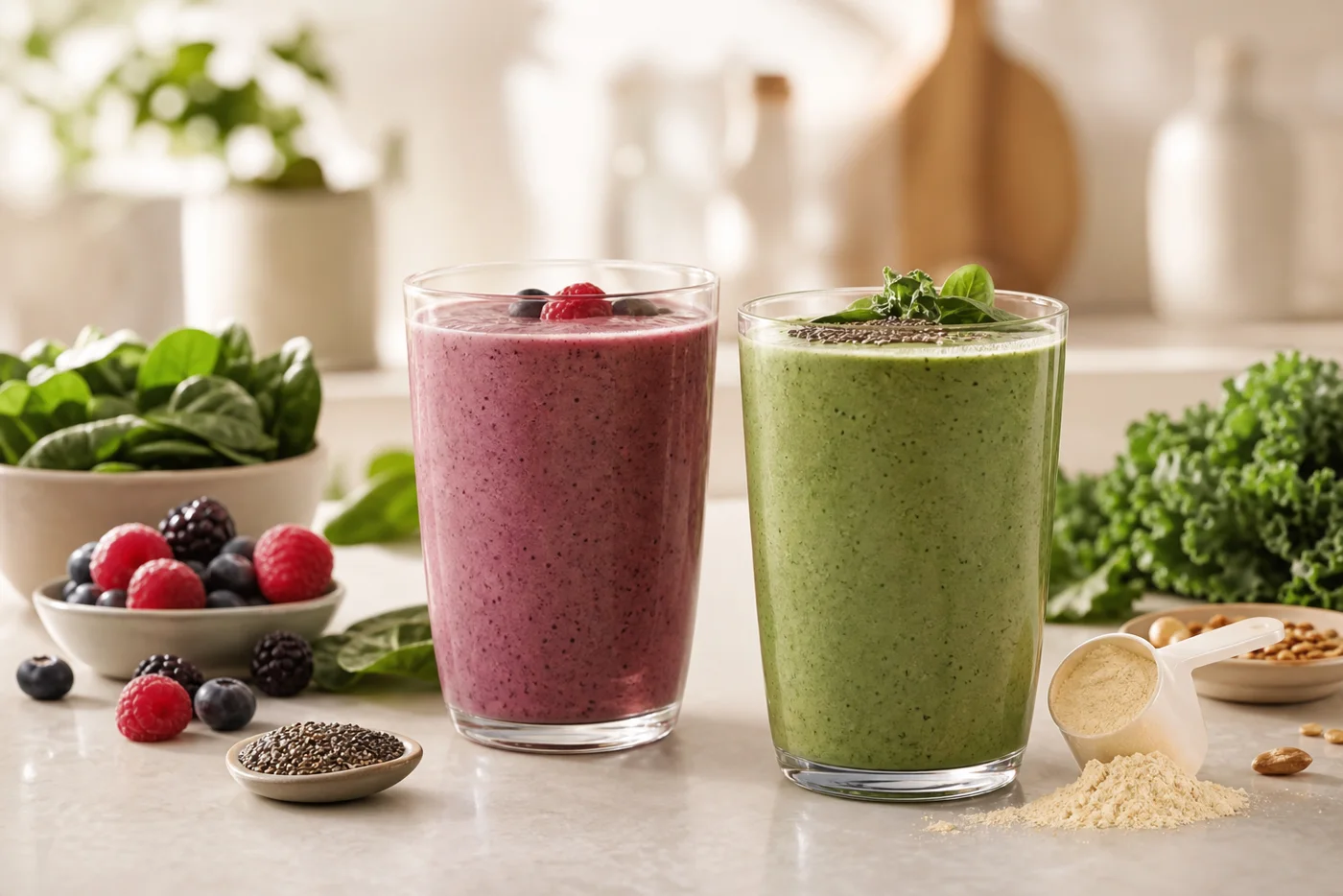
Why protein matters in a beauty routine after 40
Protein is not a quick glow trick, but it is part of the everyday structure behind hair, nails, muscles and steady meals. After 40, many women notice that breakfast needs to work harder: it should feel satisfying, support energy, and avoid the sugar-heavy crash that can make the morning routine feel rushed.
A protein smoothie can help when it is built like a small balanced meal, not a sweet drink with a scoop of powder added at the end. The most useful versions combine protein, fiber, fluid and gentle flavor. That gives the smoothie a calmer rhythm: creamy enough to satisfy, light enough for busy mornings, and practical enough to repeat.
The balanced smoothie formula
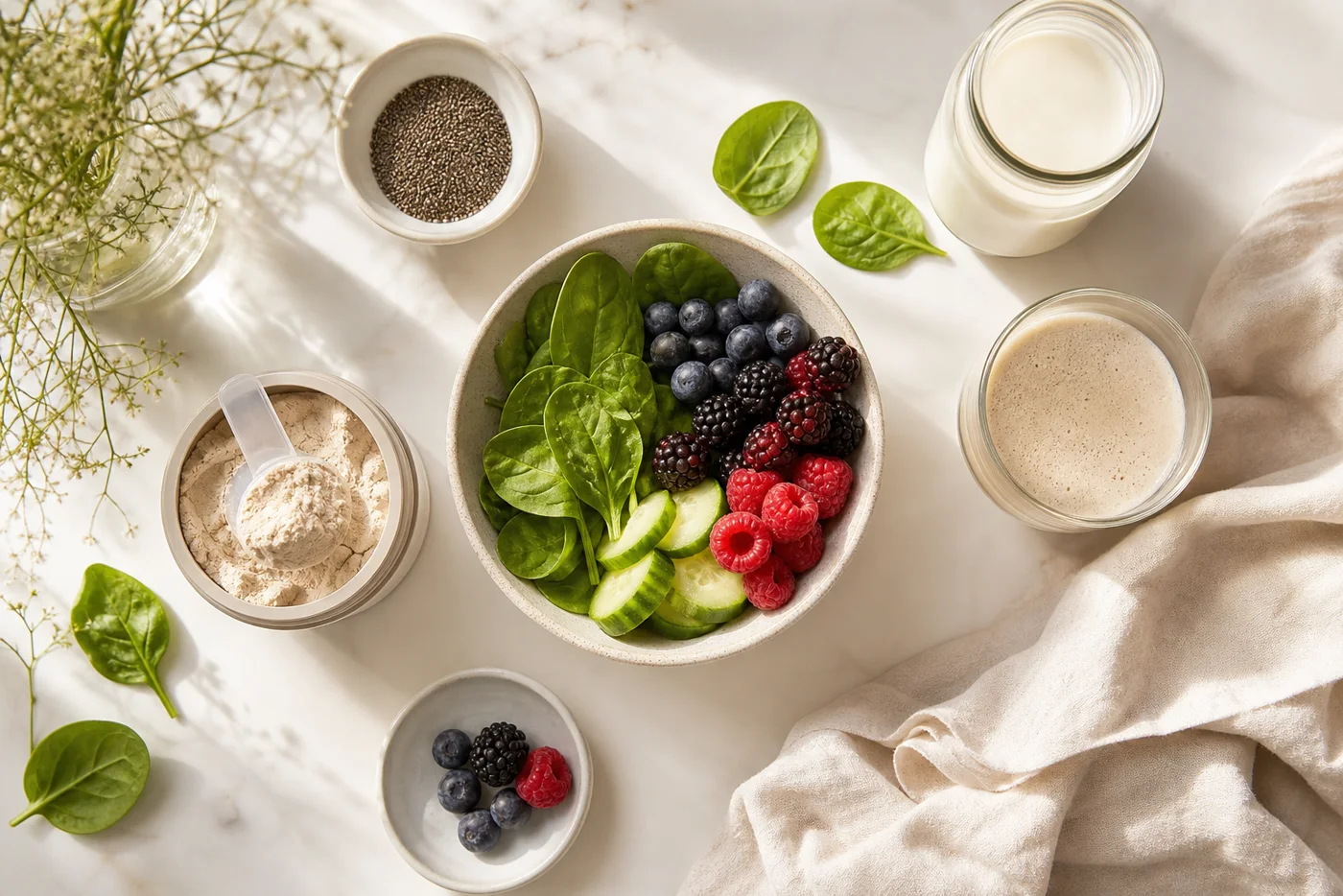
Use this simple structure before choosing flavors. Start with a protein base, add one fruit or vegetable, include a fiber-rich ingredient, then thin with enough liquid so the drink is easy to digest. The goal is a smoothie that supports a steady meal pattern, not a thick dessert bowl every day.
- Protein base: Greek yogurt, kefir, unsweetened protein powder, collagen peptides, or soft tofu if it suits you.
- Color and fiber: berries, kiwi, cucumber, spinach, frozen cherries, avocado, or cooked pumpkin in cooler months.
- Texture support: chia seeds, ground flaxseed, oats, or a spoon of nut butter.
- Liquid: water, milk, almond milk, coconut water, cooled green tea, or kefir.
How much protein to aim for in a smoothie
Many smoothie recipes look healthy but contain only fruit and liquid. For a more satisfying beauty drink, aim for a meaningful protein source rather than a tiny decorative amount. A practical home target is often about 15–25 grams of protein, depending on the rest of your day, your appetite and your health needs. This is general food guidance, not medical nutrition advice.
If you use protein powder, choose a plain or lightly flavored option you tolerate well. Start with a smaller serving if your stomach is sensitive. If you prefer food-first smoothies, Greek yogurt, kefir, tofu, chia, oats and nut butter can help create a steadier drink without relying on a large scoop of powder.
Three gentle smoothie ideas to rotate
Berry yogurt protein smoothie
Blend 3/4 cup plain Greek yogurt, 1/2 cup berries, 1 teaspoon chia seeds, 1/2 cup water or milk, and a few ice cubes. This is a simple starter option when you want creaminess without making the smoothie too sweet.
Cacao cherry collagen smoothie
Blend 1 cup milk or almond milk, 1/2 cup frozen cherries, 1 tablespoon cacao powder, 1 serving collagen peptides if appropriate for you, and 1 teaspoon ground flaxseed. Keep the cacao unsweetened and adjust thickness with liquid.
Green kefir smoothie
Blend 3/4 cup kefir, 1 kiwi, a small handful of spinach, 1 teaspoon chia seeds and 1/2 cup water. This option feels bright and fresh, especially when you want a lighter drink with breakfast.
Safety notes for powders and supplements
Powders can be convenient, but they still deserve a slow, realistic approach. Check labels for allergens, sweeteners and added botanicals. If you are pregnant, breastfeeding, managing kidney disease, diabetes, digestive issues, allergies, or taking medication, ask a qualified professional before using protein powders, collagen peptides, greens powders or herbal blends.
Collagen can be a practical protein-type addition for some people, but it is not a complete replacement for a varied protein routine. Plant proteins can work well too, though some pea or rice protein powders feel gritty unless blended with enough liquid.
Common mistakes
- Making it mostly fruit juice. Juice-based smoothies can become sweet very quickly and may not feel satisfying for long.
- Adding too many powders. Protein powder, greens powder, collagen and superfood blends in one glass can be too much for taste and digestion.
- Forgetting texture. Chia, oats or flax need a little time and enough liquid so the smoothie does not become gummy.
- Expecting visible changes overnight. Beauty-from-within routines work best as steady food habits, sleep, hydration and gentle skincare combined.
Quick checklist
- Choose one real protein source.
- Add one fruit or vegetable, not five.
- Use chia, oats or flax for a little fiber.
- Thin with enough liquid for a drinkable texture.
- Keep powders simple and check tolerance.
- Pair with breakfast if a smoothie alone does not satisfy you.
FAQ
Can I drink a protein smoothie every day?
Many people can, but variety is better than repeating the exact same blend indefinitely. Rotate fruits, liquids and protein sources so the routine stays enjoyable and balanced.
Is collagen necessary for skin and hair after 40?
No. Collagen peptides are optional. Protein from ordinary foods still matters, and skincare basics such as sunscreen, cleansing and moisturizing remain important.
What if protein powder upsets my stomach?
Use less, try a different type, or build smoothies from food-first options such as yogurt, kefir, tofu, chia and oats. Stop using anything that consistently feels uncomfortable.
Should smoothies replace meals?
Not automatically. A smoothie can be part of breakfast or a light meal, but some women feel better when it is paired with something to chew, such as eggs, toast, nuts or a simple savory plate.
Ingredients & Product Types Mentioned
Search-style links only; availability changes. Some links may use iHerb code FVQ4930.
Related Reading
Want a calmer weekly ritual?
Keep this guide as part of a soft, realistic beauty routine rather than a one-day fix.
Get the Glow Rituals guideEducational beauty and nutrition content only. Not medical advice. Ask a qualified professional about persistent skin, scalp, hair-loss, supplement or health concerns.