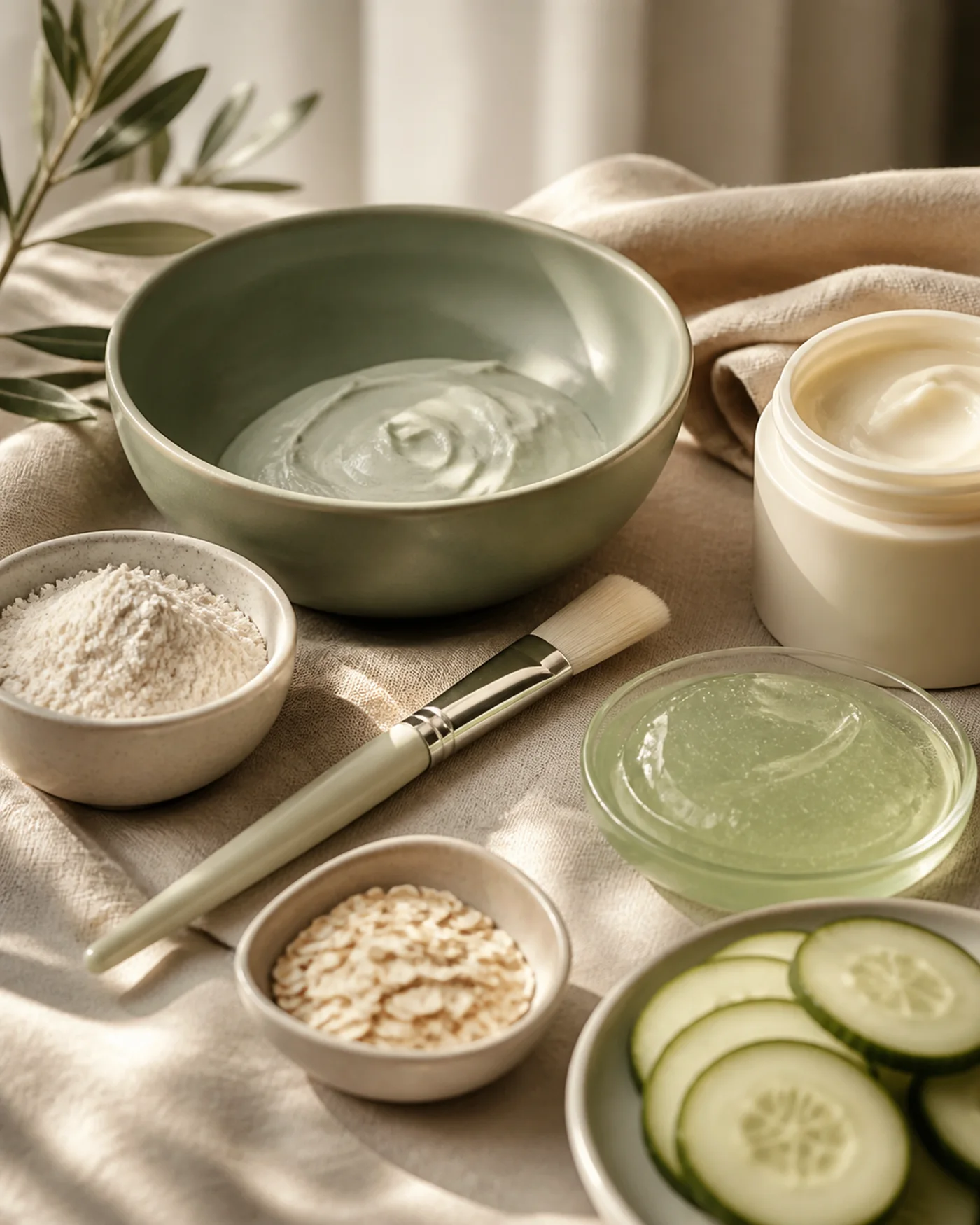
After 40, a face mask can still be a lovely ritual, but the best ones usually feel quieter than the dramatic before-and-after promises online. Mature skin often prefers cushiony textures, shorter contact time and fewer “active” ingredients at once.
The goal is not to scrub, peel or chase a tight feeling. A good DIY mask should leave skin comfortable-looking and calm-feeling, with clear boundaries for patch testing and frequency.
Start with the texture, not the trend
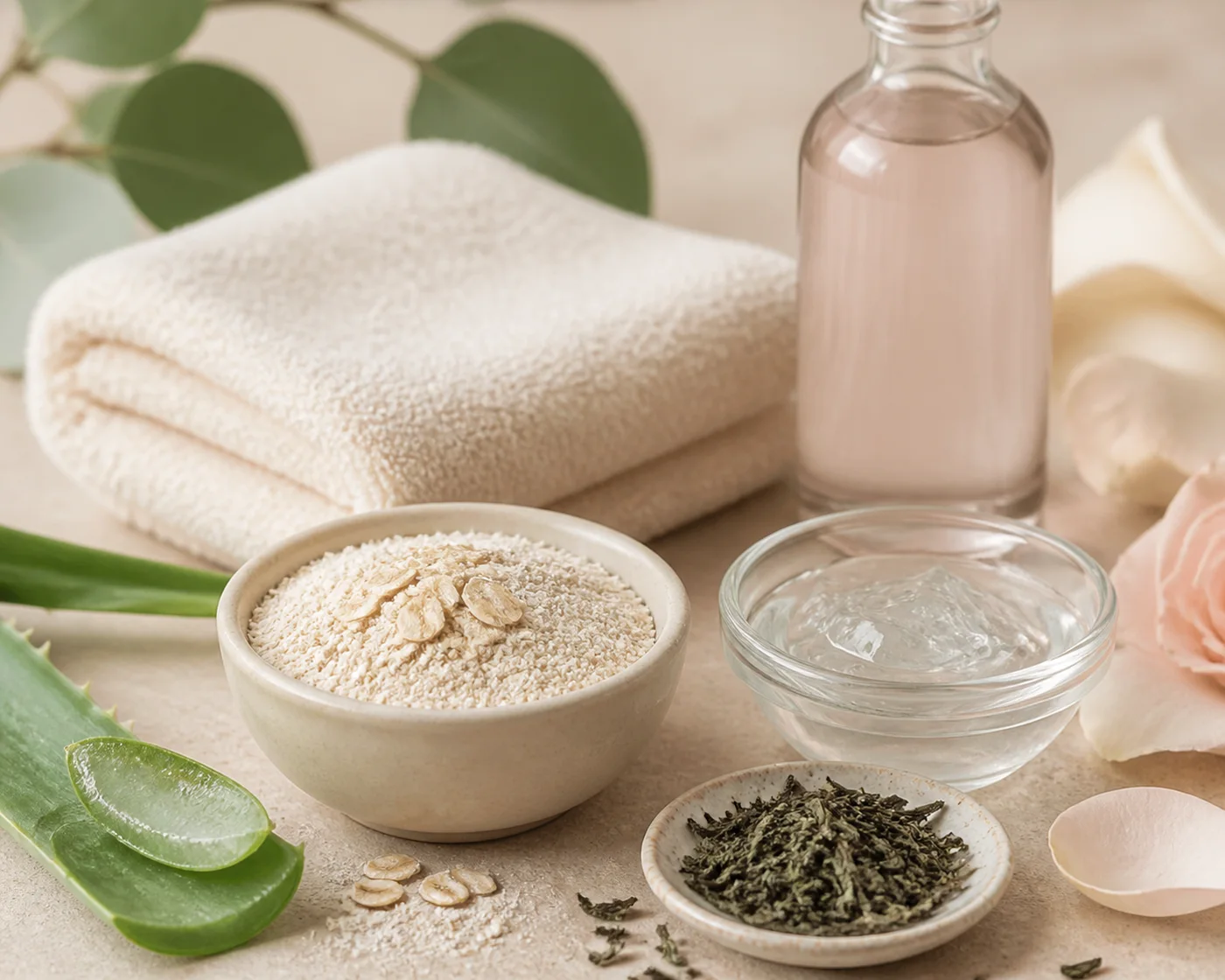
Powders and clays can be useful, but they should not feel sandy or sharp. For mature or easily dry skin, look for finely ground oats, soft aloe gel, yogurt, honey, rose water or a small amount of gentle clay buffered with a creamy ingredient. If a mask dries into a hard shell, rinse earlier.
Keep one main job per mask
A comfort mask, a clay mask and a fresh-feeling cucumber mask do not need to happen in the same bowl. Choose one purpose: softness, oil balance, fresh-feeling skin or a short calming ritual. This keeps the recipe easier to patch test and easier to stop if your skin complains.
The timing rule that protects comfort
Most homemade masks do not need 20 minutes. Five to ten minutes is often enough, especially with clay, yogurt, citrus-adjacent ingredients or anything new. Rinse before the mask feels tight, itchy or fully dry.
What to avoid if you already exfoliate
If your routine includes retinoids, acids, scrubs or strong brightening products, avoid adding gritty masks on the same day. Skip lemon juice, baking soda, salt scrubs and harsh sugar on the face. Natural does not automatically mean gentle.
Quick Checklist
- Patch test every new mask.
- Use one main active idea at a time.
- Keep timing short: 5–10 minutes.
- Do not let clay fully dry and crack.
- Avoid broken, sunburned or freshly exfoliated skin.
- Use face masks once weekly unless your skin clearly tolerates more.
Ingredients Mentioned In This Guide
Choose soft, shelf-stable basics where possible. Optional iHerb search shortcuts may use code FVQ4930.
Fresh cucumber and plain yogurt are grocery ingredients, not iHerb product picks.
FAQ
How often should I use a DIY face mask after 40?
Once weekly is a safe starting rhythm. Sensitive or dry-feeling skin may prefer less often.
Should a clay mask dry completely?
No. Rinse while it still feels slightly damp and comfortable, before it becomes tight.
Can I use a mask after retinol?
Keep it simple and avoid exfoliating masks on the same day. When in doubt, choose a plain moisturizing routine instead.
Are fruit masks always gentle?
No. Fruit can be acidic or irritating for some skin. Patch test and keep timing short.
Related Reading
Want more gentle at-home rituals?
Glow Rituals ebooks collect simple mask, smoothie and body-care recipes with calm safety notes.
Browse Glow Rituals ebooksEducational beauty content only, not medical advice. Patch test first and avoid use on irritated, broken, sunburned or freshly exfoliated skin.