Sensitive mature skin does not always need a stronger mask. Often it needs fewer surprises: no fruit enzymes, no sharp acids, no gritty scrub texture and no long drying time. An enzyme-free mask can still feel like a real ritual when the base is soft, the timing is short and the ingredients are chosen for comfort rather than drama.
This guide is for women who enjoy DIY beauty but know their skin can react when a recipe becomes too ambitious. The aim is a calm, creamy mask that supports soft-feeling, comfortable skin for a few quiet minutes. It is not a treatment for redness, eczema, rosacea, allergy or any medical skin condition.
What enzyme-free means in a face mask
In DIY skincare, enzyme masks usually come from ingredients such as papaya, pineapple, pumpkin or other fruit-based formulas. These can be useful in some commercial products, but they can feel too active for easily stressed skin, especially when the recipe also includes acids, essential oils or exfoliating powders.
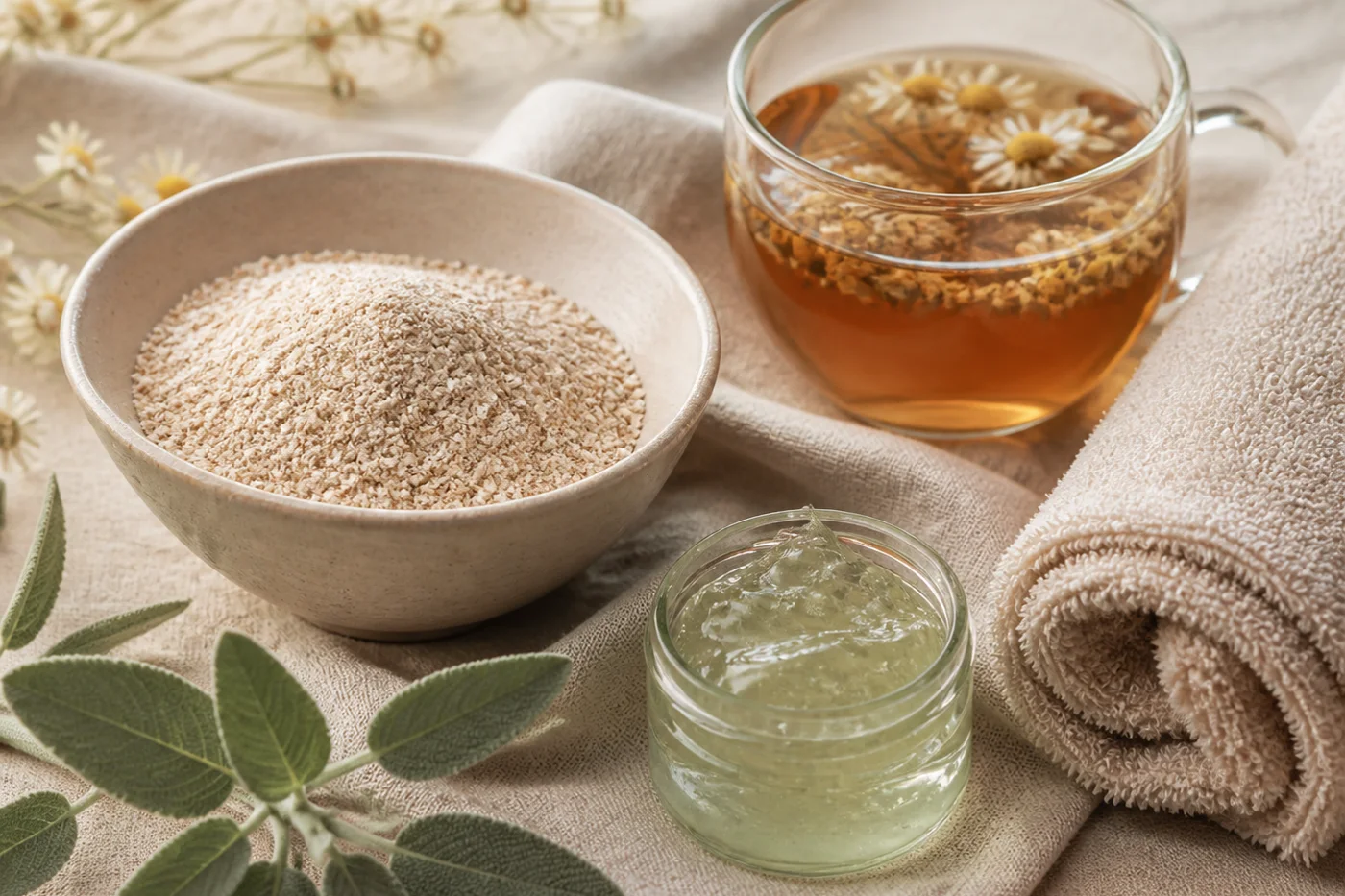
An enzyme-free mask skips that active exfoliation idea. It focuses on bland, familiar, finely milled ingredients that create slip and comfort. Think oat flour, cooled chamomile tea, aloe vera gel if tolerated, plain yogurt only for skin that already likes it, or rose water in a small amount. The mask should rinse away easily and should never need scrubbing.
Why sensitive mature skin often prefers less
After 40, skin can feel drier, thinner, more reactive or slower to calm down after a strong experiment. That does not mean it is fragile in a negative way. It simply means the routine benefits from respect: shorter contact time, fewer ingredients and a softer aftercare step.
The best mask for this skin type may look almost boring in the bowl. That is a compliment. A simple oat and chamomile blend is easier to patch test than a recipe with six powders, citrus juice and essential oil. If skin feels comfortable afterward and not tight, hot or shiny-red, the mask has done enough.
Ingredients that usually fit a calmer mask
- Finely ground oats or colloidal oats: useful for cushion and a soft creamy texture.
- Cooled chamomile tea: a gentle liquid base with a calm ritual feel.
- Aloe vera gel: optional, only if your skin already tolerates it well.
- Rose water: optional and used lightly; fragrance-sensitive skin may skip it.
- Plain oat milk: a creamy liquid option when you want a softer texture.
Ingredients to avoid when skin is reactive
Avoid lemon juice, baking soda, cinnamon, strong essential oils, coarse sugar, salt, harsh clays left to crack on the skin, and fruit purees used as exfoliating actives. Even natural ingredients can irritate when the skin barrier already feels stressed.
Also be careful with recipes that promise instant brightening, peeling or wrinkle-smoothing. Those claims usually encourage people to leave masks on too long or combine too many active ingredients. Sensitive mature skin looks fresher when it is calm and moisturized, not when it has been pushed.
A simple enzyme-free mask formula
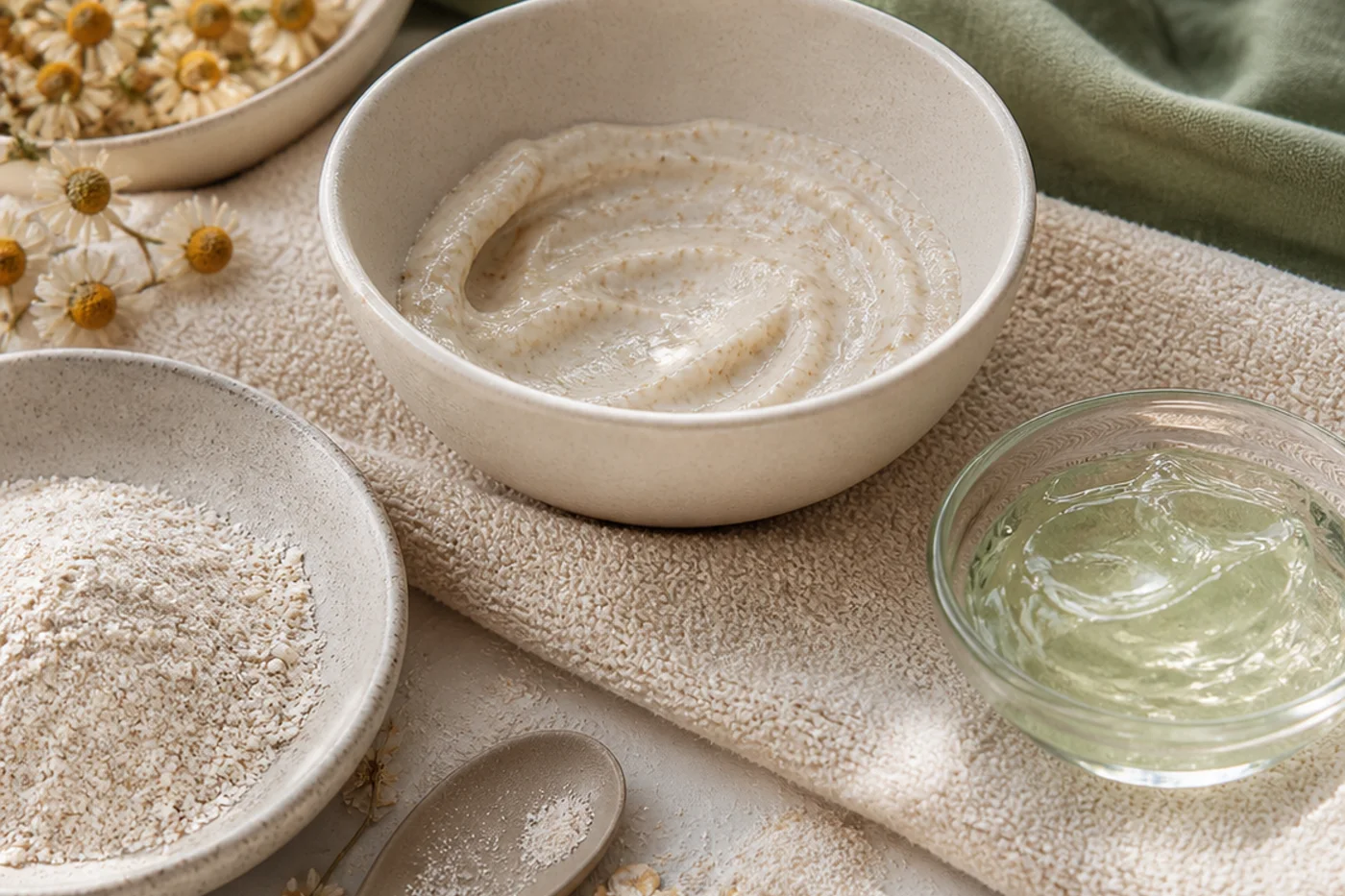
Start with one tablespoon finely ground oats. Add one teaspoon cooled chamomile tea and one teaspoon oat milk, then stir until the texture becomes a soft paste. If your skin tolerates aloe, add half a teaspoon. Apply a thin layer for five to seven minutes, rinse before it dries tight, and follow with a simple moisturizer.
Use this type of mask once weekly at most. If your skin is going through a reactive period, skip masks entirely and keep the routine very plain until it feels steady again.
How to fit a mask into a mature-skin routine
Place a gentle mask on a quiet evening, not between several active steps. Cleanse lightly, apply the mask, rinse well and finish with moisturizer. Skip retinoids, exfoliating acids and strong vitamin C on the same night if your skin is easily bothered. The next morning, keep the routine simple and use sunscreen as usual.
The best sign is not a dramatic change in the mirror. It is skin that feels calm, flexible and not tight afterward. If the mask makes your face feel shiny, hot, itchy or overly smooth in a stripped way, it was too much for that day.
Texture matters as much as ingredients
For sensitive skin, the mask should look creamy rather than sandy. If you can feel sharp particles between your fingers, grind the oats more finely or choose colloidal oats. Apply with fingertips or a clean mask brush using no pressure. During rinsing, press lukewarm water into the mask until it loosens, then remove with soft movements.
Do not turn removal into exfoliation. Many DIY masks become irritating at the rinse stage because people rub the mixture around the face. A good sensitive-skin mask should leave quietly.
Patch-test rhythm
- Test the mixed mask on the jawline or inner arm for a few minutes.
- Wait until the next day before using it on the full face.
- Use a smaller area first if your skin is very reactive.
- Stop immediately if skin feels hot, itchy, stinging or uncomfortable.
What to use afterward
After rinsing, avoid the temptation to add many steps to “finish” the ritual. A gentle moisturizer is usually enough. If your skin tolerates it, a plain hydrating serum can go underneath, but skip fragrance-heavy layers and exfoliating toners. The mask is the special step; the aftercare should be quiet.
On the next day, notice comfort more than glow. Does foundation sit better? Does the skin feel less tight after cleansing? Is there no new itching or roughness? Those small signals matter more than a dramatic before-and-after photo.
Who should skip DIY masks
Skip homemade masks during active flares, unexplained rash, broken skin, recent procedures, strong peels, sunburn or new prescription routines unless your professional has cleared it. Also skip any ingredient that has caused stinging before, even if the recipe looks gentle on paper. Sensitive skin is personal, and a calm routine should respect your own history.
Quick checklist
- No fruit enzymes or citrus juice.
- No gritty scrub texture.
- Five to seven minutes is enough.
- Rinse before the mask dries tight.
- Moisturize afterward.
- Skip masks on irritated, broken, sunburned or freshly exfoliated skin.
Ingredients Mentioned In This Guide
These are optional product-type/search shortcuts, not required purchases. Links may use iHerb code FVQ4930.
FAQ
Can sensitive skin use face masks?
Sometimes, but the mask should be simple, short and patch tested. If skin is actively irritated, skip the mask and use a plain routine instead.
Are oats enough for a real mask?
Yes. A soft oat-based mask can give a creamy, comfortable ritual without exfoliating the skin. It does not need to feel strong to be useful.
Should I add clay?
Only if your skin already tolerates clay, and even then use a small amount and do not let it dry hard. Many sensitive-skin masks are better without clay.
Can this replace skincare?
No. Think of it as an occasional comfort ritual. Daily gentle cleansing, moisturizer and sun protection matter more than any mask.
Related Reading
Keep the ritual soft
If your skin is easily stressed, one calm mask, one bland moisturizer and one steady sunscreen habit can feel more elegant than a crowded shelf of actives.
Educational beauty content only. Patch test topical recipes, avoid irritated or broken skin, and seek professional guidance for persistent sensitivity, rash, allergy, rosacea, eczema or other skin concerns.