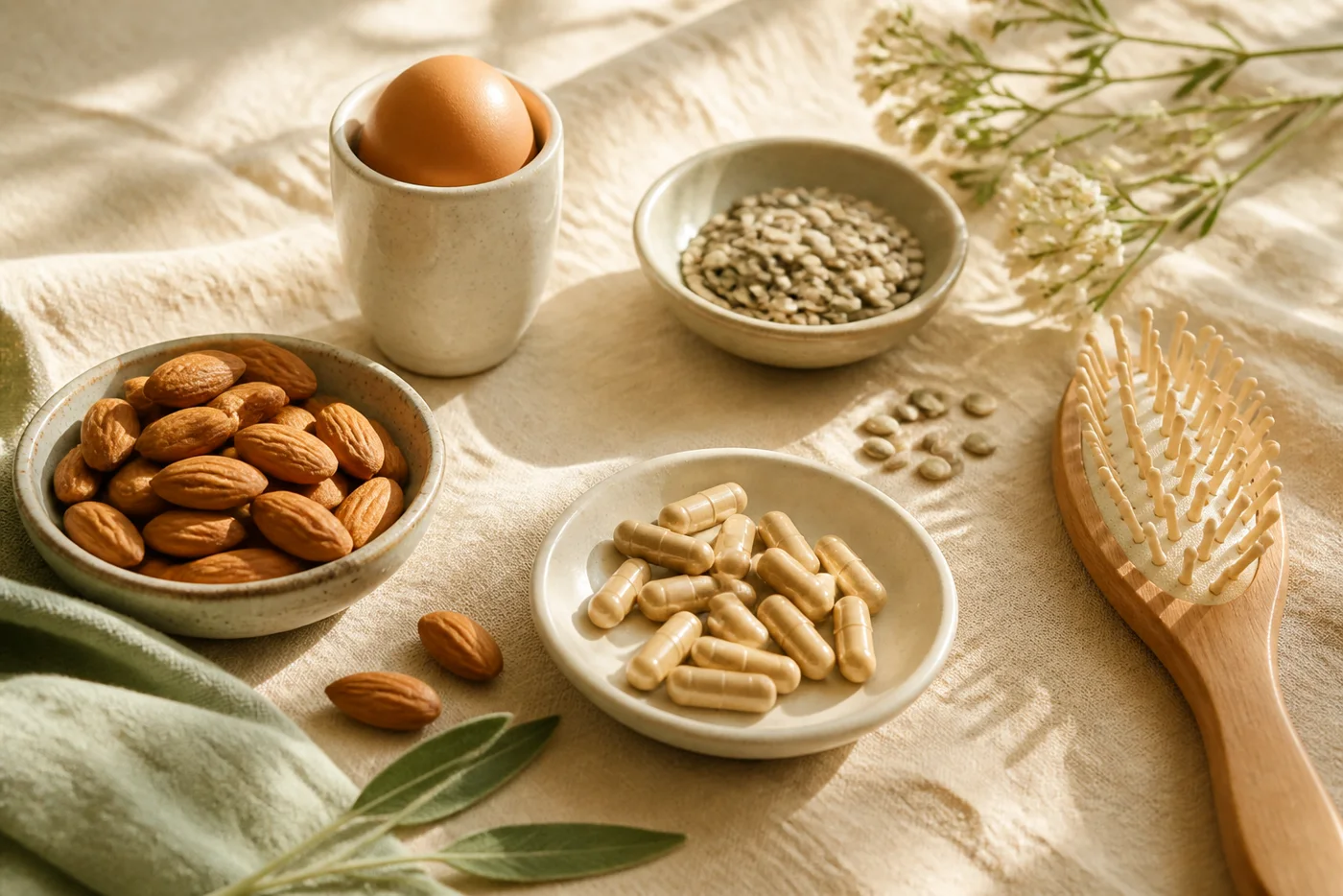
Biotin has a strong beauty reputation, especially in hair supplements. After 40, it is easy to see a bottle promising thicker-looking hair and wonder if it is the missing step. The gentler truth is more useful: biotin can matter when intake is low, but taking large doses is not automatically better for hair, skin or nails.
This guide keeps biotin realistic. It explains where it fits, when to be cautious, and why hair changes after 40 often need a wider look at protein, iron status, vitamin D, thyroid health, stress, medications, scalp comfort and everyday hair handling.
What biotin actually does
Biotin is a B vitamin involved in normal metabolism of fats, carbohydrates and proteins. Because hair and nails are fast-changing tissues, beauty marketing often turns biotin into a hair-growth shortcut. In real life, the biggest benefit is usually for people who are actually low or who have a diet pattern that makes intake inconsistent.
If you already get enough biotin from food, adding a high-dose supplement may not change how your hair looks. That does not make biotin useless; it simply means it is one part of a larger nutrition picture.
Food first: gentle sources to know
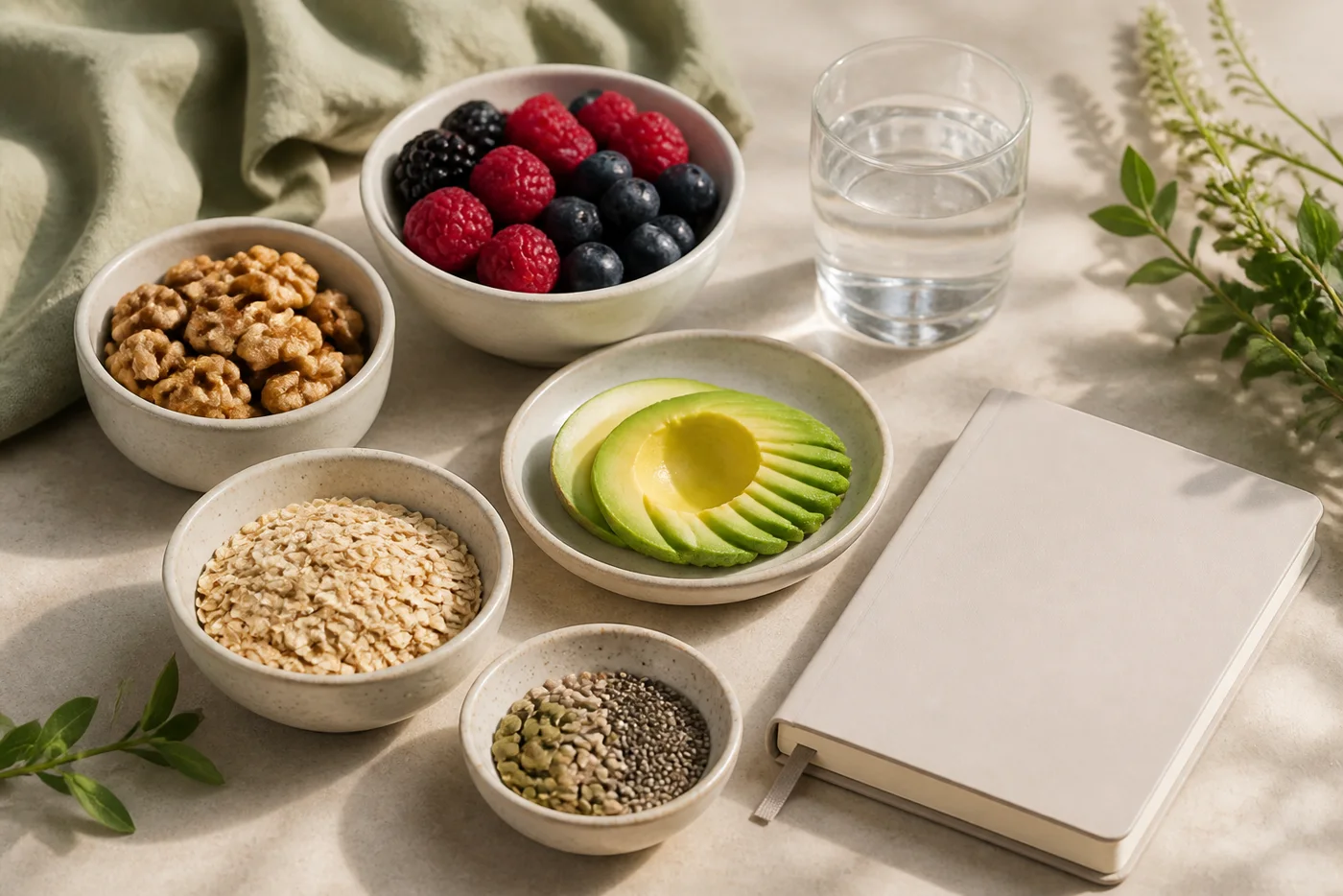
Biotin appears in everyday foods such as eggs, nuts, seeds, legumes, salmon, sweet potatoes and whole grains. For many women, a steady breakfast with protein, fiber and healthy fats supports hair routines more calmly than chasing one capsule.
If hair feels fragile, look at the full day: enough protein, enough calories, hydration, mineral intake and regular meals. Hair can look thinner when the body is under-fueled, stressed or recovering, even if the shampoo shelf is perfect.
Who may want to discuss biotin
Biotin may be worth discussing if your diet is very limited, you avoid many food groups, you have digestive concerns, or a clinician has suggested a B-vitamin issue. It may also appear inside broader hair, skin and nail formulas. The key is not to stack several biotin products without realizing it.
If shedding is heavy, sudden, patchy or connected with fatigue, scalp symptoms or hormonal changes, do not rely on biotin alone. That is a good moment to ask a qualified professional about ferritin/iron status, thyroid markers, vitamin D and other basics.
Why high-dose biotin deserves caution
More is not always better. High-dose biotin can interfere with some lab tests, including certain thyroid and heart-related tests. This is why many clinicians ask people to stop biotin before blood work. Always tell your doctor or lab team if you take it.
Some people also notice breakouts or stomach discomfort with certain formulas. If you try a supplement, keep the routine simple so you can tell whether it suits you.
A simple decision checklist
- Start with food and protein rhythm first.
- Check whether your multivitamin already contains biotin.
- Avoid stacking several hair formulas at once.
- Tell your doctor before blood tests.
- Seek evaluation for sudden or heavy hair shedding.
Ingredients Mentioned In This Guide
These are product-type search shortcuts, not medical recommendations. Use only if they fit your health situation.
Optional links may use iHerb code FVQ4930. Food first, and check with your clinician for pregnancy, breastfeeding, medications, health conditions or planned lab tests.
Related Reading
Glow Rituals beauty books
For a softer weekly routine, keep a few gentle recipes and product basics in one place.
Browse Glow Rituals ebooksFAQ
Does biotin make hair grow faster?
Not for everyone. It may help when there is a true low intake or deficiency, but it is not a guaranteed faster-growth solution.
Can I take biotin every day?
Many supplements are designed for daily use, but dose and context matter. Check labels, avoid stacking, and tell your clinician before lab tests.
Is biotin enough for thinning hair after 40?
Usually no. Hair changes can involve hormones, thyroid, iron status, stress, protein intake, scalp health and styling habits.
What is the safest first step?
Start with balanced meals, enough protein, gentle hair handling and professional evaluation if shedding is sudden or heavy.
Educational content only, not medical advice. Supplements can interact with medications, health conditions and lab testing. Discuss persistent shedding, sudden hair changes, pregnancy, breastfeeding or medical concerns with a qualified professional.