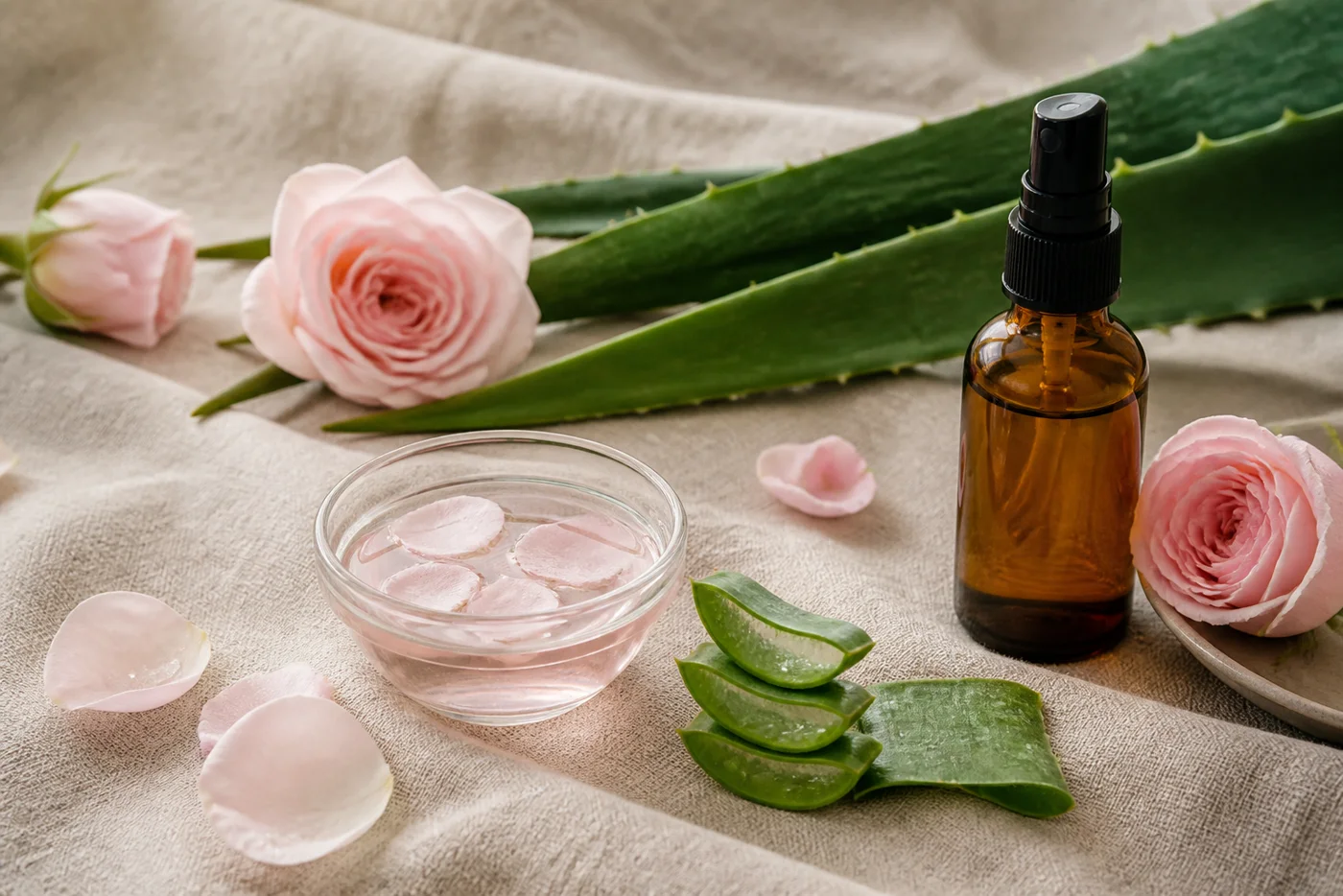
Rose water and aloe vera are two of the easiest ingredients to over-romanticize in DIY beauty. They feel fresh, look beautiful on a vanity and appear in many gentle recipes — but they are still cosmetic support ingredients, not a cure for sensitivity, redness, wrinkles or dryness.
After 40, the most useful way to use them is simple: keep formulas short, avoid harsh add-ons, patch test first and let rose water and aloe add softness, slip and a refreshed feel inside a broader routine that already includes cleanser, moisturizer and daytime sunscreen.
What rose water can realistically do
Good rose water can make a recipe feel more pleasant and lightly refreshing. It works well as the water phase in a quick mask, as a dampening step before a moisturizer, or as a soft scent in a body-care ritual. The key is to choose a simple product without strong perfume, alcohol-heavy formulas or unnecessary color.
It cannot tighten mature skin, erase lines or replace a barrier-supportive moisturizer. If your skin is very reactive, even botanical waters can sting, so a patch test matters.
What aloe vera adds to DIY recipes
Aloe vera gel gives slip and a cool, hydrated feel. In masks, it helps powders spread more evenly so you are not dragging or scrubbing. In hair or scalp recipes, a small amount can make a rinse feel softer. Plain aloe is usually the easiest choice: no dyes, no heavy fragrance and no strong actives mixed in.
For mature skin, aloe is most useful when the recipe is short-contact and gentle. Leaving thick layers to dry tightly on the face can feel uncomfortable, especially after sun, exfoliation or retinoids.
How to pair them without irritating skin
Think of rose water as the liquid and aloe as the cushion. A gentle mask might use oat flour, rice flour or kaolin clay, then a teaspoon of aloe and just enough rose water to make a soft paste. Keep the layer thin and rinse before it dries tight.
For a quick refresh step, mist rose water into clean hands or onto a cotton pad, press lightly, then seal with moisturizer. Do not keep misting dry skin all day without moisturizer; repeated water evaporation can leave skin feeling tighter.
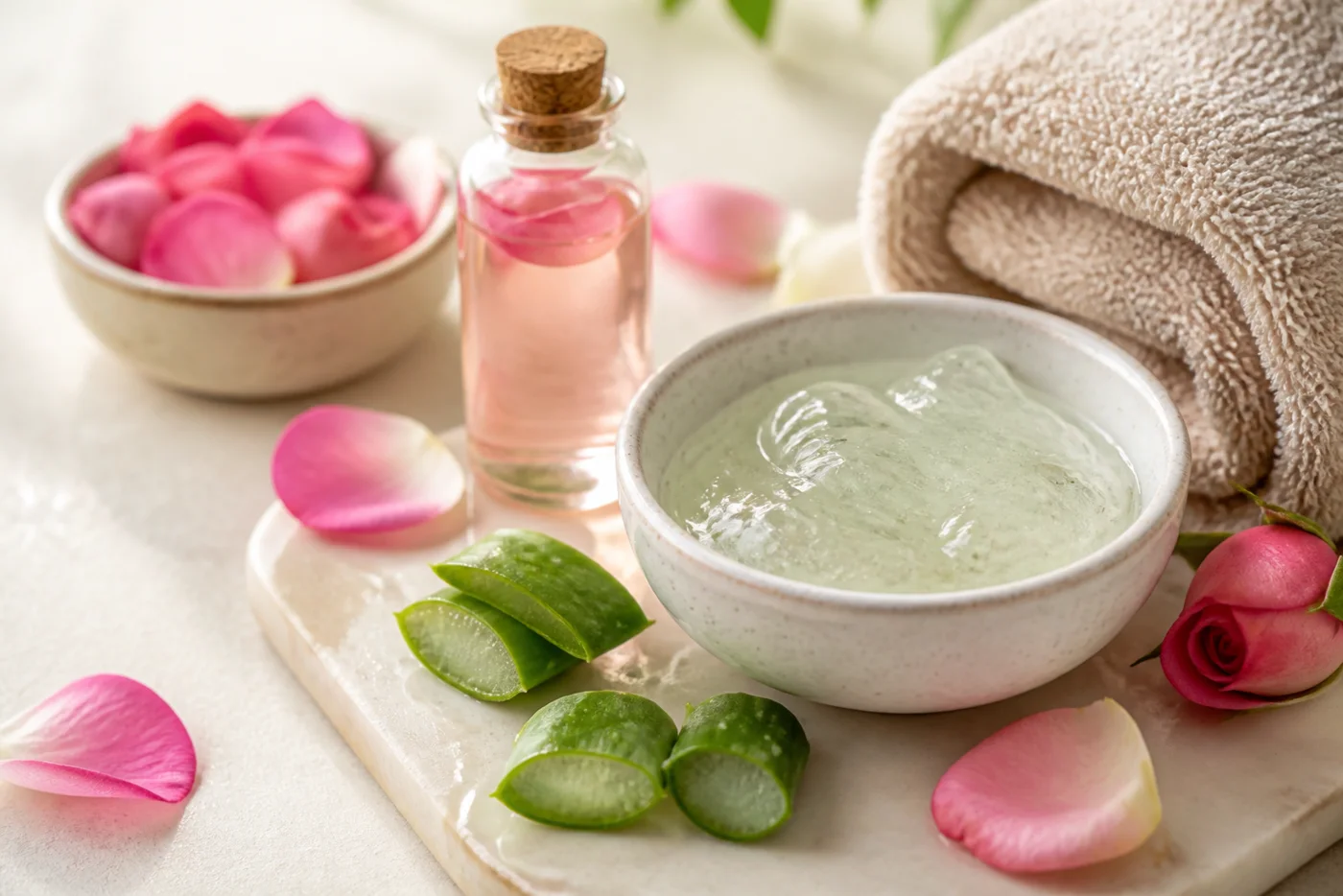
Three gentle ways to use rose water and aloe
1. Soft mask liquid
Mix 1 teaspoon aloe vera gel with 1–2 teaspoons rose water, then add enough oat flour or rice flour to make a creamy paste. Apply for 5–7 minutes and rinse before it dries.
2. Moisturizer prep step
After cleansing, press a small amount of rose water onto slightly damp skin, then apply moisturizer while the skin still feels comfortable. This is about feel and routine rhythm, not dramatic results.
3. Hair-length softening rinse
Add 1 teaspoon aloe vera gel to 1/2 cup cool water with 1 teaspoon rose water, shake well and pour through hair lengths after shampoo. Rinse out if hair feels coated.
When to skip them
Skip rose water or aloe on broken, irritated, sunburned or freshly exfoliated skin. Avoid eye-area use unless a product is specifically made for that area. If you are allergy-prone, test behind the ear or on the inner arm first and wait 24 hours.
Quick checklist
- Choose plain, low-fragrance rose water and aloe vera gel.
- Patch test every new product and every fresh recipe.
- Use masks short-contact, usually 5–10 minutes.
- Do not let clay or powder masks crack tight on mature skin.
- Seal water-based steps with moisturizer.
Ingredients Mentioned In This Guide
Optional product-type searches for simple shelf-stable basics and tools. Fresh cucumber or grocery ingredients should be bought as groceries.
Optional iHerb links may use code FVQ4930. Choose products that fit your skin and patch test first.
Related Reading
Glow Rituals books
For more calm at-home beauty structure, keep your routines simple: one mask, one moisturizer step, one safety note, and enough consistency to notice what your skin actually likes.
Browse Glow Rituals ebooks →Educational beauty content only. This article is not medical advice. Patch test topical recipes, avoid broken or irritated skin, and ask a qualified professional about persistent irritation, allergies, medications, pregnancy, breastfeeding or skin conditions.