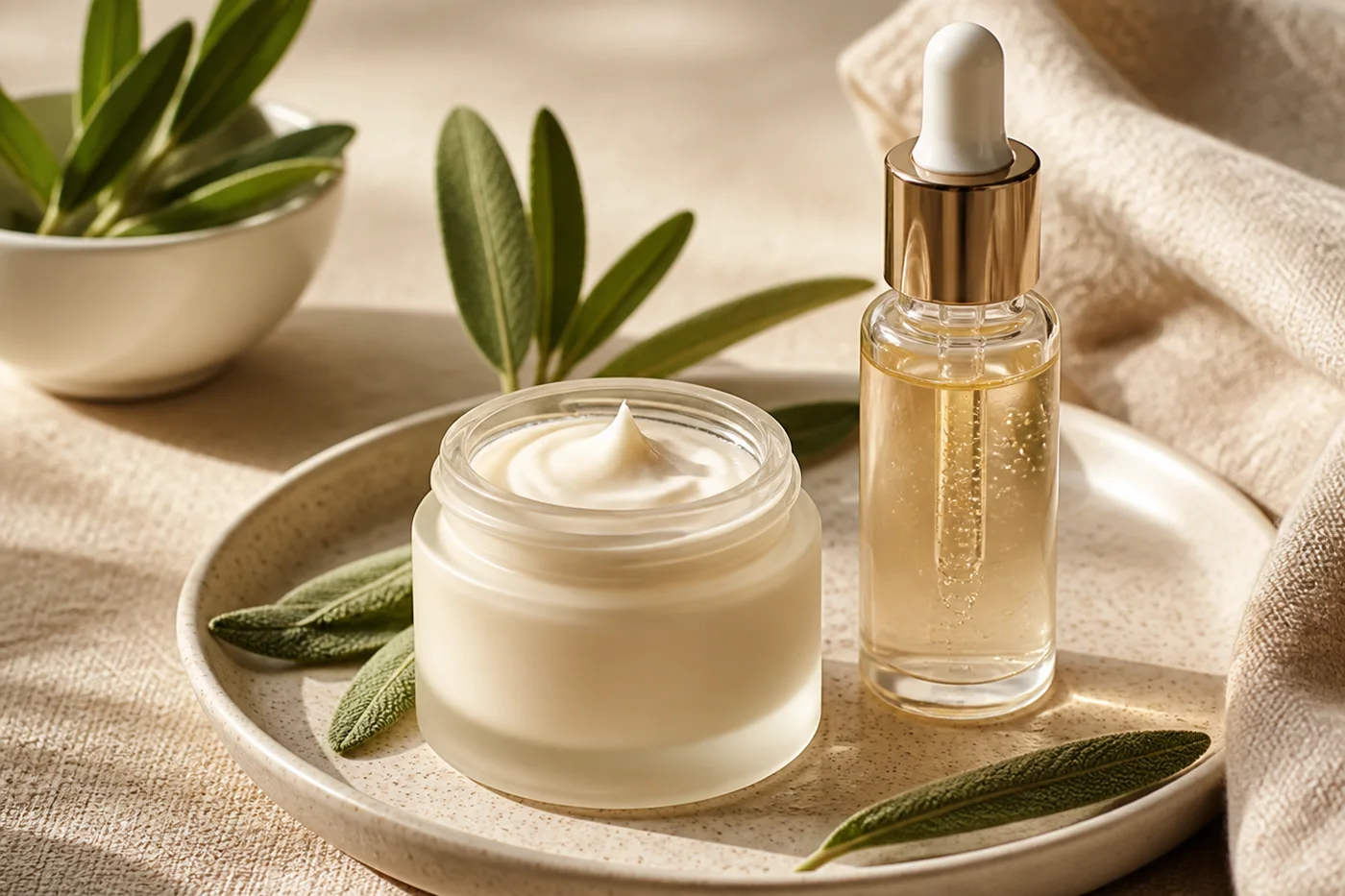
Peptides sound technical, so they are often sold with dramatic promises. For mature skin after 40, the useful truth is softer. Peptides can be a nice support step for a routine that already includes gentle cleansing, enough moisturizer and daily sun protection. They cannot replace sleep, sunscreen, consistent hydration, or professional care when the skin is irritated or changing quickly.
Think of peptides as one quiet serum category, not a miracle category. Some people love how peptide products make skin feel smoother and more comfortable. Others see very little visible change. Both experiences are normal, because formula quality, skin type, routine consistency and expectations all matter.
What peptides are, in plain language
Peptides are short chains of amino acids. In skincare, they are used in formulas meant to support the look of firmer, smoother or better-conditioned skin. Different peptide families are used for different cosmetic goals, and the finished product matters more than the ingredient name alone.
That means a label that says “peptides” is only the beginning. A gentle texture, stable packaging, a realistic concentration and a routine that does not irritate your skin are what make the product easier to use consistently.
What peptides can realistically support
For many women after 40, the best peptide result is subtle: skin may feel more conditioned, makeup may sit more smoothly, and a simple routine may feel a little more polished. Peptides can fit well when the skin is already comfortable but you want a non-harsh active that does not behave like a strong exfoliant.
They are especially useful for people who cannot tolerate frequent acids or strong retinoids. A peptide serum can offer an “active step” feeling without the same peeling or tightness that some stronger products create. Still, if a peptide formula stings, pills badly or makes your face feel hot, it is not the right formula for that moment.
What peptides cannot promise
Peptides do not erase wrinkles, lift the face or reverse aging. They are not a substitute for sunscreen, and they cannot fix a routine that is built around over-cleansing, harsh scrubs or too many new products at once. If a product page promises a dramatic overnight transformation, treat that as marketing language rather than skincare education.
They also do not diagnose or solve redness, rashes, sudden texture changes, acne flares or persistent irritation. Those situations deserve a calmer routine and, when needed, professional advice.
Common mistakes with peptide products
- Adding peptides to an already crowded routine. If you are using several acids, vitamin C, retinoids and scrubs, a peptide serum may simply become one more variable.
- Expecting a filler-like result. Topical skincare can support the look and feel of skin, but it does not work like an in-office procedure.
- Skipping moisturizer. Many peptide serums feel elegant, but they still need a moisturizer on top if your skin feels dry.
- Using an irritating formula because the ingredient sounds good. The best product is the one your skin tolerates.
How to add a peptide serum without overdoing it
Start with a low-drama rhythm. Use the product once daily or every other day for the first week, preferably in the evening if you are already testing other daytime products. Apply it after cleansing and before moisturizer. If your skin is very dry, you can apply it over slightly damp skin, then seal with a simple cream.
Do not introduce peptides on the same night you start a new retinoid, exfoliating acid or vitamin C serum. If something feels uncomfortable, you need to know which product caused the problem. A boring two-week test is often more useful than an exciting routine change.
Morning or night?
Peptides can often be used morning or night, depending on the formula instructions. Morning works if the product layers smoothly under moisturizer and SPF. Night works if you prefer a slower, less rushed routine and want to avoid pilling under makeup.
If your sunscreen is already hard to layer, keep the peptide serum at night. Your daytime SPF is more important than forcing one extra active into the morning.
What to pair with peptides
Peptides pair well with gentle moisturizers, ceramides, glycerin, panthenol, hyaluronic acid and simple sunscreen. They do not need a long ingredient wardrobe. For skin after 40, the most elegant routine is often: gentle cleanse, peptide or hydration serum, moisturizer, SPF in the morning.
Be cautious with strong exfoliating acids on the same night, especially if your skin is dry, sensitive-feeling or recently sun-exposed. Peptides are not the problem; the total routine load is.
A simple two-week peptide test
If you want to know whether a peptide serum belongs in your routine, make the test boring on purpose. Keep your cleanser, moisturizer and sunscreen the same. Add the peptide product only once a day, or every other evening if your skin is easily stressed. Take one clear photo in similar light at the start, then stop checking the mirror every morning for dramatic changes.
During the first few days, pay attention to comfort: does the serum sting, roll under moisturizer, make sunscreen pill, or leave your skin feeling tight? Those practical signs matter more than a marketing phrase on the box. A product that feels easy to use is more likely to become a steady habit.
After two weeks, decide whether your routine feels smoother, calmer or easier to layer. If the answer is yes, keep using it and judge visible texture slowly over the next month. If the answer is no, you have not failed; the formula may simply be unnecessary for your skin right now.
Who should be more cautious
Be extra cautious if your skin is currently peeling from retinoids, recovering from a procedure, reacting to a new product, or dealing with a flare that needs professional advice. In those moments, a simple comfort routine is usually wiser than testing another active, even a gentle-sounding one.
Quick checklist
- Choose one peptide product, not three.
- Patch test first, especially if your skin reacts easily.
- Introduce it away from other new actives.
- Keep moisturizer and SPF as the routine anchors.
- Judge comfort first, then visible changes after several weeks.
Ingredients Mentioned In This Guide
These are product-type search links, not guaranteed direct product endorsements. Availability and formulas can change; patch test and choose for your own skin.
Some links may use the Glow Rituals iHerb code FVQ4930.
Related Reading
Want a softer weekly skincare rhythm?
The Glow Rituals guides are designed for calm, realistic beauty routines after 40: fewer harsh steps, more consistency, and a little ritual feeling.
Explore Glow Rituals ebooksFAQ
How long do peptides take to show anything?
Give a well-tolerated product several weeks before judging subtle texture or comfort changes. Stop sooner if it stings, burns or causes a persistent reaction.
Can I use peptides with retinol?
Many routines can include both, but introduce them separately. If retinoids already make your skin dry or flaky, focus on comfort before adding another active.
Are copper peptides necessary?
No single peptide type is necessary for everyone. Copper peptide formulas may suit some routines, but they are not required for a good mature-skin routine.
Should I use peptides every day?
Daily use is not mandatory. Start slowly and follow the product directions; comfort and consistency matter more than forcing frequency.
Educational beauty content only. This guide is not medical advice. Patch test new skincare, avoid broken or irritated skin, and speak with a qualified professional for persistent irritation, rashes, acne, rosacea, sudden changes or medication-related concerns.