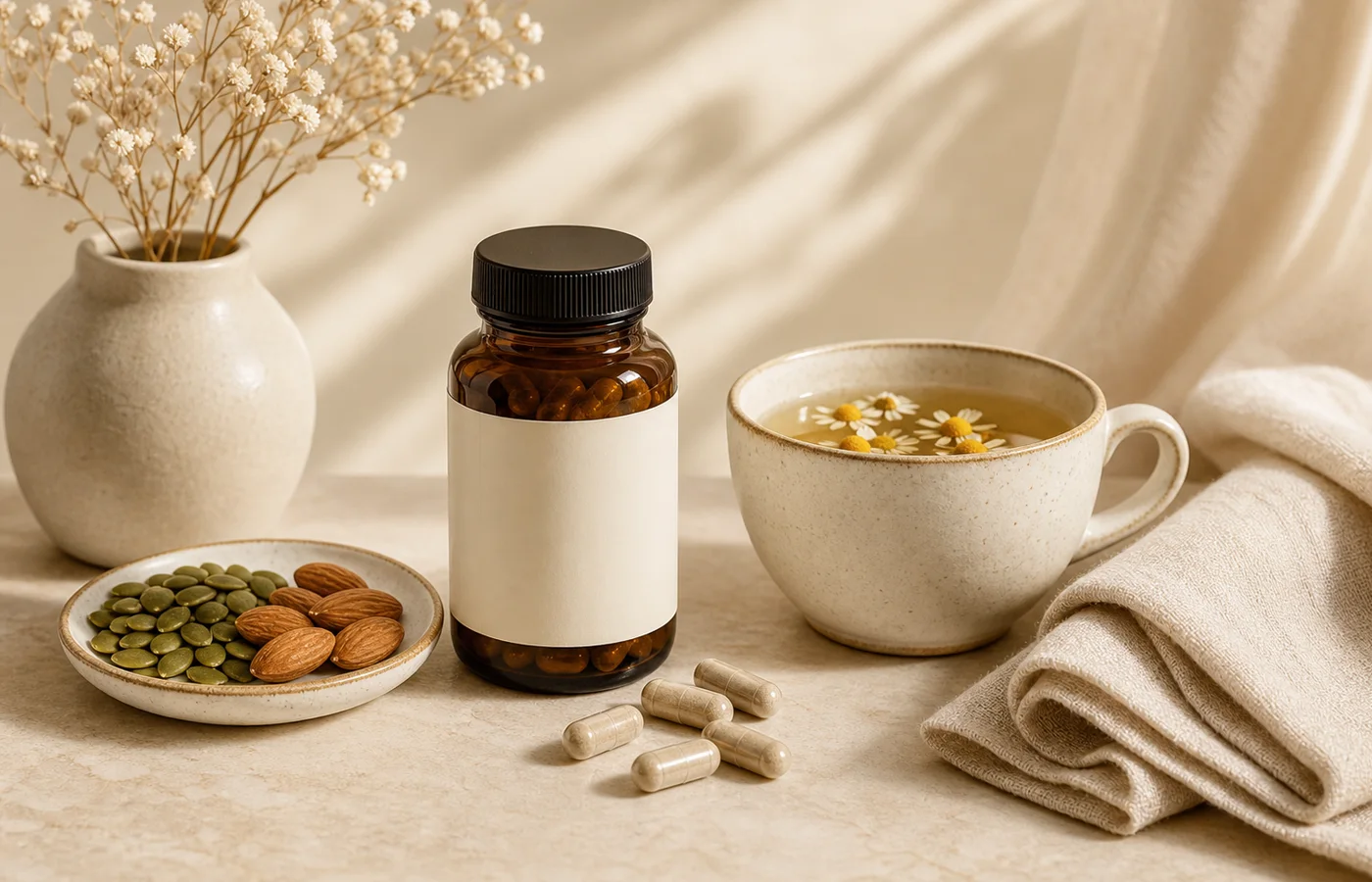
After 40, sleep can feel more sensitive to stress, caffeine, warm rooms, late screens and busy family schedules. Magnesium often appears in beauty conversations because it is involved in normal muscle and nerve function, but it should be framed realistically. It is not a guaranteed sleep fix or a wrinkle treatment.
This guide keeps the focus gentle: food-first minerals, cautious supplement thinking, soothing topical rituals and a bedtime rhythm that supports fresher-looking mornings.
What magnesium can — and cannot — promise
Magnesium is an essential mineral. Getting enough through food supports normal body function, and some people discuss it with a clinician when sleep feels unsettled. But more is not automatically better. Supplements can interact with medications, digestive conditions and kidney concerns, so personal medical advice matters.
Food-first mineral support
A beauty-friendly plate can include pumpkin seeds, almonds, oats, leafy greens, beans, yogurt or kefir if they suit you. These foods bring minerals plus protein, fiber and steady energy — the kind of support that often matters more than a dramatic powder or pill.
A calm evening rhythm
Choose a small repeatable sequence: dim lights, make caffeine-free tea, wash the face gently, moisturize, and put tomorrow’s essentials in one place. The point is to lower decision fatigue. When the routine is simple, you are more likely to repeat it.

Topical magnesium and bath salts
Magnesium lotions, sprays and Epsom-salt baths can feel like a soothing body ritual for some people. Treat them as comfort care, not medical treatment. Patch test first, avoid freshly shaved or irritated skin, and rinse if a product stings.
When supplements need extra caution
Be careful with magnesium supplements if you are pregnant, managing kidney disease, taking heart, thyroid, antibiotic or osteoporosis medication, or if magnesium causes digestive upset. Ask a qualified professional before combining supplements.
Quick Checklist
- Start with magnesium-rich foods before adding pills.
- Keep evening caffeine low and earlier in the day.
- Patch test magnesium lotions or sprays.
- Do not use bath salts on irritated or broken skin.
- Ask a clinician about supplement dose and medication timing.
Ingredients Mentioned In This Guide
Useful shelf-stable searches may include magnesium glycinate, Epsom salt, pumpkin seeds and lavender tea. Some links may use code FVQ4930.
Supplements are personal. Check suitability, dose and medication spacing with a qualified professional.
FAQ
Will magnesium make me sleep?
No single mineral guarantees sleep. It may be part of a broader routine for some people, but stress, light, caffeine, temperature and health conditions also matter.
Is topical magnesium better than supplements?
Topical products are best treated as a comfort ritual. Supplements should be considered more carefully because dose and health context matter.
Can I use Epsom salt every night?
Keep baths moderate and skin-friendly. If the skin feels dry or itchy afterward, reduce frequency, rinse well and moisturize.
Related Reading
Prefer simple beauty rituals?
Glow Rituals ebooks collect gentle beauty routines for skin, hair, body and beauty-from-within habits after 40.
Browse Glow Rituals ebooksEducational beauty content only. This is not medical advice and does not diagnose, treat or cure sleep issues. For persistent insomnia, health conditions, pregnancy, kidney concerns, medication use or supplement questions, ask a qualified professional.