Here is a small confession: I once spent a genuinely silly amount of time in front of a magnifying mirror in harsh daylight, convinced my pores had staged an overnight rebellion. They had not, of course. Nobody stands two inches from your face in unforgiving light except you. But the worry is real and common, and somewhere in our forties a lot of us notice pores looking bigger than we remember. So let me tell you what is actually going on, what truly helps, and which popular tricks are a waste of your time and money.
Why pores look bigger after 40
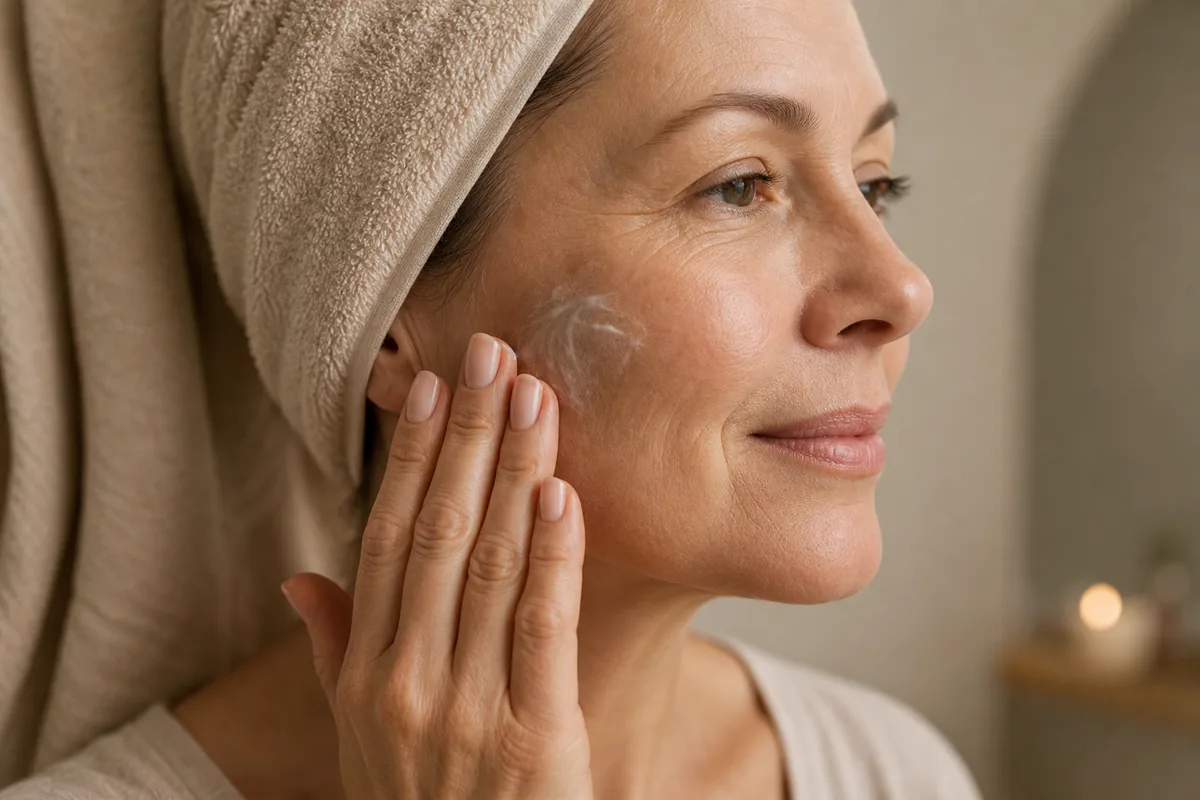
Pores do not actually grow. What changes is the skin around them. As we get older, skin makes less collagen and elastin, so it loses a little of its firmness and spring. When the support around a pore softens, the pore loses its tidy shape and looks larger and more open, especially on the cheeks and around the nose. Add a lifetime of sun, which breaks down that same collagen, plus naturally oilier skin or a clogged pore stretched by trapped oil, and you have the look most of us are squinting at in the mirror.
The useful part of knowing this: pore appearance is mostly about firmness, oil and clarity. All three you can influence. The number and base size of your pores is genetics, and that part you simply make peace with.
The honest truth first
Before the good stuff, let me clear out the myths, because chasing them does real harm. Pores are not doors. They have no little muscles, so nothing truly opens or closes them. Cold water and ice feel nice and cause a brief tightening, but they do not shrink a pore for the afternoon, let alone for good. And scrubbing harder or squeezing only inflames and stretches the skin, which makes pores look worse, not better. Anyone promising to erase your pores permanently is selling you something. What honestly works is gentler and slower, and it does genuinely help.
What actually makes pores look smaller
These are the ones with real substance behind them. You do not need all of them; start with the first two.
- Niacinamide. The standout for pores. It helps regulate oil and supports the skin, and with consistent use pores tend to look refined and less obvious. Gentle enough for daily use, even on sensitive skin.
- A gentle BHA (salicylic acid), now and then. It is oil-loving, so it gets inside the pore and dissolves the trapped oil and debris that stretch it. A couple of times a week is plenty, more just irritates.
- Clay, once or twice a week. Clay draws out excess oil and surface debris, so pores temporarily look tighter and the skin looks clearer. A lovely, low-risk ritual.
- Vitamin C and sun protection, for the long game. Since lost firmness is half the problem, protecting and supporting collagen matters. Daily sunscreen is the single biggest thing standing between your pores and the sun damage that enlarges them.
- Light, non-greasy hydration. Even oily skin needs moisture. Strip it dry and it overproduces oil to compensate, which clogs and stretches pores all over again.
Most of these sit in the ingredient library if you want to read them up one at a time.
Gentle DIY worth trying
Simple and kind beats strong and harsh every time here. These pair well with the calmer face mask recipes on the site.
- A weekly clay mask. Plain bentonite or kaolin clay mixed with a little water or green tea, left until almost dry, then rinsed. Do not let it crack and pull at the skin.
- A cooled green tea press. Brew, chill, and press a soaked pad over the oilier areas. Calming, and a pleasant fresh-feeling finish.
- An oat and yogurt mask on days skin feels dull, for a soft, smooth surface without any harshness.
What to stop doing
Half the battle is dropping the habits that backfire. Most of these also appear in my guide to gentle skincare mistakes after 40, because the theme is the same: less force, more patience.
- Squeezing and picking. It stretches the pore wall and can leave it permanently looking wider.
- Harsh grainy scrubs and stiff brushes. They irritate and, over time, work against firmness.
- Alcohol-heavy toners that strip the skin and trigger more oil.
- Hot water and over-washing, same problem, dryness leading to rebound oil.
- Pore strips on repeat. An occasional satisfying peel is fine; frequent use can irritate and stretch.
A simple routine that respects your pores
- Morning: gentle cleanse, niacinamide, light moisturizer, sunscreen. The sunscreen is non-negotiable.
- Evening: gentle cleanse, niacinamide or (a couple of nights a week) a BHA, light moisturizer.
- Once or twice a week: a clay mask in place of one evening treatment.
- Always: give it six to eight weeks. Pores respond, but slowly.
And on days you want an instant smoother look, a light primer over skincare blurs the appearance of pores without clogging them. A nice short-term trick, not a treatment.
When to see a professional
If your pores change suddenly, you get persistent painful bumps or cysts, or nothing gentle is helping and it bothers you, a dermatologist has options that are beyond a home routine, including prescription ingredients and in-clinic treatments. There is no failure in asking; it is just the next sensible step.
Ingredients mentioned in this guide
Choose simple, fragrance-free formulas, introduce acids slowly, and patch test on the inner arm before using anything new.
Some links may use the Glow Rituals iHerb code FVQ4930.
Want the recipes organized for you?
If you prefer a ready-to-save guide, these digital books collect natural beauty recipes, routines and drink ideas in one place.
TIMELESS GLOW 101
Natural skincare recipes and routines for radiant-looking skin.
Download now →INNER GLOW 101
Beauty drinks, smoothies, teas and simple daily glow ideas.
Download now →Glow Rituals Beauty shares educational beauty ideas only. Patch test DIY skincare, introduce acids like salicylic acid slowly and avoid them if your skin reacts, use daily sun protection, and talk to a qualified professional about persistent breakouts, painful bumps, pregnancy or breastfeeding concerns, an allergy or any medical question.