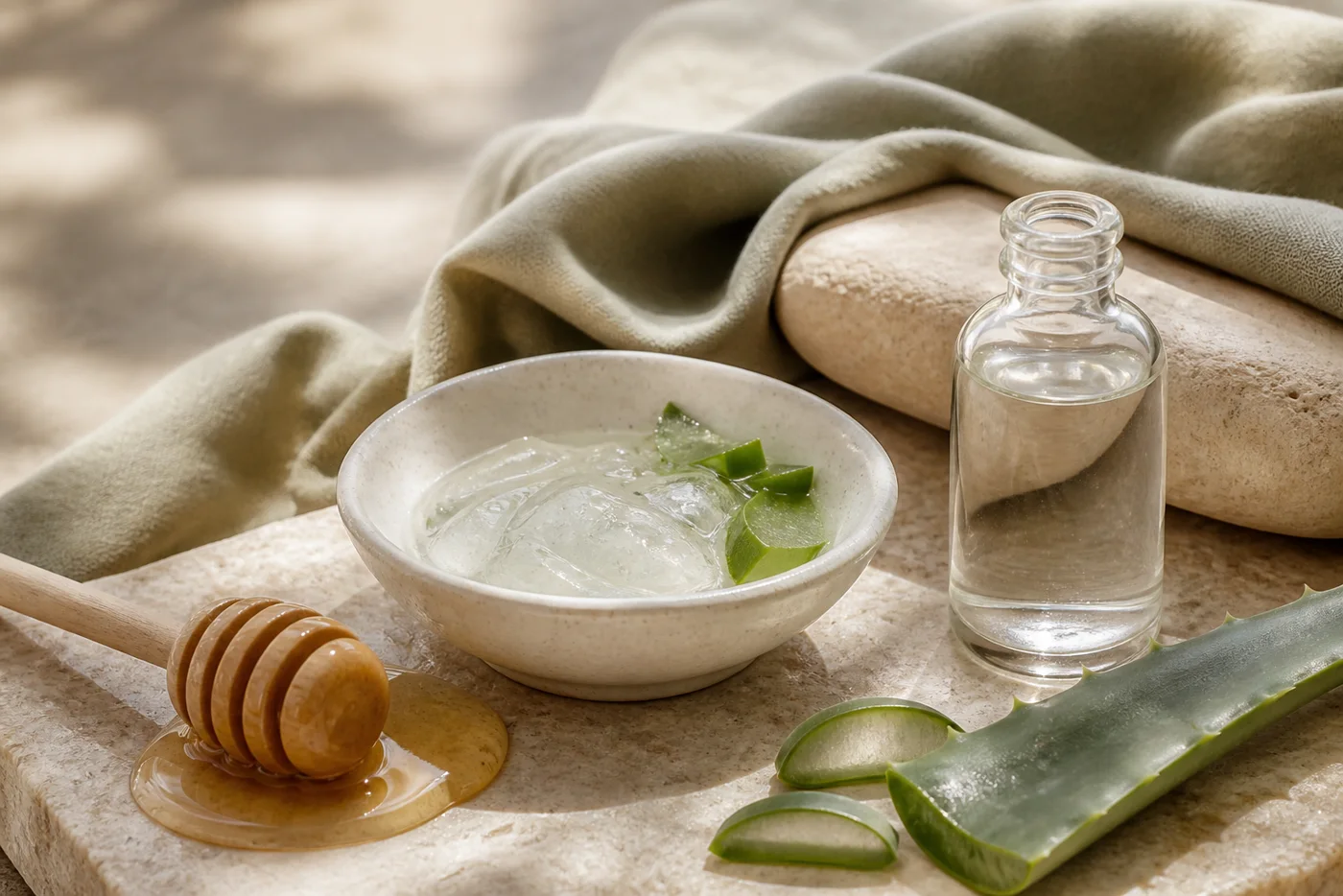
Honey, aloe and glycerin appear often in DIY beauty recipes because they can make a mask, rinse or gel feel softer and more comfortable. They are humectants, which means they help attract water into a formula and give skin or hair a more cushioned feel.
The practical lesson is simple: humectants are helpful supporting ingredients, not miracle fixes. After 40, use them in small amounts, avoid sticky over-layering, and pair them with a gentle rinse-off or moisturizing step.
What a humectant does in a recipe
A humectant adds slip and a hydrated feel by holding water in the mixture. In a face mask, that can keep clay or oats from feeling too dry. In a hair gel, it can make the texture more flexible. In a body recipe, it can soften the feel of a rinse-off polish.
Honey: softening, but sticky and allergy-aware
Honey can make oat masks feel creamy and comforting, but it should be used lightly. A teaspoon is usually enough for a small face mask. Avoid honey on broken, irritated or very reactive skin, and skip it if you have a known sensitivity to bee products.
Aloe vera gel: light comfort for masks and hair
Plain aloe vera gel is one of the easiest humectant-style ingredients to use. It can soften a clay mask, add slip to a flaxseed hair gel, or make a rinse-off body mix feel less dry. Choose a simple gel and patch test first because aloe can still bother some skin.
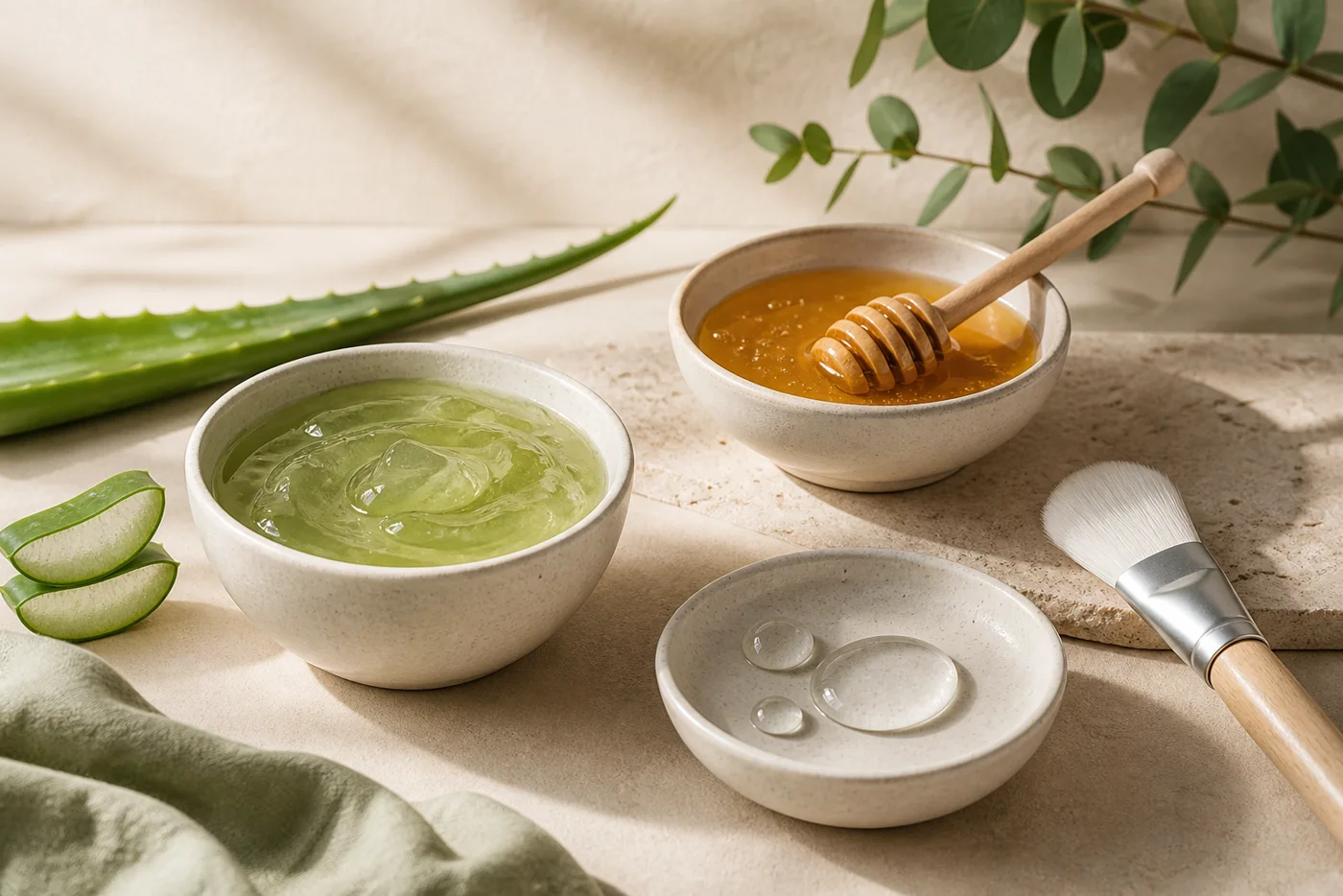
Glycerin: useful in tiny amounts
Vegetable glycerin is powerful, so more is not better. In DIY hair or body recipes, start with 1/4 teaspoon or less. Too much glycerin can feel tacky, especially in humid weather, and may make hair feel coated instead of soft.
How to use humectants safely in DIY beauty
- Patch test any new ingredient.
- Keep recipes small and fresh.
- Use one humectant at a time when testing.
- Rinse off face masks before they feel sticky or tight.
- Do not store water-based DIY recipes for long.
- Follow with moisturizer when skin needs it.
Quick Checklist
- Honey: use about 1 teaspoon in a small rinse-off mask.
- Aloe: choose plain gel and patch test.
- Glycerin: start with 1/4 teaspoon or less.
- Skip irritated or broken skin.
- Do not treat humectants as medical ingredients.
- Fresh recipes should be discarded quickly.
Ingredients Mentioned In This Guide
Shelf-stable basics may use code FVQ4930. Fresh kitchen items should stay simple and allergy-aware.
Patch test first, especially with reactive skin, allergies, pregnancy concerns or medication-related sensitivity.
Related Reading
Prefer calm ingredient guidance?
Glow Rituals ebooks collect simple beauty recipes and ingredient notes for realistic care after 40.
Browse Glow Rituals ebooksEducational beauty content only. This is not medical advice. Natural ingredients can still irritate skin or scalp; patch test and stop if anything stings or feels uncomfortable.