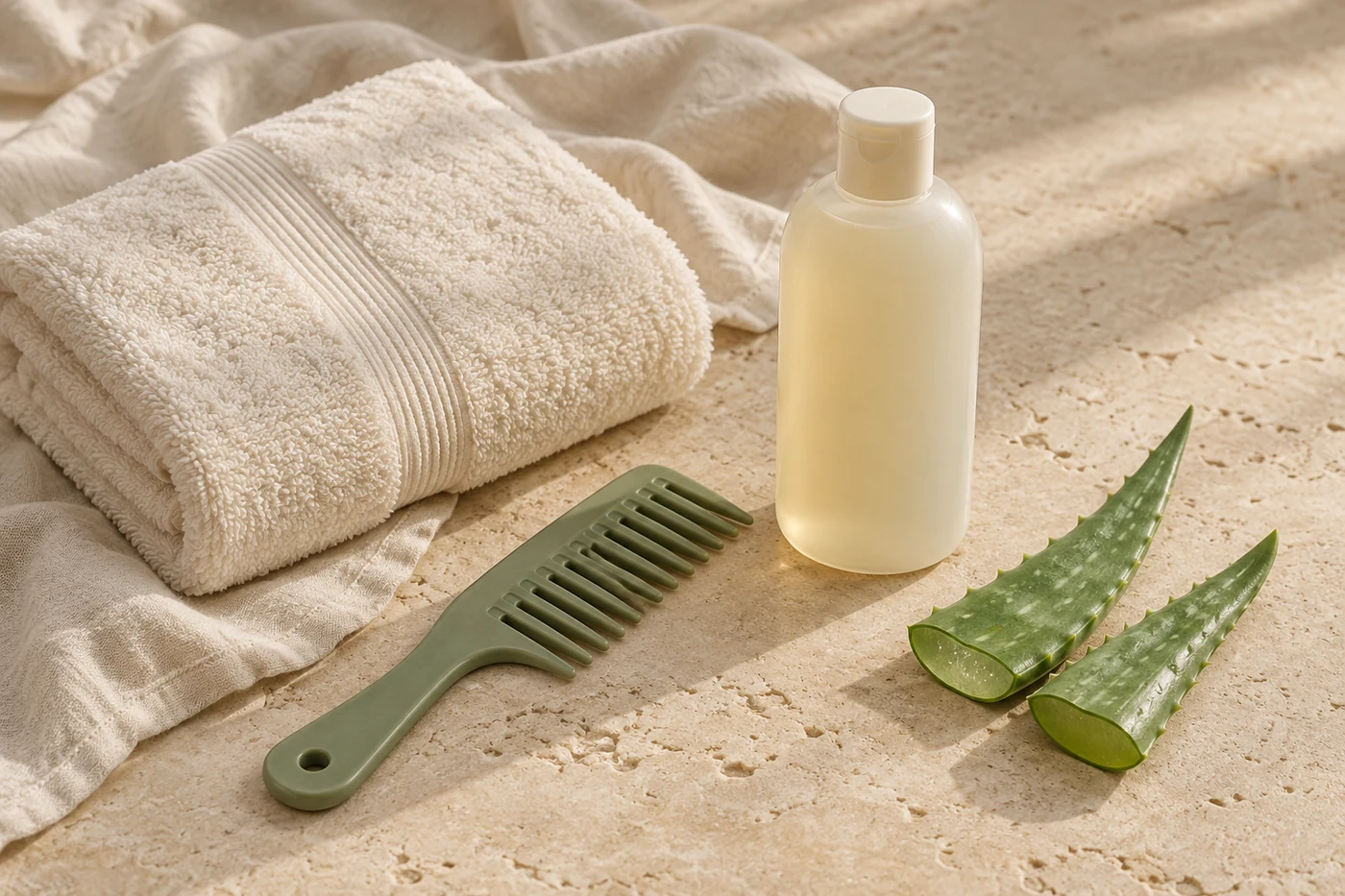
Hair washing after 40 can feel confusing because two things may be true at the same time: the scalp still needs regular cleansing, while the lengths may feel drier, rougher or more fragile than they used to. Many women respond by washing less and less, or by adding more masks, oils and leave-ins. A calmer approach is to choose a wash rhythm that respects both the scalp and the ends.
This guide is not about a perfect number for everyone. It is about reading your own hair, adjusting gently, and avoiding the common wash-day habits that make mature hair feel flatter, frizzier or more coated.
Start with the scalp, not the calendar
The scalp is skin. It collects sweat, oil, styling product, sunscreen near the hairline and everyday dust. If the scalp feels itchy, heavy, sore or flat at the roots, it may need cleansing even when the ends feel dry. Waiting too long can make the next wash harsher because you scrub more, shampoo twice aggressively, or use very hot water to feel clean.
For many women, washing every two to four days is a practical range. Some fine or oily scalps prefer every other day. Coarse, curly or very dry hair may prefer a longer gap. The useful question is not “How little can I wash?” but “Does my scalp feel clean while my ends still feel protected?”
Signs you may be washing too often
- Lengths feel rough or squeaky right after rinsing.
- Color looks dull faster than usual.
- The scalp feels tight but the roots are not oily.
- You need heavy leave-in layers every wash day just to make hair manageable.
- Frizz appears immediately after drying, even with gentle handling.
If these signs appear, try reducing shampoo contact on the lengths before changing the whole routine. Let the shampoo cleanse the scalp and rinse through the hair rather than scrubbing the ends.
Signs you may not be washing enough
- Roots look flat, separated or waxy.
- The scalp feels itchy or coated.
- Styling products stop working well.
- Hair looks dull even after brushing.
- You need dry shampoo several days in a row.
Dry shampoo can help occasionally, but it should not become a replacement for cleansing. If the scalp feels uncomfortable, a gentle wash is often kinder than another layer of powder.
A gentle wash-day method
- Detangle before the shower with fingers or a wide-tooth comb.
- Wet the scalp thoroughly with lukewarm water.
- Massage a small amount of gentle shampoo into the scalp only.
- Let the rinse move through the lengths without rough scrubbing.
- Condition from mid-lengths to ends and leave it for 2–4 minutes.
- Blot with a soft towel instead of twisting tightly.
How to protect dry-feeling lengths
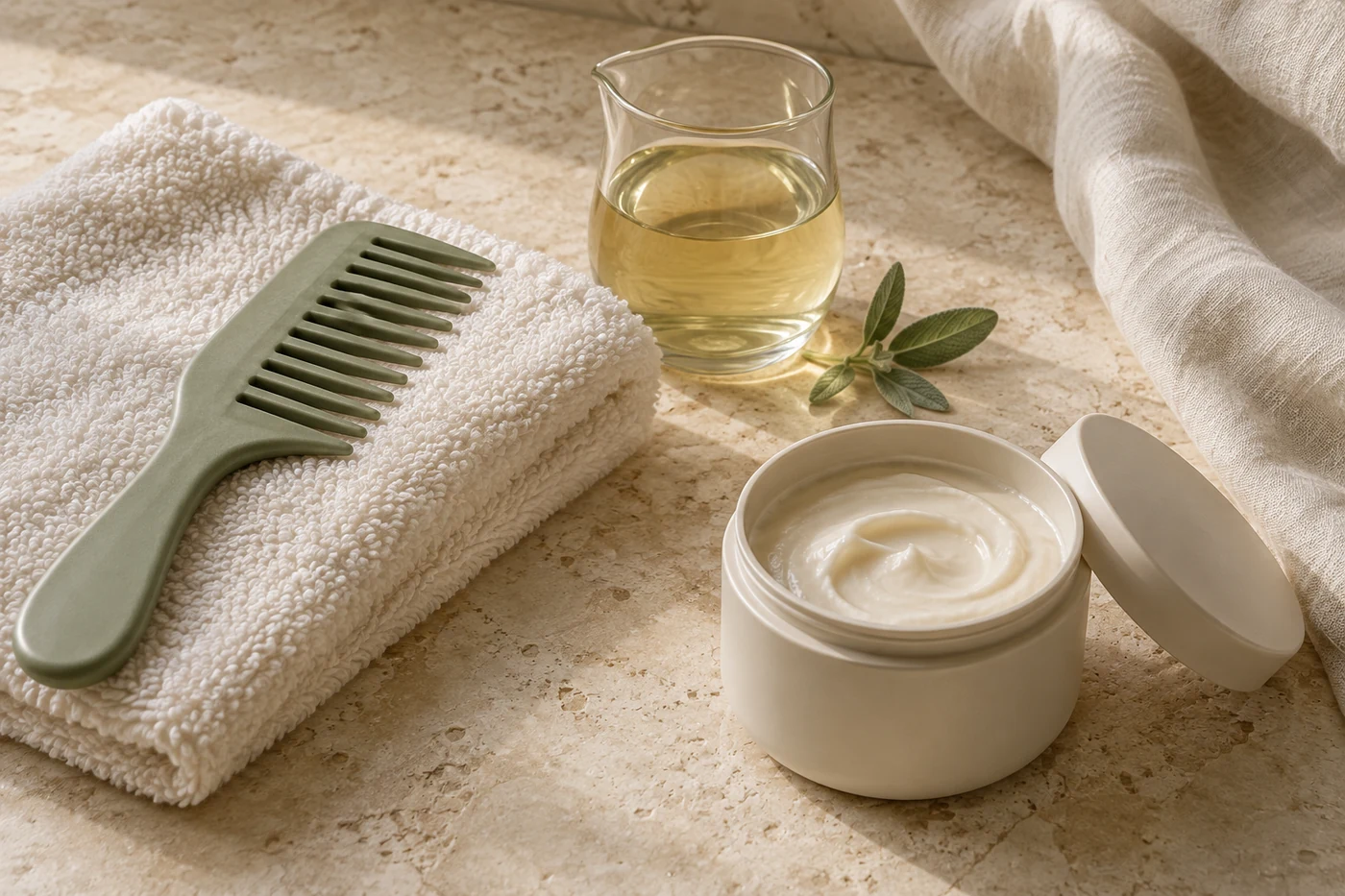
Before washing, apply a few drops of lightweight oil to the oldest, driest ends if your hair tolerates oil. This is not required, but it can reduce that stripped feeling for some hair types. During washing, keep shampoo near the scalp. After rinsing, use conditioner patiently and comb only when the hair has slip.
If your hair is very fine, avoid heavy pre-oiling and choose a light conditioner. If your hair is coarse or wavy, a richer conditioner or occasional mask may help. The ritual should match the hair you have, not a trend routine.
What about co-washing?
Conditioner-only washing can suit some curly or very dry hair, but it is not automatically better after 40. If the scalp becomes itchy, flat or coated, rotate in a gentle shampoo. A clean scalp and comfortable lengths can coexist.
Common mistakes
- Using hot water. Warm water is enough and usually feels calmer.
- Scrubbing the ends. Ends are older and do not need the same friction as roots.
- Skipping conditioner. Even a light conditioner can reduce tangles and breakage from combing.
- Testing too many products. Change one thing at a time so you can tell what helps.
- Using clarifying shampoo too often. Clarify only when buildup is real, then return to a gentle rhythm.
Simple rhythm examples
Fine hair may like gentle shampoo every other day or every third day, with conditioner only on the ends. Medium hair may do well every three days. Coarse, curly or very dry hair may wash once or twice weekly, with scalp comfort as the guide. If you exercise, sweat heavily or use scalp products, cleanse sooner rather than forcing a long schedule.
How to reset a routine that feels off
If hair feels greasy at the roots and dry at the ends, do not solve both problems with one heavy product. For two weeks, keep the scalp cleanse simple and make the conditioner step more careful. Use less shampoo, rinse longer, and apply conditioner only where hair tangles or feels rough. This small reset often reveals whether the problem was harsh cleansing, product buildup, or too much leave-in layering.
If hair feels coated even after washing, use one gentle clarifying wash, then return to a mild shampoo. If hair feels dry immediately after every wash, reduce heat, skip tight towel twisting, and consider a richer conditioner before blaming the wash schedule. The goal is to change one variable at a time.
Product layering on wash day
After washing, choose one leave-in helper: a light cream, a few drops of oil, or a mist, not all three at once. Mature hair can look dull when products sit on the surface. Start with less than you think you need, especially near the roots. Add more only to the last few inches if they still feel dry.
For heat styling, use a heat-protective product and lower the temperature when possible. Air-drying is not automatically gentler if hair stays wet for many hours or becomes tangled; a low, careful blow-dry can be kinder for some routines. Choose the method that creates the least pulling and friction.
Quick checklist
- Choose rhythm by scalp comfort and length dryness.
- Use lukewarm water.
- Shampoo scalp, condition ends.
- Blot, do not twist harshly.
- Clarify only when buildup is real.
- Keep the routine boring for two weeks before judging it.
A gentle weekly plan
Pick two anchor days for washing, then adjust only if the scalp asks for it. This gives the routine structure without making hair care feel strict or punishing.
When to get help
If you notice sudden shedding, scalp pain, patches, severe itching, scaling or a dramatic change in hair density, do not solve it with wash timing alone. A dermatologist or qualified clinician can check causes that a beauty routine cannot diagnose.
Ingredients Mentioned In This Guide
Optional product-type/search shortcuts only. Links may use iHerb code FVQ4930.
Related Reading
Keep wash day calm
A soft hair ritual is not about stretching washes as long as possible. It is about a clean scalp, protected ends, and less friction each week.
Educational beauty content only. This guide does not diagnose scalp or hair-loss conditions. Patch test topical products and ask a qualified professional about sudden shedding, scalp pain, severe irritation or medical concerns.